Shares of Amazon.com, Inc. (AMZN) experienced a significant decline of 5.6% on Friday, closing the trading session at $210.32. This drop occurred against a backdrop of broader market strength, with the Dow Jones Industrial Average surpassing the 50,000 milestone for the first time. The S&P 500 index advanced 1.97%, while the Nasdaq Composite climbed 2.18%.
Capital Expenditure Forecast Sparks Investor Concern
The primary catalyst for Amazon's stock slide was the company's projection for its 2026 capital expenditures. Management forecast that spending would surge to approximately $200 billion, representing an increase of more than 50% from an anticipated $131 billion in 2025. This substantial planned investment, largely directed toward artificial intelligence infrastructure and data centers, prompted a sell-off as investors reassessed the timeline for returns on such aggressive spending.
Market sentiment reflected a growing impatience with the scale of capital outlays by major technology firms. Portfolio managers noted that the market is beginning to penalize companies for continuously elevating capital expenditure without corresponding improvements in growth rates or clear visibility on profit generation from these investments.
Quarterly Performance Contrasts with Capex Anxiety
Notably, Amazon's underlying fourth-quarter financial results were robust. The company reported net sales of $213.4 billion, a 14% year-over-year increase. Operating income reached $25.0 billion, a figure that already accounted for various one-time charges including those related to tax disputes, severance, and asset impairments. The disconnect between solid operational performance and the stock's negative reaction highlights that investor focus has decisively shifted from current earnings to the future cost and payoff of transformative technology investments.
Friday's trading was volatile for Amazon. The stock opened at $202.70, dipped to an intraday low of $200.31, then rebounded to a high of $211.44 before settling at the $210.32 close. Trading volume was heavy, with roughly 179 million shares changing hands.
Divergent Market Reactions: Chipmakers Rally
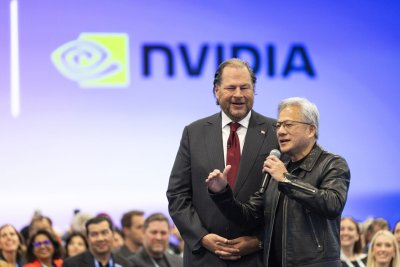
While Amazon's stock fell, the announcement of massive AI-related spending provided a tailwind for semiconductor and hardware companies poised to supply this build-out. NVIDIA Corporation (NVDA) shares surged 7.8%, and the Philadelphia Semiconductor Index (SOXX) gained 5.7%. Analysts interpreted the capex plans as validation of sustained, real demand for AI products and the necessary underlying infrastructure, suggesting the long-term AI investment theme remains intact despite near-term choppiness in related stocks.
Valuation and Macroeconomic Crosscurrents
Amazon concluded the session trading at a price-to-earnings ratio of 27.01. This valuation sits between that of other tech giants; Microsoft Corporation (MSFT) traded at a P/E of 21.62, while Alphabet Inc. (GOOGL) was at 28.36. The coming week brings key macroeconomic data that could further influence investor appetite for high-growth, long-duration stocks like Amazon. The postponed U.S. January jobs report is scheduled for release on Wednesday, February 11, followed by the January Consumer Price Index (CPI) data on Friday, February 13. These reports will shape expectations for future interest rate moves by the Federal Reserve.
The Central Question for Investors
The critical issue for the market is whether Amazon's projected $200 billion capital expenditure plan for 2026 is a peak spending level or establishes a new, elevated baseline for the cloud and AI arms race. The focus is rapidly evolving from which companies are willing to spend the most on AI to which can demonstrably convert that investment into profitable revenue streams and free cash flow. The risk is that accelerated spending drives up depreciation and operating costs ahead of revenue realization, potentially pressuring margins if AI demand growth falters or if new data center capacity enters the market too quickly. Investors are now tasked with determining if the recent sell-off is a temporary shock or the beginning of a more cautious reappraisal of the AI investment cycle's profitability timeline.