Micron Technology shares concluded Friday's trading session with a notable 3.1% gain, closing at $394.69. The stock experienced intraday volatility, trading within a range of $372.87 to $396.65. This upward movement occurred as U.S. equity markets entered the weekend closure, setting the stage for renewed investor focus on the memory sector's dynamics come Monday.
Analyst Action and Pricing Catalysts
Driving the positive sentiment, UBS revised its price target for Micron upward to $450 from $400, while reaffirming its Buy rating. The financial institution's optimism stems from observed and anticipated strength in memory pricing. Specifically, UBS forecasts a significant 62% increase in DDR memory contract prices for early 2026, coupled with a projected 40% surge in NAND flash prices. The bank also highlighted ongoing supply constraints that could potentially extend into 2027, underpinning a favorable pricing environment for memory manufacturers.
Contrasting Views on High-Bandwidth Memory
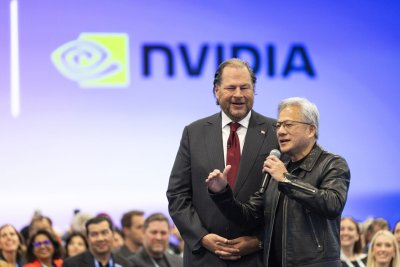
However, the investment narrative for Micron faced a counterpoint from research firm Semianalysis. The firm issued a stark revision to its forecast, reducing its projection for Micron's share of NVIDIA's next-generation HBM4 supply to zero. Semianalysis explicitly stated it currently sees no indications of NVIDIA placing HBM4 orders with Micron. The firm's updated outlook now allocates approximately 70% of NVIDIA's HBM4 supply to SK Hynix and the remaining 30% to Samsung. This assessment is reportedly based on lingering performance concerns related to Micron's base-die design and speed specifications.
High-Bandwidth Memory (HBM) represents a critical, high-margin segment of the DRAM market, specifically engineered for AI accelerator chips like those from NVIDIA. Securing a design win for a next-generation product such as HBM4 can translate into substantial, multi-year revenue streams, making competitive positioning in this arena crucial for long-term growth.
Broader AI Investment Context
The memory sector's spotlight intensifies within the context of an escalating AI arms race. Major technology firms, including Amazon, Alphabet (Google), Microsoft, and Meta Platforms, are collectively poised to deploy over $630 billion in AI-related capital expenditures this year. This unprecedented surge in investment is creating immense demand for underlying hardware, including advanced memory solutions. Notably, Amazon announced a staggering $200 billion capital spending target for 2026, a sharp increase from its $131 billion guidance for 2025, with Reuters attributing the surge directly to scaling AI infrastructure.
Market observers note a degree of tension, however. Some portfolio managers, like Dave Wagner of Aptus Capital Advisors, cited in a Reuters report, pointed to investor unease with the massive capital outlays required for current growth rates. Similarly, Andrew Wells of SanJac Alpha suggested to Reuters that the market viewed the AI infrastructure trade as having become overvalued, even as major indices like the S&P 500 and Nasdaq Composite posted gains of 1.6% and 2%, respectively, on Friday, with NVIDIA itself jumping 7%.
Investor Considerations and Forthcoming Catalyst
For Micron, a key investor consideration is how much of the current AI-driven optimism is already reflected in its stock price. The company's earnings remain historically cyclical and vulnerable to shifts in memory pricing or customer pushback on higher costs. The specific HBM4 issue carries tangible consequences; exclusion from NVIDIA's next-generation memory stack could lead investors to reassess Micron's ability to capture a meaningful portion of the high-profit AI memory market relative to its rivals SK Hynix and Samsung.
Market participants are now looking ahead to Micron's scheduled appearance at the Wolfe Research Auto, Auto Tech and Semiconductor Conference on February 11 at 8:50 a.m. EST. Investors will be keenly listening for management commentary on the HBM production ramp, progress on customer qualification processes, updates on supply conditions, and any new insights that could alter the HBM4 narrative.