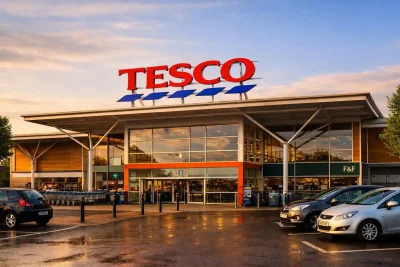
Tesco Plc concluded Friday's trading session at 452.10 pence, marking a modest gain of 0.62% for the day. The broader UK equity market also finished the week positively, with the FTSE 100 index advancing 0.6% to secure its second consecutive weekly increase. This upward movement occurred as market participants digested nuanced communications from the Bank of England regarding the future trajectory of monetary policy.
Monetary Policy and Inflation Dynamics
Investor focus remains sharply attuned to the central bank's stance on interest rates. While the Bank of England held its benchmark Bank Rate steady at 3.75% during its latest meeting, officials have signaled that rate reductions could be considered if the disinflation trend persists. However, Chief Economist Huw Pill injected a note of caution, warning that a recent decline in inflation figures, partly driven by transient factors, should not be overinterpreted. He emphasized that the disinflation process is ongoing and not yet complete, suggesting a deliberate and data-dependent approach from the Monetary Policy Committee.
Sector-Specific Cost Pressures Intensify
Beyond macroeconomic policy, specific cost headwinds are mounting within the UK grocery sector. The industry is contending with a significant rise in labor expenses ahead of a government-mandated increase to the national minimum wage scheduled for April. Competitors are proactively adjusting their pay structures; Lidl GB has announced plans to raise its entry-level hourly wage from March 1, a move projected to add £29 million to its annual costs. This follows similar wage adjustments by Aldi UK and J Sainsbury's. For Tesco and its peers, these wage hikes present a complex challenge: they are essential for retaining staff and maintaining service quality, yet they directly pressure the razor-thin operating margins characteristic of the grocery business.
This cost inflation arrives at a sensitive time for consumer behavior. Price-conscious shoppers continue to demonstrate a willingness to switch to discount alternatives, and competitors are aggressively promoting new deals. Tesco CEO Ken Murphy acknowledged in January that "competition is as intense as ever," even as the company raised its full-year profit outlook following stronger-than-expected underlying UK sales over the Christmas period.
Corporate Finance and Balance Sheet Activity
Financial strategies within the sector are also under scrutiny. According to a Sky News report, rival supermarket chain Morrisons is exploring options to raise up to £1 billion, potentially using a portion of its owned store portfolio as collateral. The company has reportedly engaged real estate advisory firm CBRE to evaluate possibilities. This highlights the industry's focus on balance sheet strength and liquidity as it navigates a high-cost environment.
Amid these crosscurrents, Tesco continues to execute its capital return program. In January, the company disclosed it had repurchased nearly 480,000 of its own shares for cancellation, part of an ongoing £1.45 billion share buyback initiative announced alongside its upgraded profit forecast.
Investment Implications and Forward Outlook
The confluence of factors creates a delicate balancing act for Tesco and the sector. The primary risk scenario involves wage-driven cost inflation persisting while intense competition and consumer price sensitivity prevent retailers from fully passing these costs onto shelf prices, thereby compressing margins. Furthermore, a more cautious Bank of England that delays interest rate cuts could prolong financial pressure on household budgets, potentially dampening consumer spending volumes.
The next significant milestone for Tesco investors will be the release of the company's full-year results, scheduled for April 16. In the interim, the market will closely monitor how wage increases across the industry begin to manifest in operational costs and whether any resultant pricing actions can be sustained without impacting sales volume. The performance of banking stocks, which provided much of the lift for the FTSE 100 recently, will also serve as a barometer for broader economic expectations tied to interest rates.