Shares of ASML Holding NV (ASML.AS) declined approximately 0.9% during Monday's trading session in Amsterdam, closing at 1,182.60 euros. The move lower coincided with the stock trading ex-dividend, meaning new buyers are no longer entitled to the upcoming interim dividend payment. The share price had settled at 1,193.80 euros on the previous Friday. Throughout the session, the stock fluctuated between a low of 1,177.40 euros and a high of 1,204.40 euros.
The interim dividend, set at 1.60 euros per share, is scheduled for distribution on February 18. The ex-dividend date was February 10, which also served as the record date for determining shareholder eligibility. Such price adjustments are a typical market reaction when a security begins trading without the rights to its next declared payout.
Major Backing for Europe's €2.5 Billion Semiconductor Initiative
In a significant development for the European semiconductor ecosystem, the Belgian research hub imec has officially inaugurated its "NanoIC" pilot line, a project with a total investment of 2.5 billion euros. This initiative is a cornerstone of the European Union's Chips Act, which aims to elevate the region's share of the global semiconductor market to 20% by the end of the decade.
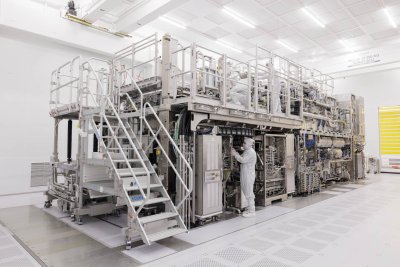
ASML is the largest private contributor to the venture, which is funded by 1.4 billion euros in public money and 1.1 billion euros from private partners. A key milestone is expected in March, with the anticipated delivery of ASML's next-generation High-NA extreme ultraviolet (EUV) lithography tool to the imec facility.
"We are all very proud and thankful that this is happening at the heart of Europe," stated ASML Chief Executive Christophe Fouquet. Imec CEO Luc Van den hove emphasized the line's critical importance for Europe's competitive position, particularly as artificial intelligence drives unprecedented demand for advanced computing power.
Strategic Importance of High-NA EUV Technology
The High-NA EUV machines represent the forefront of lithography technology, enabling the patterning of silicon wafers at resolutions necessary for manufacturing chips with features below 2 nanometers. This technological ramp-up is vital for the industry's roadmap, and any delays or technical challenges could potentially disrupt the construction timelines for new semiconductor fabrication plants and the subsequent demand for advanced equipment.
ASML maintains a dominant position in the lithography market. Other key players in the semiconductor capital equipment sector include Applied Materials (AMAT), Lam Research (LRCX), and Tokyo Electron, which provide tools for other critical stages of chip production. Slowdowns in new fab projects tend to have a ripple effect across this entire supplier ecosystem.
Broader Market Context and Investor Focus
While ASML shares reacted to company-specific events, the broader chip sector remained volatile. In the United States, stock index futures edged lower as market participants awaited key economic data and scrutinized the investment plans of technology giants in artificial intelligence infrastructure.
Investor attention this week is fixed on several macroeconomic indicators, including U.S. payroll numbers on Wednesday and inflation data on Friday. Furthermore, the upcoming financial results from Nvidia (NVDA), a bellwether for AI chip demand, are casting a long shadow over the sector. "I'm not surprised ... futures are down," commented Ipek Ozkardeskaya, a senior market analyst at Swissquote Bank.
For ASML, beyond short-term dividend-related price moves, the fundamental drivers remain customer spending cycles and the timing of tool deliveries. These factors will ultimately dictate the company's performance, especially as sentiment around the expansive AI investment theme continues to evolve.
Looking ahead on the corporate calendar, ASML is scheduled to publish its annual report on February 25, followed by its first-quarter earnings results on April 15.