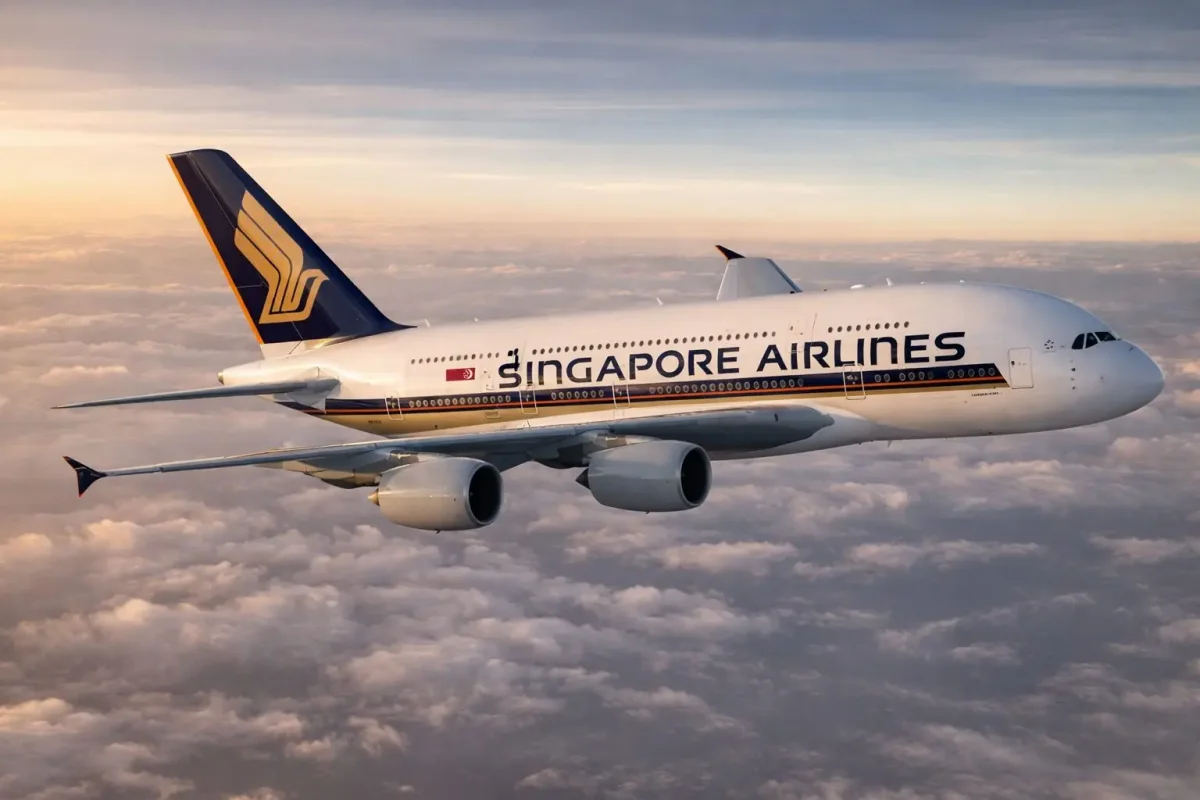
Singapore Airlines Ltd (SGX: C6L) concluded Friday's trading session at S$6.70, marking a slight decline of 0.15%. The stock saw active trading with a volume of approximately 8.94 million shares, moving within a daily range of S$6.62 to S$6.71. Over the past year, the share price has fluctuated between S$5.90 and S$7.63.
Supply Chain Pressures Emerge as Industry Headwind
Investor attention is currently fixed on persistent supply-chain disruptions within the aviation sector, a key topic at the recently concluded Singapore Airshow. These bottlenecks, involving critical components like aircraft engines and spare parts, are raising significant concerns about escalating operational costs for carriers globally. Industry executives warn that these delays may represent a structural shift rather than a temporary issue.
At the airshow, Jeffrey Lam of ST Engineering suggested that ongoing delivery and maintenance backlogs could become "the new norm" for the industry, citing persistent delays from major manufacturers Airbus and Boeing, alongside congested engine repair facilities. This sentiment was echoed by Scoot CEO Leslie Thng, who noted the airline has been compelled to secure additional spare engines at its own expense to maintain operations. Willie Walsh, Director General of the International Air Transport Association (IATA), described the situation as "very frustrating" for airlines.
Financial and Operational Implications
For a premium carrier like Singapore Airlines, which operates its flagship full-service network alongside the budget Scoot subsidiary, aircraft availability and uptime are paramount. Persistent bottlenecks force airlines into costly alternatives, including expensive leasing agreements, accelerated maintenance cycles, and the stockpiling of spare parts—all of which directly pressure profit margins. IATA has estimated that the extra costs incurred by airlines operating older aircraft for longer reached $11 billion globally in 2025.
The demand environment remains robust, with IATA reporting global passenger traffic in 2025 was approximately 9.3% above pre-pandemic 2019 levels, with a further 4.9% growth anticipated for the current year. However, the risk is that sustained supply-chain issues through the key northern summer travel peak could force carriers to absorb higher costs precisely when they aim to capitalize on strong demand. A potential softening in travel demand could further pressure yields, a key metric measuring revenue per passenger kilometer.
Fuel costs also remain a watch item, as jet fuel prices typically correlate with crude oil. Any upward movement in oil prices could erode profitability, even on flights with high load factors, with a pronounced impact on the long-haul international routes that are central to Singapore Airlines' network.
Upcoming Catalyst: Third-Quarter Business Update
Market participants are now looking ahead to the company's next scheduled financial disclosure. Singapore Airlines is set to release its business update for the third quarter of fiscal year 2025/26 after the market closes on February 24. This update will be closely scrutinized for management commentary on cost pressures, capacity growth plans, and forward yield guidance in the context of these industry-wide challenges.
The stock often serves as a liquid proxy for investor sentiment toward Singapore's travel and tourism sector, reacting not only to company-specific news but also to broader shifts in risk appetite. The interplay between strong passenger demand and rising operational costs will likely be a dominant theme in the upcoming report and for the sector in the near term.