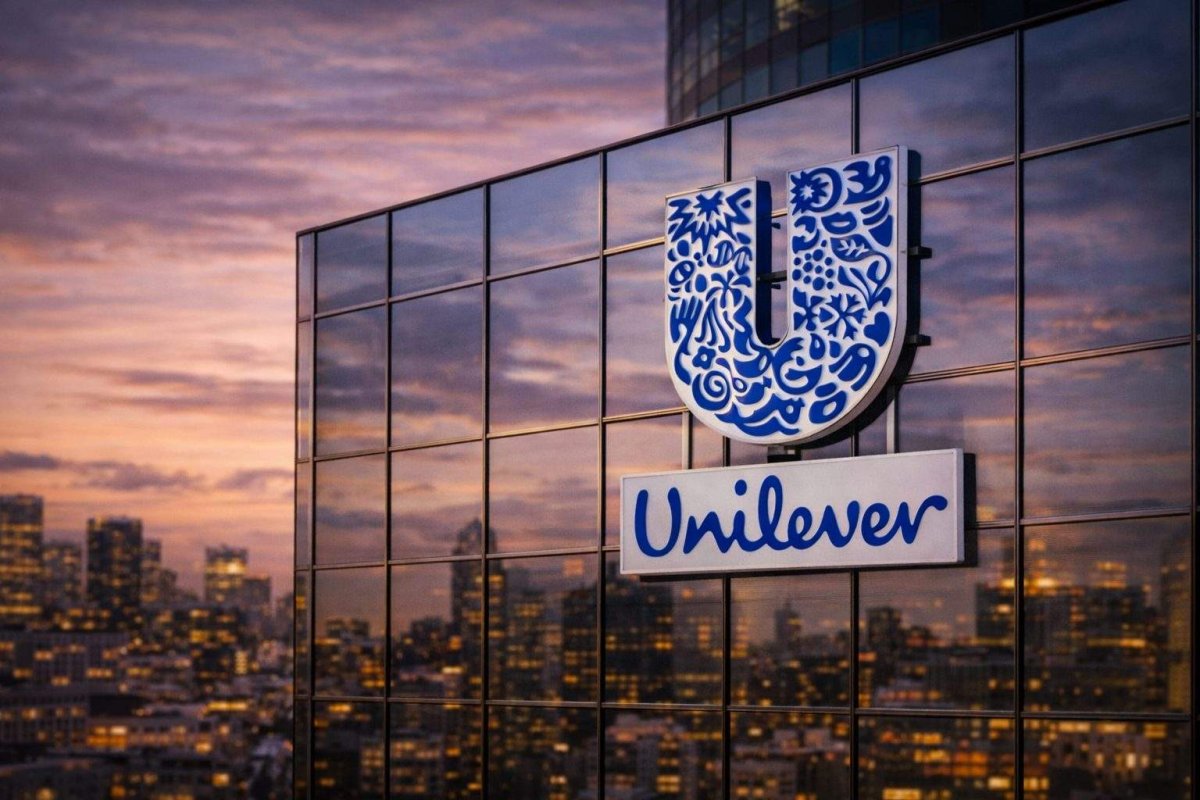
Shares of Unilever PLC (UL) experienced a decline in early trading on the London Stock Exchange Monday, following a rating downgrade by Deutsche Bank. The financial institution moved its recommendation on the consumer goods giant to "hold" from "buy," citing concerns that the stock's valuation has become extended after a recent advance.
As of 08:38 GMT, Unilever's share price was down 0.7%, trading at 5,214 pence. This represented a drop from the previous session's close of 5,250 pence, with the stock moving within a range of 5,200 to 5,234 pence during the morning session. Deutsche Bank maintained its price target of 5,150 pence, which sits below the current trading level, suggesting limited near-term upside from the bank's perspective.
The downgrade carries particular weight because Unilever has re-emerged as a popular defensive holding for many investors. Analyst Tom Sykes, in the bank's research note, pointed out that the shares now trade at approximately 19 times forward twelve-month earnings. This represents a significant 19% premium to the broader market. Sykes concluded that at this level, "the valuation no longer supports a 'buy' recommendation." The move above the bank's target price was the catalyst for the rating change.
This shift in sentiment highlights a precarious setup for the stock. With investor positioning crowded and the share price already reflecting expectations for strong financial performance, the market may exhibit heightened sensitivity to any disappointments in the upcoming results. Even minor shortfalls in key metrics like sales volumes or profit margins could trigger a disproportionate stock reaction, even if overall revenue remains stable.
Investor focus now turns squarely to Unilever's scheduled fourth-quarter and full-year 2025 results, due for release on February 12. The market will scrutinize the update for guidance on volume trends—the actual number of product units sold—and margin outlook. In recent years, the maker of brands like Dove, Hellmann's, and Ben & Jerry's has relied heavily on price increases and favorable product mix to drive growth, as consumers in some regions have shifted to more affordable alternatives. Analysts and shareholders are keen to see evidence that volume growth is beginning to contribute more meaningfully as the pace of price hikes moderates.
The implications of Unilever's valuation debate and upcoming results extend beyond the company itself. The European consumer staples sector, which includes peers like Nestlé S.A. (NSRGY) and Reckitt Benckiser Group plc (RBGLY), is often viewed by fund managers as a homogenous group for its reliable cash flows and defensive characteristics. A reassessment of Unilever's worth could quickly spill over to affect sentiment and trading in these related names, especially when the sector moves in tandem, as it frequently does.
There is a clear near-term risk that other brokerage firms could follow Deutsche Bank's lead with additional downgrades if Unilever's share price continues to drift above consensus target prices in the run-up to the earnings report, or if management adopts a cautious tone regarding the future. The potential downside scenario is not necessarily one of a broken business model, but rather of a solid company whose stock price enters a period of stagnation—a "boring" outcome where the share price simply stops advancing.
Conversely, a confident outlook from management and a clear message regarding resilient profit margins could temporarily override valuation concerns. This is particularly plausible if broader equity markets experience volatility, prompting investors to rotate capital back into defensive sectors like consumer staples. This dynamic creates a tightrope for the trade; the stock's near-term direction will hinge on the delicate balance between its premium valuation and the perceived quality and safety of its earnings stream.
Beyond the February 12 earnings, Unilever is also scheduled to present at the prestigious CAGNY (Consumer Analyst Group of New York) conference on February 17. This event will provide another platform for management to communicate its strategy and address analyst questions, potentially offering further catalysts for the stock.