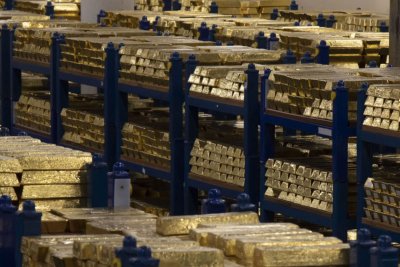
Gold prices sustained their position above the pivotal $5,000 per ounce threshold during London trading on Monday, February 9, 2026. Spot bullion advanced 1.1% to reach $5,012.53, building on a substantial 4% rally recorded in the previous session. The April futures contract for U.S. gold mirrored this strength, trading at $5,033.70. Market analysts attributed the metal's buoyancy to a combination of a softening U.S. dollar and heightened anticipation for a series of critical U.S. economic indicators scheduled for release later in the week.
Shifting Dynamics: From Safe Haven to Rate Gauge
The recent price action underscores a notable evolution in gold's role within financial markets. According to Rania Gule, a senior analyst at XS.com, the metal is increasingly reclaiming its status as a "neutral sovereign asset." This shift signifies that traders are now pricing gold more as a sensitive barometer of interest rate expectations and currency movements, rather than solely as a traditional safe-haven during periods of market stress. As a non-yielding asset, gold is particularly vulnerable to revisions in projected borrowing costs. This sensitivity is amplified by foreign exchange fluctuations, which directly affect the purchasing power of international buyers when converting from their local currencies into U.S. dollars.
Upcoming Data Deluge: Jobs and Inflation in Focus
Market participants are intently focused on the upcoming U.S. macroeconomic calendar, which has seen some adjustments. The Bureau of Labor Statistics (BLS) will now release the highly anticipated January employment report on Tuesday, February 11, at 8:30 a.m. Eastern Time. This will be followed by the January Consumer Price Index (CPI) data on Thursday, February 13, also at 8:30 a.m. ET. Weekly initial jobless claims are slated for release on Wednesday, February 12.
The collective market narrative hinges on whether these data points will reinforce or challenge the growing expectations for Federal Reserve interest rate cuts in 2026. Current sentiment, as noted by analysts, has begun to factor in at least two quarter-point reductions for that year. Softer inflation readings would help contain real yields—the inflation-adjusted return on bonds—which is typically a supportive environment for gold. Conversely, a robust jobs report could bolster the U.S. dollar and apply downward pressure on bullion prices.
Central Bank Demand Provides Structural Support
On the demand side, official sector activity continues to provide a foundational pillar of support for the gold market. Data indicates that China's central bank extended its gold-buying spree for a fifteenth consecutive month in January. The nation's official reserves now stand at 74.19 million troy ounces, with an approximate value of $369.6 billion as of the end of last month. This persistent accumulation by a major sovereign entity highlights gold's enduring appeal within strategic reserve portfolios.
Precious Metals Complex Shows Divergence
While gold held firm, the broader precious metals sector exhibited mixed performance. Silver, often viewed as a more volatile and industrially sensitive sibling to gold, surged 4.3% to $81.32 per ounce. This impressive gain followed a nearly 10% jump in the prior session. Market analyst Fawad Razaqzada of City Index and FOREX.com noted that "silver is more of a risk asset than gold… when risk appetite is strong, you tend to see silver outperform gold." In contrast, platinum declined 1.5% to $2,065.10, and palladium fell 1.1% to settle at $1,687.50.
The current landscape suggests that gold's trajectory is not unidirectional. A stronger-than-expected CPI print or wage data that reignites inflation concerns could swiftly reverse the supportive dynamic by pushing the U.S. dollar and real yields higher, thereby capping gold's upward momentum. With traders fixated on the interplay of interest rate forecasts, currency strength, and incoming economic data, market volatility is on the rise. In such an environment, especially with a packed data calendar, momentum-driven trades can unravel rapidly.
All eyes are now firmly trained on the U.S. jobs report due February 11, followed immediately by the CPI release on February 13. The outcome of these reports is poised to be a significant catalyst, potentially tipping the scales on how aggressively the market prices in future monetary policy easing in the weeks ahead. The precious metals market, particularly gold, remains in a state of heightened sensitivity, awaiting this fundamental guidance.