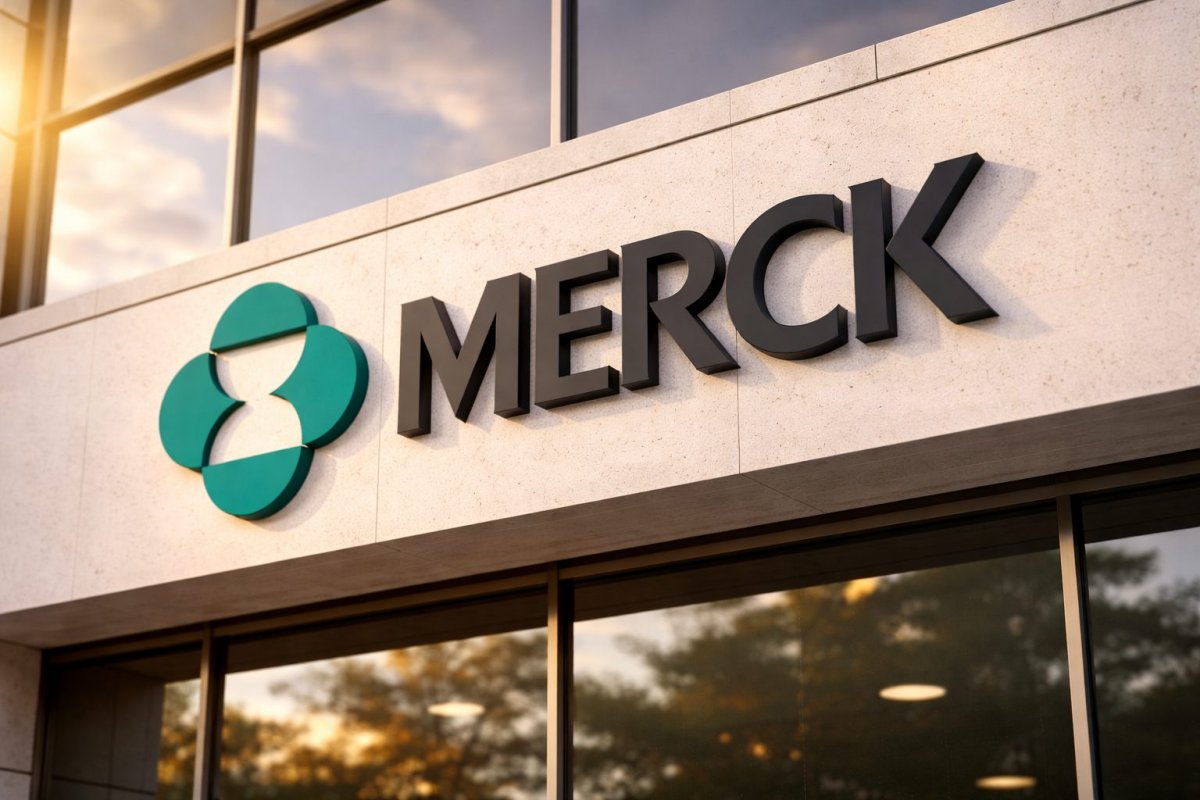
Shares of Merck & Co., Inc. concluded Friday's trading session with a notable advance, rising 1.82% to close at $121.93. This gain extended the pharmaceutical giant's winning streak to seven consecutive sessions, positioning the stock within a fraction of a percent from its 52-week peak. The broader U.S. equity market exhibited strength, contributing to the positive momentum. While peers like Pfizer and Eli Lilly recorded more substantial moves, Merck's performance outpaced that of Johnson & Johnson. Trading activity for the day was measured at approximately 13 million shares, a figure that fell below the stock's 50-day average volume, indicating a potential consolidation phase following the recent rally.
Insider Transaction Draws Attention
Amid the stock's ascent near its yearly high, a notable insider transaction was disclosed through a regulatory filing. A Form 4 submitted to the U.S. Securities and Exchange Commission revealed that Richard R. DeLuca, Executive Vice President of Merck and President of its Animal Health division, executed a sale of 37,685 company shares on February 6. The transactions occurred at a weighted average price of $120.9241 per share, with individual sale prices ranging from $120.7350 to $121.3054. Following this disposal, DeLuca's direct holdings in Merck were reduced to 160,173.834 shares. Such filings often garner scrutiny from investors, particularly when a stock is trading near significant technical levels.
Market Focus Shifts to Forward Guidance and Pipeline
Investor attention is now firmly set on the market's opening on Monday, following the company's recent communications regarding its long-term outlook. Merck provided updated guidance for the year 2026, projecting sales in a range of $65.5 billion to $67.0 billion and non-GAAP earnings per share between $5.00 and $5.15. However, management also cautioned about anticipated headwinds, specifically highlighting a projected $2.5 billion revenue impact from the loss of exclusivity for key patents. This pressure is expected to stem from generic competition, Medicare pricing negotiations, and declining demand for the COVID-19 therapeutic, Lagevrio.
In conjunction with its financial forecast, Merck emphasized the strategic importance of its development pipeline. CEO Robert M. Davis noted the company's continued advancement in science throughout 2025. A significant regulatory update accompanied the outlook: the U.S. Food and Drug Administration (FDA) has accepted a supplemental Biologics License Application (sBLA) for Winrevair, a therapy for pulmonary arterial hypertension. The regulatory agency has assigned a Prescription Drug User Fee Act (PDUFA) action date of September 21, 2026, for this label expansion request.
Analysts have begun to weigh in on the updated strategy. Evan Seigerman of BMO Capital Markets characterized Merck's latest quarterly performance as "a reasonable foundation" heading into the 2026 period. The central investment thesis continues to revolve around the company's ability to manage the decline of mature products while successfully commercializing new therapies and securing additional approved uses for existing drugs. The oncology blockbuster Keytruda remains at the core of the bull-versus-bear debate regarding Merck's future.
Balancing Near-Term Momentum and Long-Term Risks
In the immediate term, traders are monitoring whether Merck can sustain its position above the $120 level following the week's rally. The stock's sensitivity to broader market sentiment and rotational flows within the large-cap pharmaceutical sector will also be critical. Money tends to move quickly among major healthcare names when risk appetite shifts, making the performance of peer stocks a relevant indicator.
Nevertheless, significant risks persist on the horizon. The primary concern is the potential for legacy brands to lose market share to generic alternatives at a faster pace than currently modeled. Additionally, any unforeseen delays or setbacks in the clinical development or regulatory approval process for new drug candidates could abruptly refocus investor attention on the anticipated 2026 revenue gap. This, in turn, raises persistent questions about how the company plans to address the subsequent revenue shortfall in 2027 and beyond.
Market participants are scheduled to receive further insights during Merck's first-quarter earnings conference call on April 30. Investors will be keenly listening for any new commentary regarding product demand trends, pricing pressures, and the company's strategic capital allocation plans. The interplay between the fading revenue from older products and the scaling uptake of newer launches will likely dictate the stock's trajectory over the coming quarters.