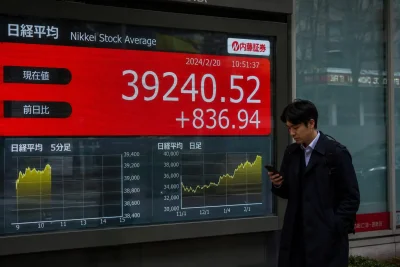
Shares of Mitsubishi UFJ Financial Group advanced significantly at the end of last week, propelled by political developments in Japan. The Tokyo-listed stock closed at 2,951.5 yen, marking a 2.5% gain, while its U.S.-traded ADRs jumped 4.9% to $19.14. The rally followed Prime Minister Sanae Takaichi's decisive election win, which market participants believe could accelerate policy shifts favoring equities over bonds.
Banking Sector Faces a Complex Yield Environment
The financial landscape for major banks like MUFG is nuanced. While rising Japanese government bond yields could potentially improve net interest margins, they also pose a significant risk by creating unrealized losses on existing low-yield bond holdings. MUFG itself projects these paper losses could reach 200 billion yen by the end of 2025. In response, the bank's management has outlined a strategy to cautiously rebuild its JGB portfolio as rates climb.
Analyst sentiment has turned bullish on the sector's prospects. Goldman Sachs raised its medium-term net profit forecasts, boosting estimates for MUFG, Sumitomo Mitsui Financial Group, and Mizuho by 20%, 11%, and 21%, respectively. Meanwhile, Simplex Asset Management's Toshinobu Chiba identified the 10-year JGB yield reaching 2.5% as a key level for strategic entry.
BOJ Policy and Currency Dynamics in Focus
The Bank of Japan remains a central focus. Following a rate hike to 0.75% in December, board member Kazuyuki Masu recently advocated for "timely" further increases, noting underlying inflation is nearing the 2% target. Markets are currently pricing in approximately a 60% chance of another hike in April. The yen's trajectory presents a double-edged sword for MUFG: a softer currency boosts the value of overseas earnings when repatriated but could also fuel import-driven inflation, encouraging the BOJ to maintain a tighter policy stance.
The immediate risk, as highlighted by analysts, is a repeat of January's volatility, where bond yields could spike too rapidly. A sudden surge might erase benefits from wider lending margins, as mark-to-market losses on bond books escalate and investor risk appetite diminishes.
Market stability will be tested through a series of government debt auctions scheduled for this week, beginning with a six-month Treasury discount bill on February 9, followed by 10-year inflation-linked JGBs on February 10, and a liquidity enhancement sale on February 13. The results will provide crucial insight into investor appetite in the post-election environment.