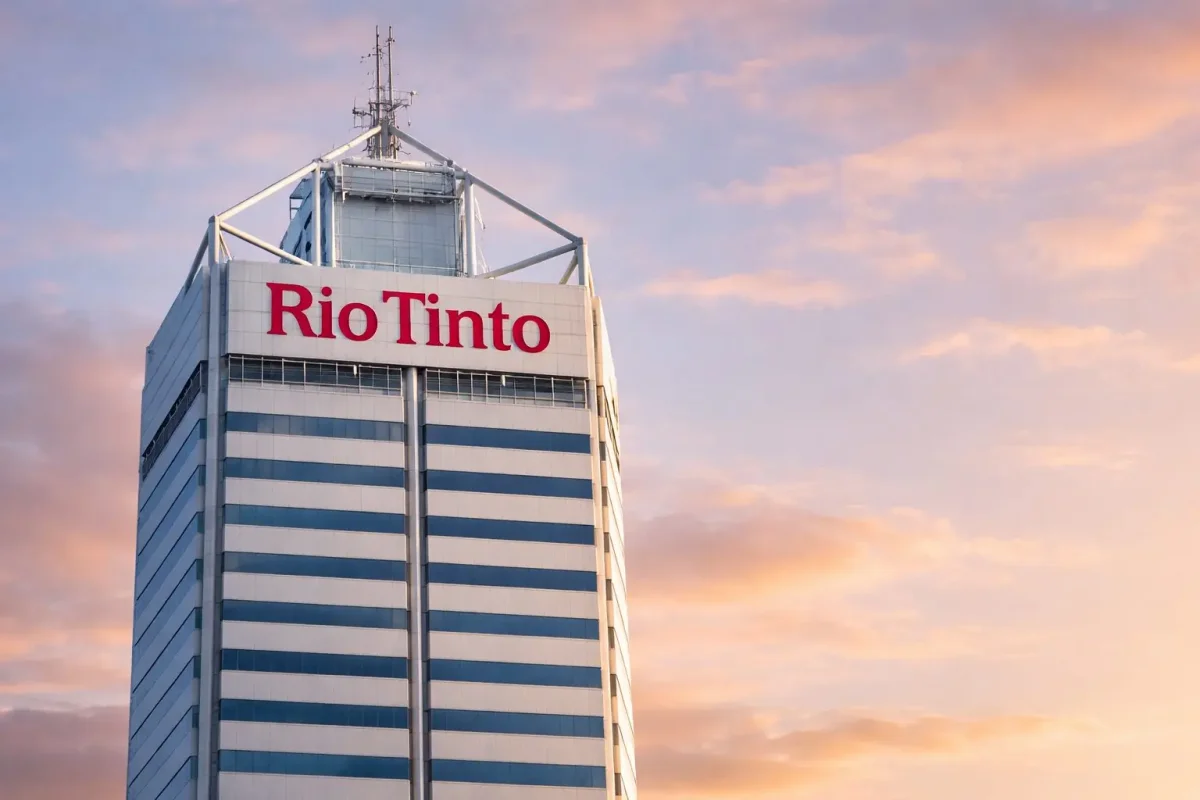
Shares of Rio Tinto (RIO.L) are under scrutiny as the London market prepares to open, following the company's decision to terminate discussions regarding a potential merger with rival Glencore. The move ends a revived proposal that could have established a mining behemoth with a combined valuation exceeding $200 billion. Rio Tinto's stock concluded Friday's session at 6,843 pence, marking a modest gain of 0.25% for the day but remaining approximately 5% below its 52-week peak of 7,228 pence.
Focus Shifts to Strategy and Upcoming Results
With the merger off the table, investor attention now turns to the strategic direction set by Chief Executive Simon Trott. The market is keenly awaiting clear communication on cost management, capital expenditure for growth, and shareholder returns. Analysts have noted the disciplined approach displayed by Rio's management. "It is a positive signal that Rio appears to be exercising restraint and avoiding overpayment," commented Andy Forster, a senior investment officer at Argo Investments. Portfolio manager John Ayoub of Wilson Asset Management suggested that Trott has effectively "passed his first significant test" in his leadership role.
The company has scheduled the release of its full-year 2025 financial results for February 19. This report will provide critical updates, including unit cost performance for the past year and forecasts for 2026. Any indication of rising operational expenses or a more conservative approach to capital returns could pressure a share price that is already trading near its recent highs. Rio has also outlined its final dividend timetable, with shares set to trade ex-dividend on March 5 and the payment date established for April 16.
Glencore's Path and Regulatory Constraints
For Glencore, which has faced pressure to expand its copper portfolio, the collapsed talks likely mean a renewed emphasis on asset sales rather than a transformative merger. The company is reportedly nearing the sale of a 70% stake in its Kazzinc zinc, lead, and copper operation, with analysts estimating the deal's value around $5 billion. This disposal could occur within the coming weeks.
Under the United Kingdom's Takeover Code, specifically Rule 2.8, Rio Tinto is now prohibited from re-engaging in merger discussions with Glencore for a period of six months. This cooling-off period was triggered by Rio's formal statement on February 5, in which it declared it was no longer considering a business combination after determining it could not reach an agreement that would deliver sufficient value to its shareholders. The company stated it evaluated the opportunity through the "disciplined lens" outlined during its Capital Markets Day last December.
Broader Market Volatility and Sector Dynamics
The operating environment for miners remains challenging. Metals markets have experienced significant turbulence, driven in part by a surge of retail trading activity in China. This has prompted exchanges to implement stricter regulations and increase margin requirements 38 times over two months, as noted by Reuters columnist Andy Home, elevating the risk of sharp price reversals.
Meanwhile, industry focus is intensifying on copper and cobalt supply chains, a key theme at this week's Mining Indaba conference in Cape Town. Geopolitical competition for critical minerals is escalating, with the United States employing offtake agreements—where financing is provided in exchange for future production rights—to vie with China for resources in Africa. In Guinea, a China-backed consortium is advancing the massive Simandou iron ore project, a development that has effectively compelled Rio Tinto to align its own efforts with the venture.
Iron Ore Outlook Remains Pivotal
Despite these developments, Rio Tinto's financial performance continues to hinge heavily on iron ore. The demand outlook for China's steel sector, the primary consumer, remains a volatile and crucial factor. Analyst Bai Xin of Horizon Insights projects global iron ore output to increase by 2.5% this year, with shipments to China growing by 36 to 38 million tons. This additional supply is expected to "pile pressure on prices," even as Chinese steel mills increasingly rely on export markets to manage domestic oversupply.
The immediate checkpoint for investors is February 19. Rio Tinto's annual results will deliver the hard numbers on costs and profitability, setting the tone for the stock's trajectory in the near term as it navigates a post-merger landscape, regulatory restrictions, and a complex global commodities market.