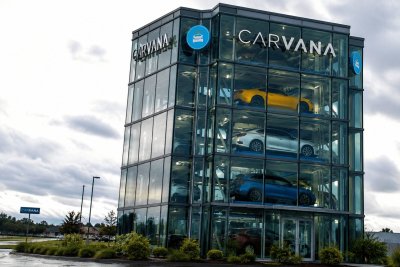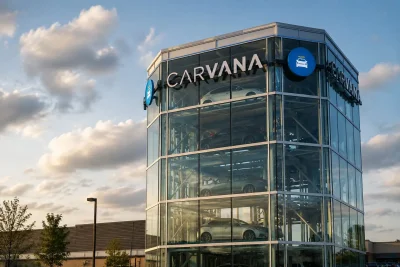
Carvana Co. faced renewed selling pressure in Friday's trading session, with its stock declining approximately 1.6% to $327.55. This movement extended losses following a significant drop after the online used-car retailer released its fourth-quarter financial results, which highlighted mounting operational expenses.
Profitability Under Pressure
The company reported that its gross profit per unit (GPU), a key metric for vehicle profitability, decreased to $6,427 during the fourth quarter, down from $6,427 a year earlier. This contraction was primarily driven by rising costs associated with vehicle reconditioning, including inspections, repairs, and detailing at its production sites, alongside steeper retail depreciation rates. Total quarterly expenses climbed to $2.16 billion.
Despite the cost headwinds, Carvana posted revenue of $5.603 billion for the quarter, fueled by the sale of 163,522 retail units. Its adjusted EBITDA, which excludes certain non-cash and interest expenses, rose to $511 million.
Market Reaction and Analyst Sentiment
The earnings report triggered a sharp market response, with shares plunging roughly 8% on Thursday. In its wake, several prominent brokerages, including J.P. Morgan and RBC Capital Markets, reduced their price targets for the stock. Analyst commentary pointed to the heightened sensitivity of premium growth stocks like Carvana to any perceived operational disappointments.
Short interest remains elevated, representing about 10.7% of the stock's free float, or approximately 14.84 million shares. This significant short position, combined with the stock's history as a retail investor favorite, can exacerbate price swings in both directions.
Management Outlook and Challenges
Looking ahead, Carvana's management expressed optimism for 2026, forecasting improvements in both retail units sold and adjusted EBITDA. The company also anticipates sequential growth in these metrics for the first quarter, assuming current business trends hold. However, executives acknowledged that the elevated cost dynamics seen in Q4 are expected to persist into Q1 2026.
On a recent earnings call, CFO Mark Jenkins addressed concerns raised by short-seller Gotham City Research, specifically denying allegations that the company sells loans to related parties. The company's business model, which relies on centralized vehicle reconditioning and direct-to-consumer delivery, continues to place a strong emphasis on balancing production speed, quality, and cost efficiency.
The primary risk for Carvana is that if reconditioning and depreciation costs remain high through the current quarter, per-unit profitability could be squeezed even if sales volume increases. This puts the spotlight squarely on the company's ability to demonstrate cost discipline in the coming months.
Investors are now focused on whether Carvana can successfully manage these cost pressures at the start of the year and avoid further margin erosion. The company is scheduled to report its next quarterly results around April 30, which will provide a critical update on its progress.