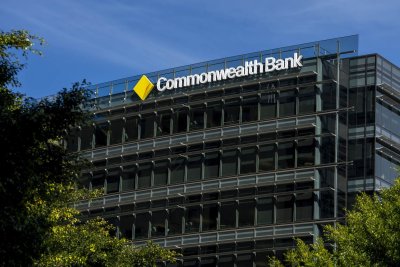
Shares of Commonwealth Bank of Australia (CBA) edged higher on Monday, closing at A$159.89, a gain of 0.6%. The stock traded within a range of A$159.22 to A$161.13 during the session, maintaining a position near the A$160 mark. This movement comes ahead of a significant week for the bank, with its half-year financial results and interim dividend announcement scheduled for Wednesday, February 11, 2026.
The broader Australian equity market provided a supportive backdrop, with the S&P/ASX 200 index surging 1.85% to close at 8,870.10. This robust performance helped the benchmark recoup a portion of the 2.03% decline recorded the previous Friday, indicating a rebound in overall market sentiment.
Investor focus is squarely on the upcoming earnings report, which will cover the bank's performance for the six months ending December 31, 2025. Analysts and shareholders alike will scrutinize key metrics, with net interest margin (NIM) expected to be a primary area of attention. This measure, representing the difference between the interest income generated from loans and the amount paid out on deposits, is a critical gauge of bank profitability. Additional scrutiny will fall on credit quality, funding costs, and the bank's operational expense management.
Concurrently, the board's decision on the interim dividend will be disclosed. The bank has confirmed an ex-dividend date of February 18, 2026. Shareholders on the register as of the record date of February 19 will be eligible for the payout, which is anticipated to be distributed on or around March 30, 2026. This timeline is a standard fixture in the bank's capital return calendar and is closely watched by income-focused investors.
In a related development, CBA, along with other major Australian lenders, has confirmed it will increase variable home loan interest rates by 25 basis points, effective February 13. This move is a direct response to the Reserve Bank of Australia's (RBA) recent decision to raise the official cash rate to 3.85% on February 3. The transmission of monetary policy through the banking sector is a key mechanism influencing household spending and economic activity.
RBA Governor Michele Bullock recently highlighted that private demand appeared stronger than anticipated in the latter part of 2025. Market participants will be parsing upcoming data on consumer spending, housing, and credit growth for signs of whether this demand is moderating in the face of higher borrowing costs. The health of the household sector is a paramount concern for banks, as it directly impacts loan performance and future credit demand.
As Australia's largest lender, Commonwealth Bank's results are often viewed as a bellwether for the financial sector. While its major competitors—Westpac, National Australia Bank, and ANZ—report on separate dates, CBA's performance provides an early read on industry-wide trends concerning funding pressures, loan book growth, and asset quality. The stock's 52-week trading range, between A$140.21 and A$192.00, underscores the volatility and macroeconomic sensitivity it has experienced over the past year.
Market dynamics remain complex, with sectors like technology and artificial intelligence continuing to influence broader risk appetite. CBA's Chief Economist, Luke Yeaman, noted that the ongoing AI investment theme is being supported by tangible profits and cash flow, rather than speculation alone. However, risks persist for the banking sector, including the potential for a sharper-than-expected contraction in net interest margins, rising operational costs, and an increase in loan delinquencies as higher interest rates strain household budgets.
Wednesday's report will therefore deliver crucial insights not only into Commonwealth Bank's standalone performance but also into the resilience of the Australian consumer and the profitability trajectory of the major banks. All eyes will be on the accompanying commentary from management for guidance on the outlook for the remainder of the fiscal year.