Shares of Yangzijiang Shipbuilding (Holdings) Ltd. experienced a notable recovery during Monday's afternoon trading session in Singapore, rising 2.5% to S$3.24. This upward movement partially offset the significant 6.2% decline the stock suffered in the previous Friday's session, which had closed at S$3.16. The rebound suggests some investor confidence returning to the counter, though market participants remain cautious ahead of key financial disclosures.
Trading Activity and Market Context
Trading volume for the shipbuilder reached approximately 14 million shares, a figure that aligns with its average turnover over the preceding three months. The stock traded within a narrow band between S$3.21 and S$3.26 throughout the day, indicating a degree of stability following the prior volatility. The broader Singapore market, as measured by the Straits Times Index, also posted gains, advancing 0.53% to close at 4,960.57.
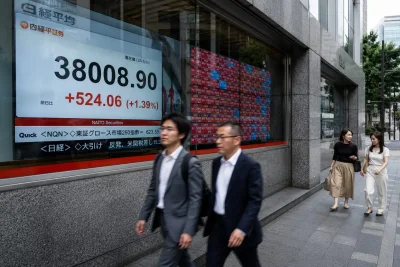
The positive sentiment in Singapore echoed a broader rally across Asian equity markets. This was largely fueled by political developments in Japan, where election results pointed toward a stable government majority, and a late-week recovery in U.S. semiconductor stocks. Analysts noted that the political outcome in Japan could facilitate more decisive fiscal stimulus measures, providing a tailwind for regional risk appetite.
Earnings Report Looms Large
All eyes are now firmly fixed on the company's upcoming earnings release, scheduled for March 4. The financial report is anticipated to provide critical updates that will shape the investment thesis for Yangzijiang. Investors and analysts are particularly keen to scrutinize details concerning new order bookings, progress on delivery schedules for existing contracts, and, most importantly, the trajectory of profit margins.
A central question for stakeholders is the health of the company's order backlog—the total value of shipbuilding contracts that have been secured but are not yet completed and delivered. The robustness of this backlog as 2026 approaches is a primary indicator of future revenue visibility and operational stability for the capital-intensive shipbuilding sector.
Cyclical Sensitivities and Macro Risks
As a Singapore-listed entity with significant shipbuilding and shipping operations, Yangzijiang's fortunes are closely tied to global trade flows and industrial demand. Its stock performance often serves as a barometer for investor risk appetite regarding cyclical and trade-dependent industries. Consequently, the share price remains susceptible to macroeconomic shifts.
Potential headwinds include any signs of softening in global trade volumes, tightening budgets among its customer base, or an unexpected surge in input costs such as steel and labor. Any of these factors could rapidly deteriorate market sentiment toward the stock, irrespective of concurrent movements in the wider market indices.
As the March 4 earnings date approaches, the S$3.20 price level is emerging as a technical focal point for traders. Market participants are expected to monitor both company-specific news and broader macroeconomic developments that typically influence cyclical stocks like Yangzijiang. The coming weeks will be crucial in determining whether the recent recovery marks a sustained reversal or merely a temporary respite within a longer-term corrective phase.