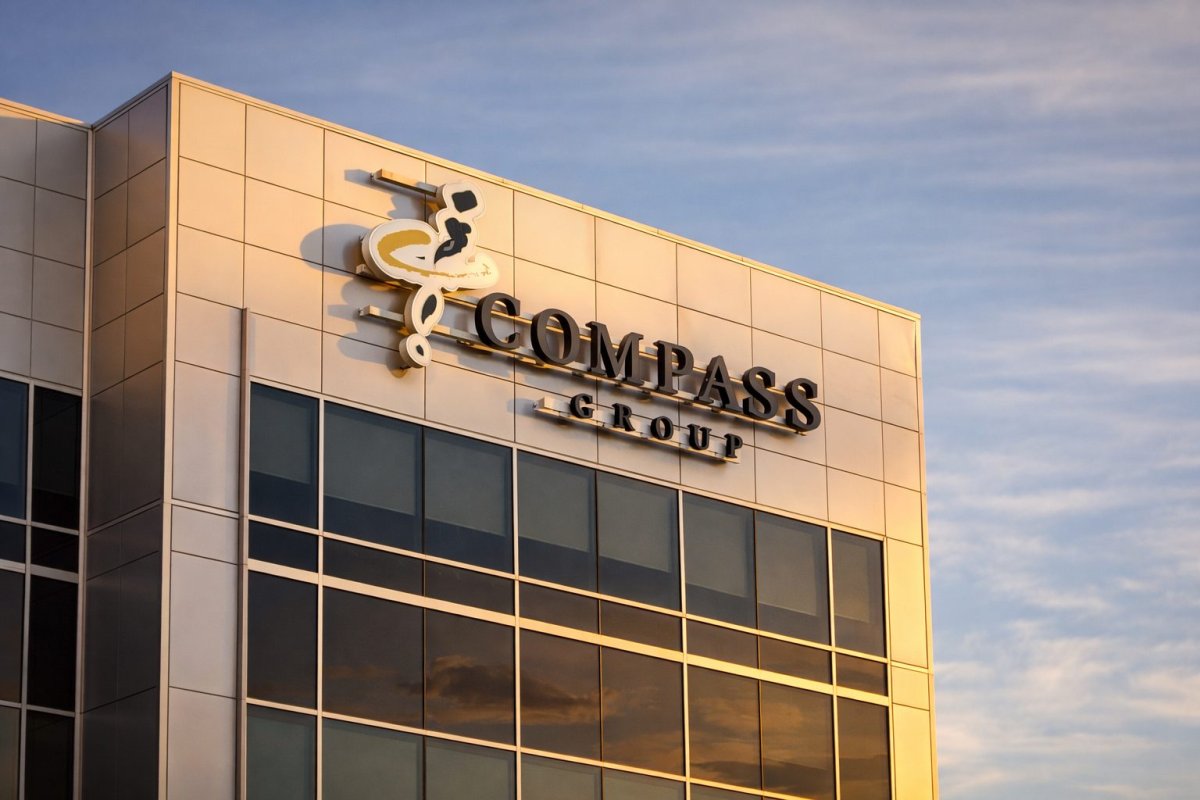
Shares of Compass Group PLC, the world's largest contract catering company, experienced minimal movement in Tuesday's trading session, hovering near a significant low point for the year 2026. The stock edged down 0.14% to close at 2,078 pence, following a more substantial 2.07% decline on Monday. Trading volume remained subdued as the shares fluctuated between 2,073 and 2,099 pence, reflecting continued investor caution.
Persistent Investor Concerns Over AI and Office Demand
Despite the company reporting robust first-quarter organic revenue growth of 7.3% and reaffirming its full-year 2026 profit guidance, market sentiment has failed to recover. The primary focus for investors, as highlighted by analysts, centers on the potential long-term threat that artificial intelligence (AI) poses to Compass's core business model. A significant portion of the company's revenue is derived from catering contracts for corporate offices, a sector seen as vulnerable to AI-driven efficiencies and potential white-collar job displacement. Analysts from JPMorgan noted that the recent operational update is unlikely to be sufficient to shift the negative narrative surrounding the stock.
CEO Dominic Blakemore emphasized a "strong start to the year with broad-based growth across every region and sector," pointing to successful outsourcing contract wins and expansion into new markets. The company maintains its target of approximately 10% underlying operating profit growth for 2026, having lifted forecasts due to improved margins and recent deals. However, the bearish thesis persists: a sustained decline in office occupancy or an acceleration in AI-related job cuts could directly impact workplace catering volumes, potentially causing investors to remain on the sidelines even if Compass meets its financial targets.
Strategic Shifts and Upcoming Financial Events
In response to the challenging market perception, Compass management has been actively communicating its strategic initiatives. The company recently circulated new investor materials detailing its "sectorisation" strategy. This approach involves structuring its global operations by end-markets—such as Corporate, Healthcare & Seniors, Education, Sports & Leisure, and Defense, Offshore & Remote—rather than by geographic regions. Management argues this allows for better alignment of services with specific client needs and drives more focused growth. A dedicated "Sectorisation Deep Dive" is featured on the company's investor relations page.
A notable technical change is scheduled for April 1, when Compass will switch the trading currency for its London-listed ordinary shares from British pounds to U.S. dollars. This move follows the company's earlier shift to reporting its financial results in dollars. The company stated the change reflects its global footprint and dollar-denominated revenue streams. Dividends, however, will continue to be declared in pounds sterling unless shareholders elect an alternative currency option.
Looking ahead, investors are awaiting several key dates. The company is set to announce its "GBP rate" ahead of a dividend payment scheduled for February 26. More comprehensive financial details will be revealed with the release of half-year results on May 11. These reports will be scrutinized for any signs that the company's growth momentum can outweigh the structural concerns currently dampening the share price.
The stock's performance continues to lag the broader FTSE 100 index, which managed to edge higher even as Compass shares fell. This divergence underscores the specific, company-related anxieties currently in play. While the fundamentals appear solid in the near term, the long-term shadow of technological disruption and shifting workplace trends is keeping a firm lid on investor enthusiasm for the catering giant.