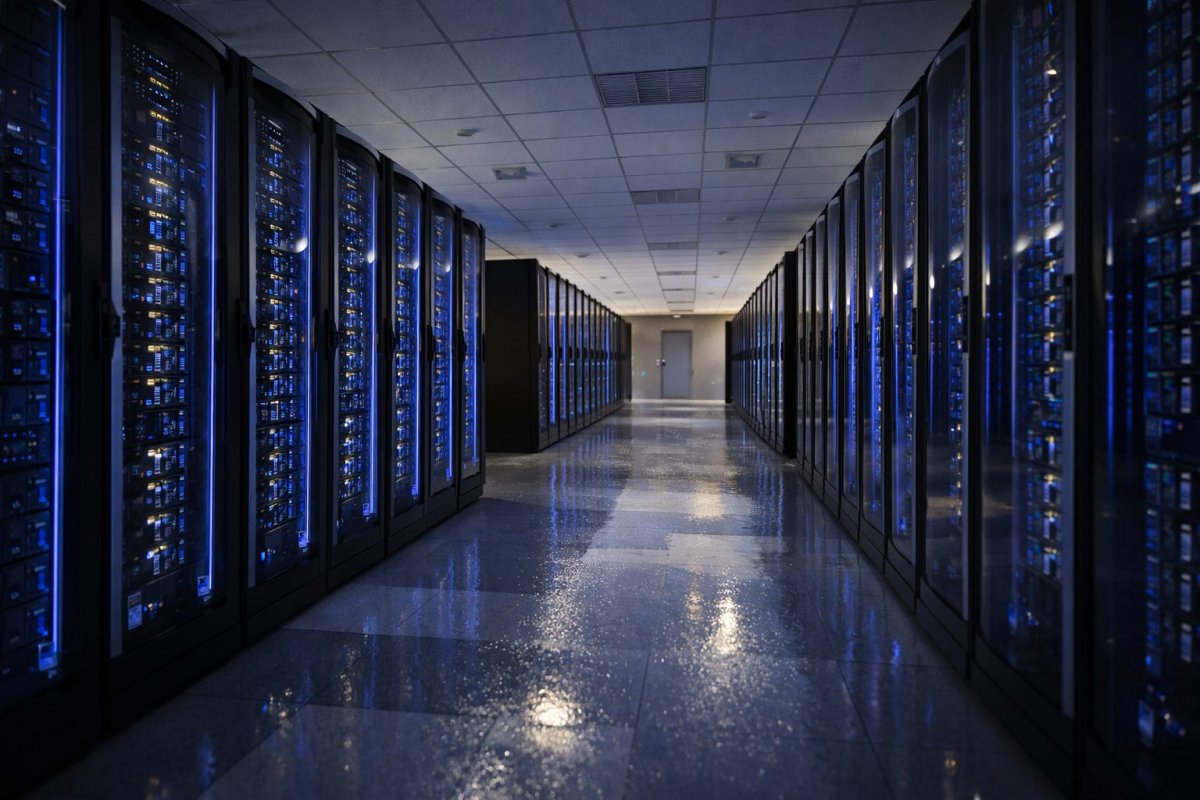
Data center and artificial intelligence stocks exhibited divergent performance as markets closed on Friday, February 15, 2026, setting the stage for a pivotal week of economic data and corporate earnings. The sector, a key driver of recent market momentum, failed to move in unison, highlighting selective investor sentiment amid macroeconomic crosscurrents.
Notable Stock Moves
Leading chipmaker Nvidia saw its shares decline 2.2% by the session's close. In contrast, hardware and infrastructure providers posted solid gains. Dell Technologies advanced 4.1%, while Arista Networks climbed 4.8%. Other sector components also traded mixed: Broadcom closed 1.8% lower, Hewlett Packard Enterprise gained 2.2%, Vertiv dipped 0.8%, and Eaton eased down 0.3%.
The broader market indices presented a muted picture. The S&P 500 managed a slight gain, while the Nasdaq Composite edged lower. This occurred despite the release of U.S. inflation data that came in softer than analyst forecasts. Large-cap technology and communication services stocks acted as a drag on both indexes.
Market Strategists Weigh In
Market participants are navigating a complex environment for high-multiple AI infrastructure stocks, closely watching Treasury yields and shifting expectations for Federal Reserve interest rate cuts. According to CME's FedWatch tool, traders slightly increased their expectations for a quarter-point rate cut by June following the inflation data.
"Large cap tech stocks continue to be an anchor on the market and any whiff of optimism continues to get rejected," noted Michael James, managing director at Rosenblatt Securities. Art Hogan, chief market strategist at B. Riley Wealth, characterized the current period as a "whack-a-mole" environment for market narratives, with a relentless stream of AI headlines causing sharp moves in individual names. Other strategists point to growing performance splits between the sector's leaders and laggards.
Sector Dynamics and Macro Pressures
The data center investment thesis appears increasingly nuanced. Analysts observed that capital flowed into segments of the AI buildout with clearer near-term revenue visibility, while some of the heavyweight chip stocks, perceived as carrying higher risk, faced investor hesitation. The hardware sector is no longer trading as a monolithic block.
Macroeconomic forces are applying immediate pressure. Data center projects are intensely capital-intensive, making related stocks highly sensitive to interest rate shifts. A decline in yields provides a lift to valuations, but a swift reversal can inflict just as rapid a correction.
Beneath the surface of the AI investment surge, a persistent concern lingers: the massive costs, evolving competitive landscape, and sometimes unclear return on investment. Should enterprise clients pull back or delay projects, the sector's powerful momentum could dissipate quickly.
Key Events on the Horizon
U.S. markets will reopen on Tuesday following the Presidents Day holiday. Investor attention will quickly turn to a series of significant events later in the week.
Retail giant Walmart is scheduled to release its quarterly earnings before the market opens on Thursday, February 19, at approximately 6 a.m. Central Time. A live conference call with management will follow at 7 a.m. Central.
The week's main macroeconomic event arrives on Friday, February 20. The U.S. Bureau of Economic Analysis will release its initial estimate for fourth-quarter Gross Domestic Product (GDP). Concurrently, it will publish the latest Personal Consumption Expenditures (PCE) price index, the Federal Reserve's preferred gauge for tracking inflation. Also due that morning is the University of Michigan's final consumer sentiment reading for February.
These reports will provide critical insights into the strength of the U.S. economy and the trajectory of inflation, directly influencing expectations for monetary policy and setting the tone for equity markets, particularly for rate-sensitive sectors like technology and infrastructure.