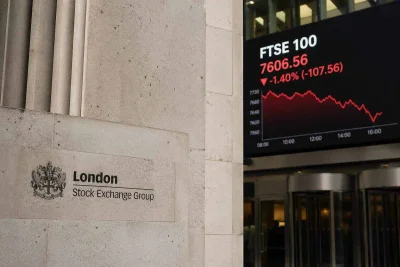
Shares of Diageo, the global spirits conglomerate, edged lower during Thursday's trading session in London, continuing a downward trend that has persisted for multiple sessions. The stock declined 0.3 percent to 1,756 pence at market open, following a more substantial 2 percent drop recorded on Wednesday. This movement reflects ongoing investor caution as the company approaches a significant financial reporting milestone.
Upcoming Financial Disclosure
All eyes are on Diageo's scheduled release of interim results covering the six months ending December 31, 2026, set for February 25. The company has arranged a webcast and question-and-answer session for that date, featuring newly appointed Chief Executive Officer Dave Lewis and Chief Financial Officer Nik Jhangiani. This will mark Lewis's first earnings presentation since assuming leadership on January 1, following an external search for a successor to the previous CEO.
Market Context and Sector Performance
The broader European equity market displayed modest weakness during the session, with the STOXX 600 index declining 0.1 percent. Market participants digested a mixed batch of corporate earnings reports while monitoring renewed geopolitical tensions between the United States and Iran. Within the beverage sector, competitor Pernod Ricard reported a 5.9 percent decline in first-half like-for-like sales, which exclude currency fluctuations and acquisition effects. Pernod's CEO Alexandre Ricard noted to Reuters that while challenges persist in the U.S. and China, other global markets continue to perform.
Investors across the spirits industry are closely watching for indications that consumer demand may be stabilizing following a post-pandemic slowdown. The sector has faced headwinds as distributors reduce inventory levels through a process known as destocking, which could pressure near-term financial performance. Additional concerns include the potential for deeper discounting in major markets and any deterioration in cash generation that might affect debt management, share buyback programs, and dividend distributions.
Recent Challenges and Outlook
Diageo faces scrutiny after reducing its annual outlook in November 2025, citing softer consumer demand in both the United States and China. Since that downward revision, shareholders have been searching for evidence that the decline has reached its nadir. The upcoming results will provide crucial insight into whether these challenges persist or show signs of abatement.
Market observers note several potential risk factors. Should destocking activities continue at current levels, the next financial update could disappoint investors. Furthermore, any indication of increased promotional activity or price reductions in core markets would likely be viewed negatively. The company's cash flow performance remains particularly important, as weakness could refocus attention on leverage ratios and capital allocation flexibility.
Geographic Considerations
While the U.S. and China markets dominate investor concerns, other regions offer potential growth opportunities. India remains a focus for its expansion narrative, though regulatory developments often accompany such growth. Notably, Bloomberg reported on Wednesday that Pernod Ricard, a significant competitor to Diageo in India, is considering taking its Indian subsidiary public through an initial public offering.
The Indian market represents both substantial opportunity and complexity for global spirits companies, with evolving regulatory frameworks and demographic trends creating a dynamic operating environment. Diageo's performance in emerging markets like India could help offset challenges in more mature regions.
As the February 25 reporting date approaches, trading activity in Diageo shares is likely to reflect shifting expectations about the company's near-term trajectory. The results will provide the first comprehensive look at performance under new leadership and may set the tone for the remainder of the fiscal year. Investors will be particularly attentive to management commentary on demand trends, inventory levels, and guidance for the second half of the financial period.