Shares of Dutch Bros Inc. experienced a significant reversal in after-hours trading on Thursday, February 12, 2026, surging 12.3% to $57.07. This rally followed a 5.0% decline during the regular session, which closed at $50.82. The sharp move was triggered by the company's release of fourth-quarter financial results that exceeded Wall Street expectations, coupled with ambitious long-term growth targets.
Strong Quarterly Performance Drives Optimism
The drive-thru coffee chain reported robust financial metrics for the final quarter of 2025. Revenue climbed 29% year-over-year to $443.6 million, surpassing analyst estimates of $423.79 million. A key indicator of existing store health, systemwide same-shop sales, increased by 7.7% for locations operational for at least 15 months. Profitability metrics also showed strength, with net income reaching $29.2 million and adjusted EBITDA jumping 48.8% to $72.6 million. On a per-share basis, adjusted earnings came in at 17 cents, nearly double the consensus forecast of 9 cents.
Ambitious 2026 Guidance and Expansion Plans
Looking ahead, Dutch Bros provided detailed financial projections for the full year 2026. The company anticipates revenue in the range of $2.0 billion to $2.03 billion. This forecast sits just below the current analyst consensus of approximately $2.04 billion. Management expects same-shop sales growth to moderate to a range of 3% to 5%, with adjusted EBITDA projected between $355 million and $365 million. A major component of the growth strategy involves aggressive physical expansion, with plans to open at least 181 new shops during the year. Capital expenditures are budgeted between $270 million and $290 million to support this rollout.
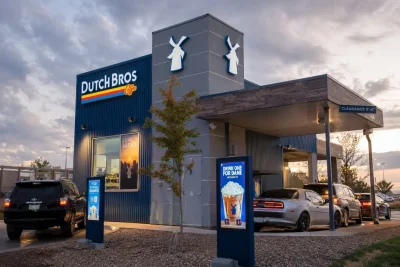
By the end of 2025, Dutch Bros operated 1,136 locations across 25 states. The leadership expressed strong confidence in its long-term target of reaching 2,029 shops by 2029. CEO Christine Barone cited "the right energy and the right strategy," while CFO Josh Guenser noted confidence in the expansion plan had "never been higher."
Operational Metrics and Cost Management
On the operational front, the company highlighted that mobile orders constituted 14% of total transactions in the fourth quarter, indicating growing digital engagement. For the upcoming first quarter, Dutch Bros guided same-shop sales growth between 4% and 6%. Barone also pointed to strategic shifts in real estate, noting a move to build-to-suit leases has helped reduce capital spending per new location. She remarked on favorable market conditions, stating, "we are really seeing great real estate availability."
Market Context and Investor Sentiment
The after-hours surge represents a dramatic shift in sentiment for a stock that had declined roughly 17% year-to-date prior to the earnings announcement. This pre-earnings weakness set the stage for a pronounced reaction to the quarterly beat and forward guidance. Dutch Bros, while lacking the scale of a global competitor like Starbucks, has carved out a niche with its rapid expansion and drive-thru-focused model, attracting investors interested in the specialty coffee and quick-service restaurant segments.
However, the stock often trades in correlation with broader trends in the consumer discretionary and restaurant sectors, not solely on its own fundamentals. Key challenges remain, including volatility in coffee commodity prices and persistent labor cost pressures. Any slowdown in customer traffic or underperformance at new locations could quickly pressure margins, underscoring the risks embedded in its high-growth narrative.
What Investors Are Watching Next
The immediate focus for the market is whether the after-hours gains will be sustained when regular trading resumes on Friday, February 13. Analysts will be scrutinizing the company's 2026 guidance, particularly the moderated same-shop sales outlook, against current valuations. The primary metrics for assessing ongoing execution will be transaction momentum—encompassing both traffic and average ticket size—and the pace and success of new store openings. The company's ability to manage input costs while expanding its footprint will be critical to maintaining its growth story and investor confidence in the quarters ahead.