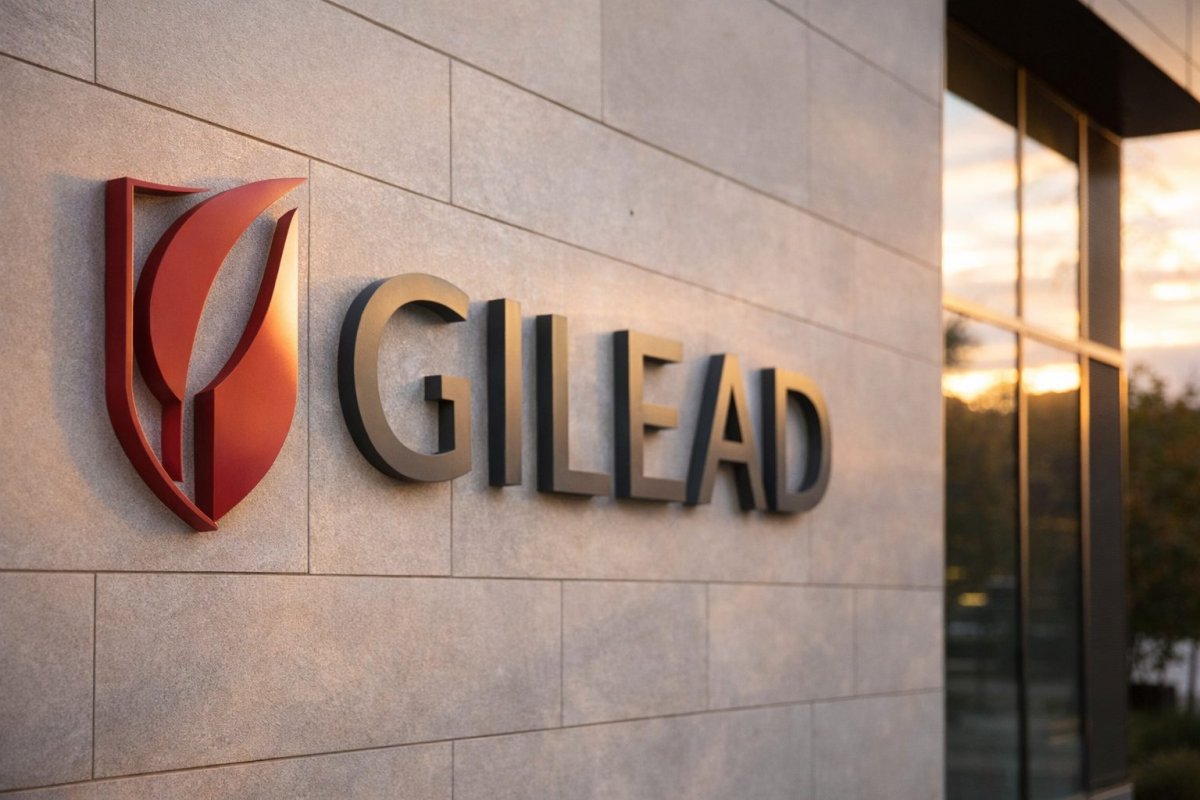
Shares of Gilead Sciences Inc. (GILD) retreated 1.8% during Thursday's trading session, closing at $152.94. This decline pared back a significant 5.82% surge from the previous day, which saw the stock close at $155.80 on elevated volume. The stock traded within a range of $150.92 to $156.20 throughout the session.
Guidance and Yeztugo Forecast Drive Volatility
The price action follows the biopharmaceutical firm's recent financial update, where it issued its 2026 outlook. A key component of that guidance was the sales projection for Yeztugo, its novel twice-yearly injection for HIV prevention. Gilead forecast approximately $800 million in Yeztugo sales for 2026, a figure that fell short of the consensus analyst estimate circulating on Wall Street. The company's broader full-year sales and profit ranges also came in slightly below market expectations.
This forecast is critical for investors, as Yeztugo is viewed as a central growth driver for Gilead's next chapter. The market has begun treating the drug's commercial ramp-up as a frequent performance indicator, making the stock sensitive to incremental updates on demand signals, insurance coverage, and pricing assumptions.
Fourth-Quarter Performance and Product Breakdown
For the fourth quarter, Gilead reported a 5% year-over-year increase in total revenue, reaching $7.9 billion. Non-GAAP earnings stood at $1.86 per share. The company's HIV franchise showed strength: sales of Biktarvy grew 5% to $4.0 billion, while Descovy revenue climbed 33% to $819 million. In contrast, revenue from Veklury, its COVID-19 antiviral, declined 37% to $212 million. Chief Executive Officer Daniel O'Day highlighted the "successful U.S. launch of Yeztugo" as a positive note to close the year.
Despite the lighter-than-hoped Yeztugo outlook, several brokerage firms raised their price targets on Gilead's stock following the earnings report. Wolfe Research increased its target to $170 from $155, maintaining an Outperform rating. BMO Capital lifted its target to $160, and BofA Securities raised its view to $162. Analysts acknowledged a strong commercial quarter but noted ongoing headwinds.
Analyst Perspectives on Risks and Forecasts
Brian Abrahams of RBC Capital Markets described the quarter as "strong" but pointed to "most-favored-nation" pricing policies—a government tool to cap drug costs—as a potential challenge. He noted the Yeztugo forecast "fell short of the 'whisper' investor expectation" of around $1 billion. Similarly, Salim Syed of Mizuho suggested Gilead was "probably being conservative here … though some may have wanted a higher number."
The overarching market narrative, however, appears focused on pricing and policy risk. If healthcare payers push back more forcefully than anticipated, or if regulatory actions in Washington further tighten reimbursement rates, Yeztugo's growth trajectory could be softer than currently modeled by investors. This concern is amplified by competitive pressures in Gilead's cell therapy business and the continued decline in COVID-19-related sales, which provide less earnings cushion should the Yeztugo launch underperform.
Looking ahead, investors are awaiting Gilead's increased quarterly dividend of $0.82 per share, payable on March 30 to shareholders of record as of March 13. Traders will also monitor early demand indicators for Yeztugo to assess whether it is on a path to meet the company's 2026 sales target. The stock's performance on Thursday notably lagged behind peers like Johnson & Johnson (JNJ) and Pfizer (PFE) on a mixed day for the broader healthcare sector (XLV).
In a regulatory filing, Gilead confirmed it submitted its earnings release as an exhibit to a Form 8-K and reiterated its practice of reporting both GAAP and non-GAAP financial figures, with the latter excluding items the company considers non-recurring.