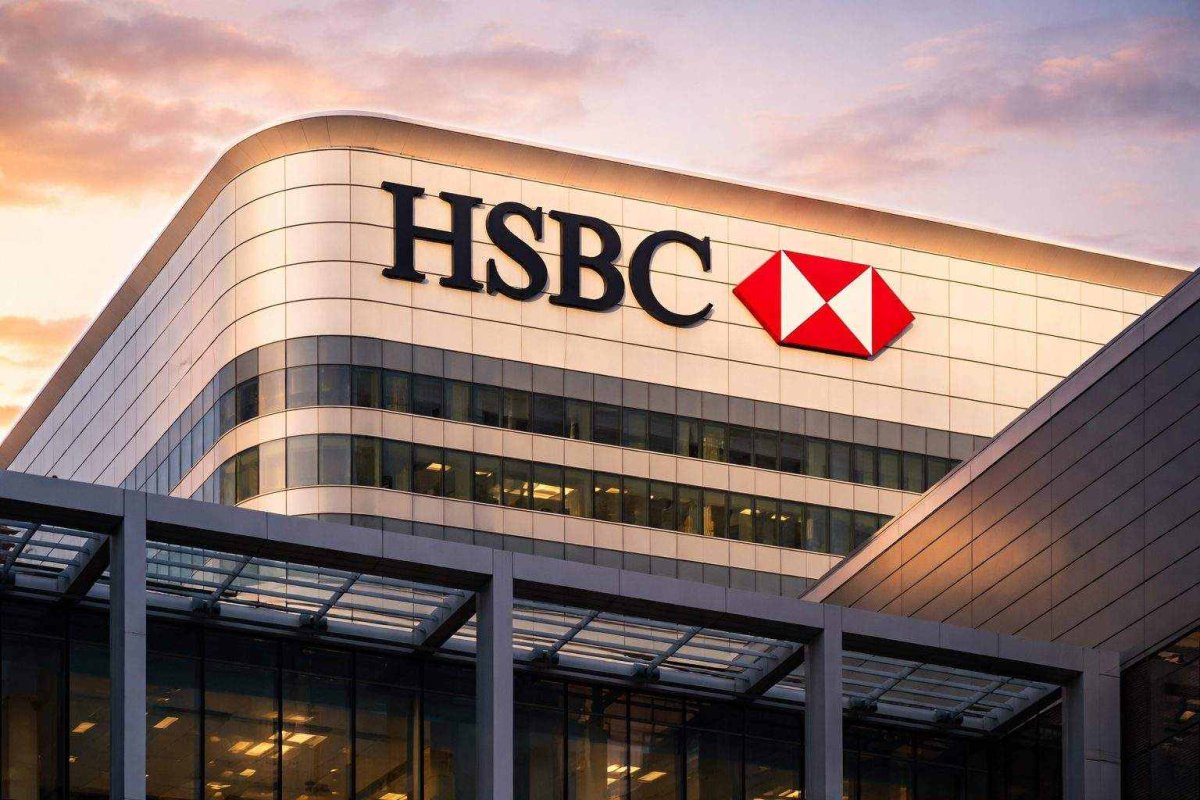
Shares of HSBC Holdings plc saw modest gains during early Thursday trading in London, as investor sentiment toward UK financials improved amid shifting monetary policy expectations. The stock advanced approximately 0.3 percent, trading near 1,302 pence, continuing momentum from a strong prior session.
Inflation Data Fuels Rate Cut Speculation
The positive movement follows a significant macroeconomic development on Wednesday. Official data revealed that UK inflation slowed to 3.0 percent in January, marking its lowest level in nearly a year. This cooling in price pressures has intensified market speculation that the Bank of England could begin cutting its benchmark interest rate as early as March. The central bank's next policy announcement is scheduled for March 19.
"Investors keep piling into UK assets," noted Axel Rudolph, a senior financial analyst at IG, reflecting the bullish mood triggered by the inflation report. This environment propelled the FTSE 100 index to a record closing high of 10,686.18 on Wednesday, a gain of 1.23 percent. The blue-chip index secured its second consecutive record finish.
HSBC Outperforms Ahead of Key Report
HSBC notably outperformed the broader market in the previous session. The banking giant's shares closed Wednesday up 2.17 percent at £12.98. The stock opened Thursday's session at 1,306.8 pence and traded in a range between roughly 1,296 and 1,307 pence in early activity, according to market data.
The uplift was part of a broader rally for UK-listed banks. Peer Standard Chartered plc also climbed, finishing Wednesday's session up 2.43 percent at £18.10. In the United States, HSBC's American Depositary Receipts (ADRs) concluded trading on Wednesday with a 1.77 percent gain at $88.10, after reaching an intraday peak of $88.56.
All Eyes on Annual Results and Dividend
The market's focus is now squarely on HSBC's upcoming annual results. The bank is scheduled to release its full-year financial report for 2025 on Tuesday, February 25, at 4:00 a.m. Greenwich Mean Time. A conference call for investors and analysts will follow later that morning.
A key area of scrutiny will be management's commentary on capital returns. Investors are keenly awaiting potential guidance on shareholder payouts, including the dividend, as the interest rate environment evolves. Executives' outlook for the 2026 financial year will also be closely parsed for signs of how they expect to navigate a potential shift toward lower borrowing costs.
Navigating a Shifting Rate Environment
The path forward for bank stocks like HSBC is nuanced. While lower interest rates can stimulate economic activity and loan demand, they also typically compress the net interest margin—the difference between the interest income generated by banks and the amount paid out to depositors. This is a crucial profitability metric for lending institutions.
Furthermore, the market reaction to the annual results will be sensitive to any unexpected developments. A sharper-than-anticipated increase in credit loss provisions or a significant rise in operational costs could quickly reverse recent share price gains, even against a supportive macroeconomic backdrop.
The performance of banking sector equities is likely to remain closely tied to macroeconomic signals in the coming weeks. Beyond the Bank of England's March decision, new data on economic growth and the labor market will be critical in shaping the trajectory for monetary policy and, by extension, financial stocks.