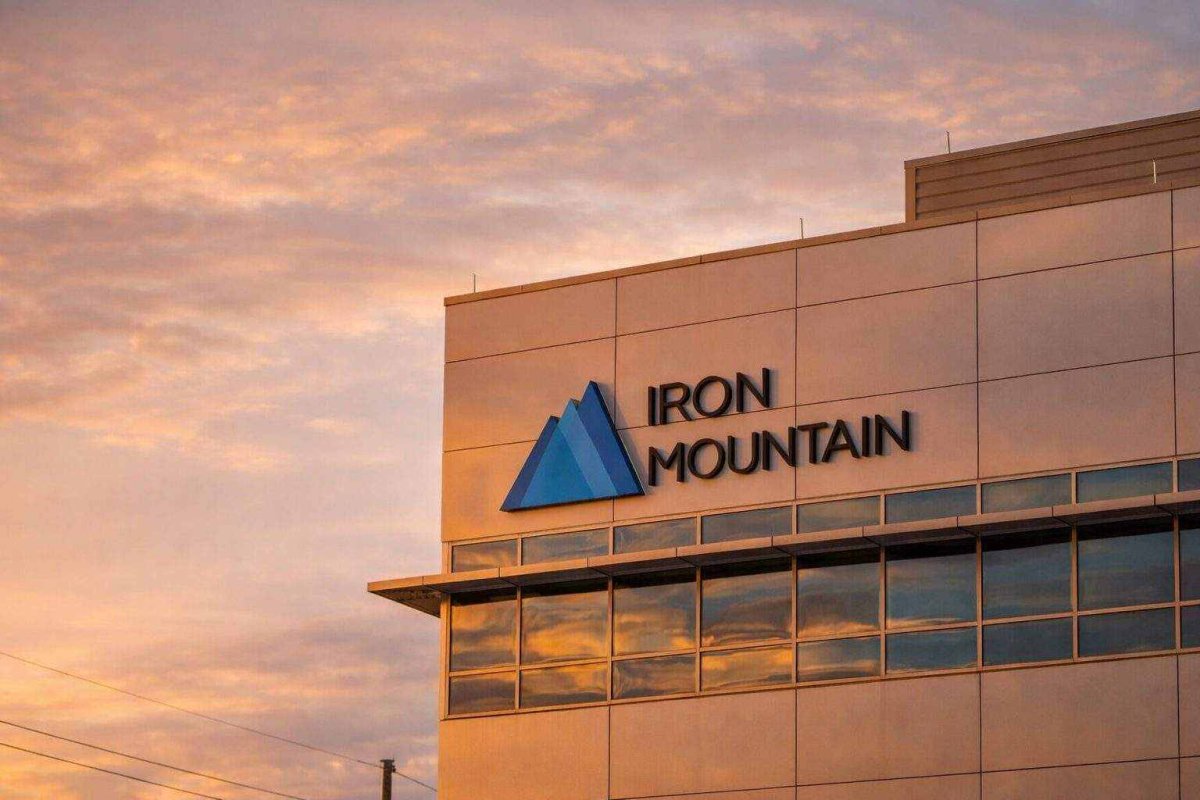
Iron Mountain Incorporated saw its stock advance 3.6% on Friday, closing at $109.83 and approaching its 52-week high. The move extends a six-session winning streak for the company, which is increasingly viewed as a key player in the data center infrastructure space.
Financial Forecast and Sector Dynamics
The company provided a bullish outlook, projecting 2026 revenue in the range of $7.625 billion to $7.775 billion. Adjusted funds from operations (AFFO) per share are expected to land between $5.69 and $5.79. CEO William Meaney highlighted "strong data center leasing" as a primary growth driver, with plans to bring 400 megawatts of new capacity online within two years.
The broader data center sector received a boost from macroeconomic data. January's U.S. consumer inflation reading came in slightly below forecasts, easing pressure on interest rates. The 10-year Treasury yield fell approximately 5.6 basis points to 4.048%, supporting rate-sensitive segments of the market.
Mixed Performance Among Peers
While Iron Mountain rallied, sector giant Equinix Inc. saw its shares dip 0.2% to $956.19. Earlier in the week, Equinix issued its own 2026 revenue guidance of $10.123 billion to $10.223 billion. Digital Realty Trust, another competitor, posted a modest gain of 0.4%, closing at $180.97.
Investors continue to evaluate data center operators through the lens of AFFO, a key cash-flow metric for real estate investment trusts. This measure helps assess operational performance amid significant capital expenditures for new construction.
Market Context and Forward Look
Trading activity was set to pause for the Washington's Birthday holiday on Monday. Investors are now looking ahead to the release of the Federal Reserve's late-January meeting minutes on February 18 for further clues on monetary policy. Additionally, Nvidia's quarterly results on February 25 are anticipated to serve as a barometer for AI-related investment and data center spending.
Despite soaring demand fueled by artificial intelligence, the industry faces practical constraints, including limited power availability, grid bottlenecks, and supply chain delays for critical components like generators. These factors could potentially impact project timelines and returns.