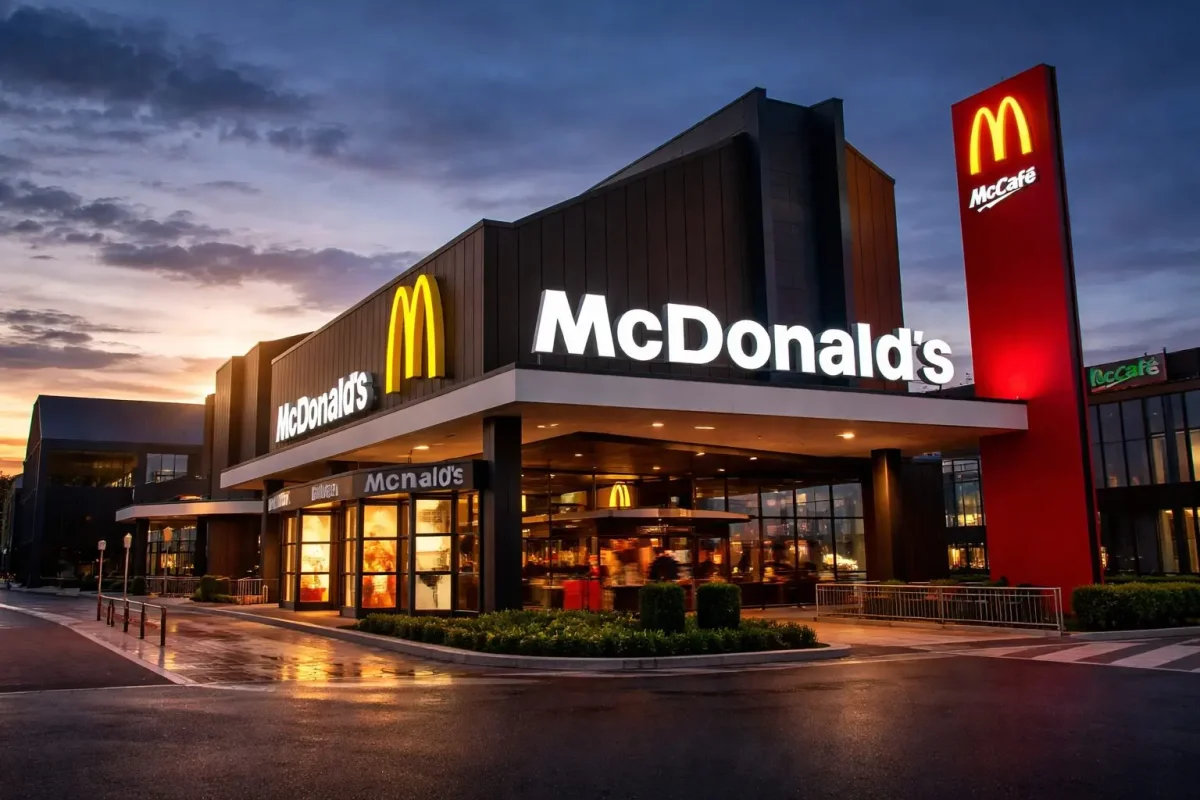
Shares of McDonald's Corporation experienced a notable decline in after-hours trading on Friday, February 13, 2026, shedding approximately 1.4% to settle at $327.58. This movement followed a regular trading session where the stock fluctuated between $326.57 and $335.51, with a volume of roughly 3.6 million shares changing hands.
CEO Share Sale Under Pre-Arranged Plan
A key development influencing after-hours sentiment was a regulatory filing revealing that Chief Executive Officer Chris Kempczinski initiated plans to sell 26,277 shares of the company. The transaction, valued at approximately $8.49 million based on prevailing market prices, was executed pursuant to a Rule 10b5-1 trading plan. Such plans allow corporate insiders to establish predetermined schedules for selling shares, often to avoid accusations of trading on non-public information. The filing indicated these shares originated from a recent option exercise.
Strong Quarterly Results Amid Market Scrutiny
The stock movement occurred against the backdrop of the company's recently reported fourth-quarter financial performance. McDonald's announced global comparable sales growth of 5.7% for the period, notably surpassing Wall Street expectations which, according to LSEG data, had anticipated a 3.7% increase. U.S. same-store sales were particularly robust, rising 6.8%. The company posted quarterly revenue of $7.01 billion, with diluted earnings per share reaching $3.03, or $3.12 on an adjusted basis after excluding certain one-time charges.
In a move signaling confidence in its financial stability and commitment to shareholder returns, the fast-food giant's board authorized a 5% increase in its quarterly dividend, raising it to $1.86 per share. The company confirmed a payout date of March 17, 2026, for shareholders of record as of March 3.
Analyst Upgrade and Strategic Focus
Adding a layer of complexity to the market's reaction, the investment research firm Argus upgraded its rating on McDonald's stock from "hold" to "buy," concurrently establishing a price target of $380. Analysts cited the company's strategic emphasis on value menus, active promotional campaigns, and continued investments in digital infrastructure and brand development as primary catalysts for the upgrade.
This focus on value presents a central dilemma for investors and the industry at large. As consumer budgets, particularly among lower-income demographics, face pressure, large chains like McDonald's often serve as a bellwether for discretionary spending. The critical question is whether aggressive discounting and value bundles can sustain customer traffic without eroding profit margins. On a recent earnings call, CEO Kempczinski addressed this directly, stating, "We don't subsidize pricing on a permanent basis," and noted the company is scaling back support for franchisees' "extra value" deals. Industry observers, such as Jim Sanderson of Northcoast Research, have emphasized that maintaining traffic will require McDonald's to "continue to grind away with marketing and value promotions."
Competitive Landscape and Forward Guidance
The competitive environment remains challenging. While McDonald's posted solid results, other players have struggled. For instance, Wendy's reported a significant decline in U.S. same-restaurant sales for the fourth quarter and provided a 2026 earnings forecast that fell substantially short of analyst estimates.
Looking ahead, McDonald's provided guidance for 2026, targeting the opening of approximately 2,600 new restaurants worldwide. The company also expects its operating margin to remain in the mid-to-high 40 percent range. However, risks are evident. The company faces potential headwinds if consumer interest in value deals wanes, if competitors engage in deeper price undercutting, or if persistent cost inflation for ingredients and labor squeezes profitability. Furthermore, the defensive premium often afforded to stocks like McDonald's during economic uncertainty can quickly dissipate with shifts in interest rates or broader market risk appetite.
Ultimately, the after-hours dip reflects the market's immediate reaction to the CEO's share sale filing, even as investors digest a mix of strong fundamental results, a bullish analyst call, and ongoing strategic questions about the balance between value offerings and margin preservation in the evolving fast-food landscape.