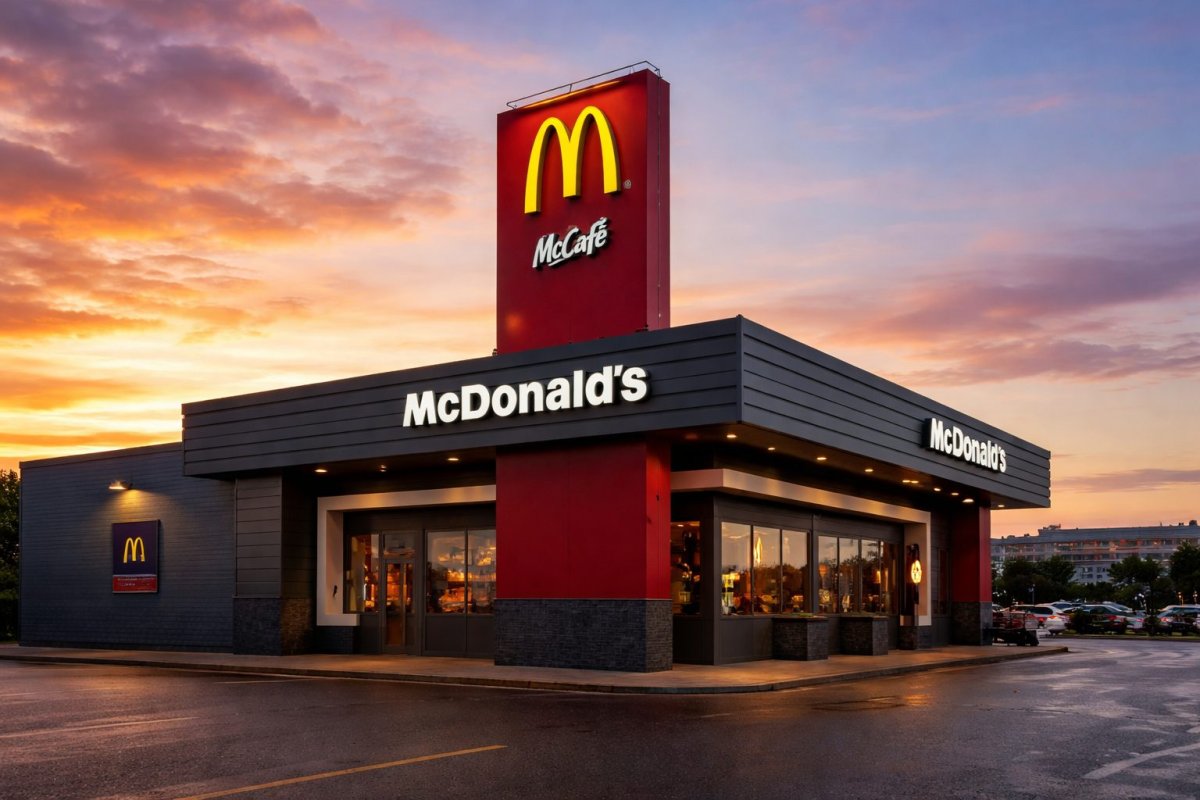
Shares of McDonald's Corporation experienced a modest decline in Wednesday's trading session as the market awaited the fast-food giant's quarterly financial results, scheduled for release later in the day. The stock retreated by approximately 0.4%, closing at $324.70, a move that contrasted with a relatively flat performance from the broader market, as tracked by the SPDR S&P 500 ETF Trust (SPY), and underperformance in the consumer discretionary sector. Notably, competitors such as Yum! Brands and Restaurant Brands International traded higher, while Wendy's also posted gains.
The upcoming earnings report is a significant event for market observers, as McDonald's is often viewed as a bellwether for U.S. consumer health. Its extensive value menu and massive global footprint can provide a buffer when economic pressures cause diners to cut back, yet the chain can also be an early indicator when price increases begin to deter customer visits. This dual role makes its performance metrics a critical data point for gauging consumer resilience and spending trends.
Options market activity suggests traders are anticipating heightened volatility surrounding the earnings announcement. Current pricing implies an expected stock price movement of roughly 3% in either direction by the end of the trading week. According to consensus estimates compiled by Visible Alpha, analysts are projecting adjusted earnings per share of $3.04 on revenue of $6.83 billion. A key metric, comparable sales growth for restaurants open at least one year, is forecast to increase by 3.7%. The stock has appreciated around 6% year-to-date, with UBS analysts, among others, anticipating solid sales growth both domestically and internationally. A primary focus for investors will be assessing whether the company's value-oriented promotions are successfully driving customer traffic.
In a separate corporate development, McDonald's announced the addition of Ford Motor Company Chief Executive James D. Farley Jr. to its board of directors, effective February 4. This appointment expands the board to 12 members. McDonald's CEO Chris Kempczinski stated that Farley brings "invaluable experience balancing innovation with operational excellence," while Farley himself praised McDonald's as "one of the most admired and recognized brands in the world."
The broader macroeconomic environment for consumer-facing companies has been uneven. Recent data from the U.S. Labor Department showed a gain of 130,000 nonfarm payrolls in January, with the unemployment rate at 4.3%. However, annual benchmark revisions resulted in a downward adjustment of 862,000 jobs to the March 2025 employment level on a not seasonally adjusted basis, adding complexity to the labor market narrative.
For McDonald's specifically, market participants will scrutinize U.S. traffic trends and average check size, evaluating whether promotional activity is boosting sales volume without unduly pressuring profit margins. Management commentary on digital ordering initiatives, loyalty program engagement, and delivery services often has an outsized impact on the stock price, sometimes more than minor deviations from headline profit expectations.
Persistent cost pressures remain a background concern for the industry. A recent Financial Times report highlighted rising beef costs as a recurring challenge for burger chains. Analysis from Bank of America Global Research estimates that beef constitutes nearly 20% of the commodity basket for hamburger operators, with red meat representing a similar proportion of input costs for McDonald's.
The primary risk for optimistic investors is that a strong quarterly performance may already be partially reflected in the stock's current valuation, which is near recent highs. Any indication of softening U.S. customer traffic, or a cautious tone from management regarding early 2026 demand, could prompt a sell-off—particularly if the market perceives that the company's value-focused strategy is sustaining visit counts at the expense of profitability.
Investors will also be attentive to any potential shifts in the company's strategic approach to pricing, promotions, and franchisee economics, areas that can require rapid adjustment when consumer behavior becomes more selective. The next major catalyst will be management's assessment of current demand and the forward-looking guidance provided during the conference call scheduled for 4:30 p.m. Eastern Time.