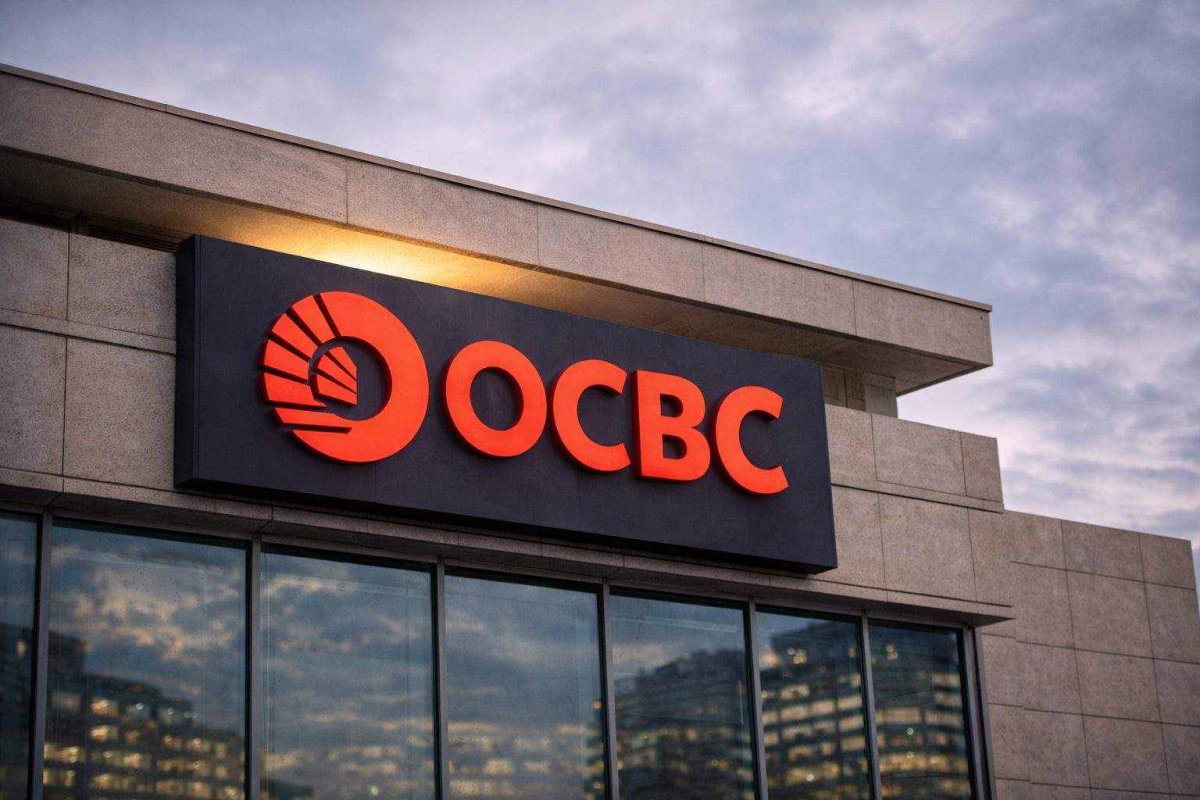
Shares of Oversea-Chinese Banking Corporation (OCBC) advanced on Monday, gaining approximately 0.9% to close at S$21.42. This upward movement occurred against a backdrop of mixed performance for Singapore's major banking institutions, as investors recalibrated their positions ahead of a crucial earnings season. The broader Straits Times Index managed a gain of 0.6%, providing a supportive market environment.
DBS Earnings Miss Shifts Investor Focus
The immediate catalyst for the sector rotation was the fourth-quarter 2025 earnings report from DBS Group, which fell short of analyst expectations. DBS reported a 10% year-on-year decline in net profit, sending its shares down 1.1%. A key factor cited was a contraction in net interest margin (NIM), which narrowed to 1.93% amid a softening local interest rate environment. While the bank announced an increase to its ordinary dividend and introduced a capital return dividend—pledging to continue such returns through financial years 2026 and 2027—the market reaction was dominated by concerns over the profit miss and a disappointing performance in markets trading income.
DBS CEO Tan Su Shan's cautionary remarks, advising investors to "buckle up" for a volatile year ahead, further underscored the challenging operating landscape. This combination of factors prompted a tactical shift among traders, with capital flowing out of DBS and seeking opportunities elsewhere in the sector, notably into OCBC ahead of its own results.
OCBC in the Spotlight: Margins and Capital Returns
With OCBC scheduled to release its full-year 2025 financial results on February 25, investor attention is intensely focused on two primary areas: net interest margins and capital return policies. The banking sector globally is navigating a potential peak in interest income, and OCBC is no exception. Analysts and shareholders are keenly watching for any signals that the bank's NIM may have topped out, and whether robust fee income from segments like wealth management and global markets can compensate for any pressure on net interest income.
The dividend policy has become a central theme following DBS's explicit commitments. The market now expects OCBC's management to articulate a clear stance on the deployment of excess capital, particularly if earnings growth shows signs of moderation. The pressure for attractive shareholder returns is amplified by OCBC's shares trading near record highs.
Beyond these immediate concerns, credit quality remains a critical watchpoint for Singaporean banks. With significant exposure to corporate and property-related loans, any unexpected spike in bad-loan provisions could swiftly offset gains made elsewhere in the business. A deterioration in asset quality would likely lead the market to price in a more difficult credit cycle.
Broader Market Implications and Risks
The divergent performance of DBS and OCBC highlights the nuanced stock-picking occurring within the Singapore financial sector. The upcoming OCBC report, due before the trading session on February 25, is viewed as the next major catalyst. Management's commentary on the outlook for margins, loan growth, and capital management will be scrutinized for clues on whether the sector can sustain its profitability amid economic crosscurrents.
Significant macroeconomic risks loom. A scenario where interest rates decline more rapidly than anticipated, or where loan demand weakens concurrently with intensified competition for deposits, could force downward revisions to bank profit forecasts. In such an environment, even recently bolstered dividend expectations might face downward pressure. The performance on Monday suggests a market in flux, with OCBC's gains reflecting a tactical repositioning rather than a fundamental re-rating, setting the stage for a pivotal week as its earnings release approaches.