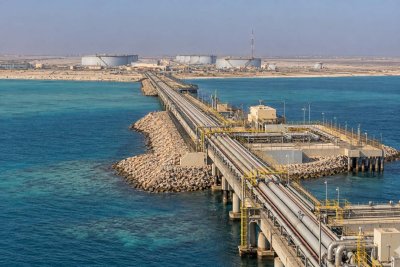
Global oil benchmarks retreated in Tuesday trading as geopolitical tensions in a critical Middle Eastern shipping corridor continued to inject uncertainty into the market. As of 10:02 GMT, Brent crude futures for April delivery declined by 24 cents, or 0.35%, to settle at $68.80 per barrel. The U.S. benchmark, West Texas Intermediate (WTI), experienced a slightly steeper drop, falling 30 cents, or 0.47%, to $64.06 per barrel.
Strait of Hormuz Advisory Maintains Risk Premium
The primary driver behind the market's cautious sentiment remains a formal advisory issued by the U.S. Maritime Administration. The agency has warned commercial vessels transiting the Persian Gulf, the Strait of Hormuz, and the Gulf of Oman of a persistent threat that Iranian forces may attempt to board, detain, or seize ships. This strategic waterway is a vital artery for global energy supplies, facilitating the transit of approximately one-fifth of the world's seaborne oil. The advisory explicitly recommends that U.S.-flagged vessels maintain maximum practical distance from Iranian territorial waters, provided it does not compromise safe navigation, and instructs crews not to offer physical resistance if boarded.
This sustained geopolitical friction has reinstated what traders term a "risk premium" into oil prices. This premium reflects the additional cost buyers are willing to pay as insurance against potential supply disruptions, even if no barrels have been physically halted. The premium was evident in Monday's session, where Brent gained $0.99 to close at $69.04, a 1.5% increase largely attributed to the U.S. shipping warning.
Market Focus Shifts to Fundamentals and Inventory Data
Analysts note that while geopolitics are currently in focus, the market's underlying fundamentals remain a concern. Tamas Varga of PVM Oil Associates Ltd. commented, "Unless there are concrete signs of supply disruptions, prices will likely start going lower." This sentiment underscores a market caught between headline risk and physical oversupply concerns.
Attention is now turning to hard data, with the market awaiting the U.S. Energy Information Administration's (EIA) weekly petroleum status report, scheduled for release Wednesday at 10:30 a.m. Eastern Time. An unexpected build in U.S. crude inventories could exert significant downward pressure on prices, potentially eroding the current risk premium. The consulting firm Ritterbusch & Associates noted that this week's crude trade "may have little to do with fundamentals," highlighting the current dichotomy.
Broader Geopolitical and Supply Context
The situation in the Strait is further complicated by stalled diplomatic efforts. Recent talks regarding Iran's nuclear program concluded with Tehran stating the discussions helped gauge Washington's seriousness, claiming there was sufficient common ground to continue negotiations. Foreign ministry spokesman Esmail Baghaei described the talks as a test for "how to continue this path." Meanwhile, Europe is contemplating an escalation of pressure on Russia. A European Union proposal document, reviewed by Reuters, outlines plans to widen sanctions to target oil handling facilities in non-EU countries like Georgia and Indonesia, and to impose an outright ban on maritime services for Russian crude, moving beyond the existing price-cap mechanism.
On the supply side, the Organization of the Petroleum Exporting Countries (OPEC) reported a slight dip in January output to 28.34 million barrels per day, down 60,000 bpd from December, according to a Reuters survey. This decrease was attributed to reduced production in Nigeria and Libya, offsetting gains from other members. The broader OPEC+ alliance, which includes Russia, has paused its planned monthly output increases for the first quarter of 2025 due to concerns about an oversupplied market.
In physical trading, India's state-run refiners, Indian Oil Corporation and Hindustan Petroleum Corporation Ltd., secured a 2-million-barrel cargo of Venezuela's Merey crude from trading house Trafigura for delivery in the second half of April. The cargo, priced against the Dubai benchmark, is destined for India's east coast aboard a Very Large Crude Carrier (VLCC). This follows reports of Venezuelan crude trading at a discount to Brent.
Looking ahead, the market's direction appears contingent on a resolution of the Hormuz tensions and the trajectory of inventory data. Giovanni Staunovo, a strategist at UBS, characterized the environment as "extremely difficult to judge," with traders closely monitoring for any signals on the timing of renewed Iran talks or final EU sanctions decisions. Should the immediate threat of shipping disruptions subside, analysts warn the risk premium could dissipate rapidly, leaving prices vulnerable to reflecting weaker supply-demand balances.