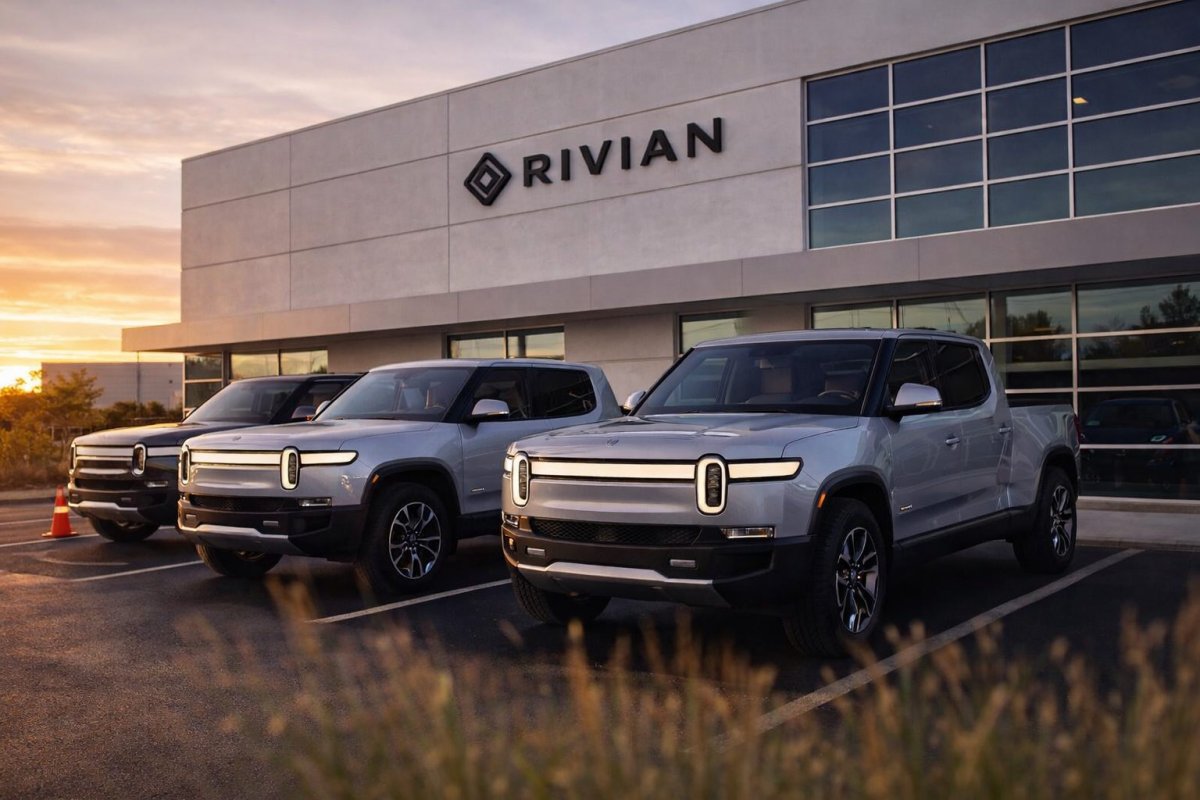
Rivian Automotive witnessed a powerful rally in its share price on Friday, closing up 26.7% at $17.73. The surge was fueled by the electric vehicle maker's ambitious delivery projection for 2026, which hinges on the successful launch of its more affordable R2 sport utility vehicle.
2026 Delivery Forecast and Financial Position
The company forecasts delivering between 62,000 and 67,000 vehicles in 2026, a significant increase from the 42,247 units anticipated for 2025. CEO RJ Scaringe emphasized that growth will be primarily driven by the R2, while volumes for the existing R1T pickup, R1S SUV, and commercial delivery vans are expected to remain stable. To support this expansion, Rivian plans capital expenditures of $1.95 billion to $2.05 billion for the year.
Financially, Rivian ended 2025 with a robust liquidity position. The company held $6.08 billion in cash, cash equivalents, and short-term investments. When including its available revolving credit facility, total liquidity reached approximately $6.59 billion. For the fourth quarter of 2025, Rivian reported revenue of about $1.29 billion, with an adjusted loss per share of 54 cents. The quarter saw $120 million in consolidated gross profit, bolstered by $179 million in gross profit from software and services, including its collaboration with Volkswagen. For the full year 2025, consolidated gross profit totaled $144 million.
The Crucial R2 SUV Launch
Market attention is intensely focused on the forthcoming R2 SUV, priced around $45,000, which is seen as critical for Rivian's expansion beyond the premium segment. The company confirmed that the first customer deliveries are on schedule for the second quarter of 2026. Investors and analysts are awaiting further details on pricing, trim levels, and the rollout plan, which Rivian has committed to revealing on March 12.
This launch occurs against a challenging backdrop for the EV sector. Demand has softened following the expiration of the federal $7,500 tax credit for Rivian's vehicles, and the company faces intensified competition from established automakers like Tesla, Ford, and General Motors, all of which are advancing their own lower-priced electric offerings. Piper Sandler analysts underscored the stakes, stating that "nothing matters more than a timely launch for the R2 SUV."
Market Reaction and Analyst Sentiment
Trading volume soared to roughly 128 million shares on Friday as investors repositioned around the updated growth narrative. The rally also highlighted the volatile sentiment surrounding EV stocks, which have been under significant pressure. Analyst reactions were mixed but generally upgraded. Deutsche Bank raised its rating on Rivian to "buy" and increased its price target. UBS shifted its stance from "sell" to "neutral," lifting its target to $16 and describing the near-term risk/reward profile as more balanced.
Rivian also expects to receive $2 billion in funding this year from Volkswagen as part of their strategic technology joint venture, providing additional capital for the R2 ramp-up.
Risks and Future Catalysts
Despite the optimistic outlook, significant execution risks remain. Any delays or production hiccups with the R2 launch could jeopardize the 2026 delivery targets and refocus investor concern on the company's cash burn and potential future funding needs. Furthermore, softer sales of regulatory credits—emissions credits sold to other automakers—were noted as a headwind to automotive gross profit in the latest quarter.
The immediate test for Rivian's stock momentum will come when U.S. markets reopen on Tuesday, February 17, following the Washington's Birthday holiday. The longer-term credibility of the company's ambitious forecast, however, will likely be determined by the specifics disclosed on March 12 regarding the R2. Those details will be pivotal in assessing whether Rivian can successfully execute its pivot toward a higher-volume, more affordable market segment and achieve sustainable profitability.