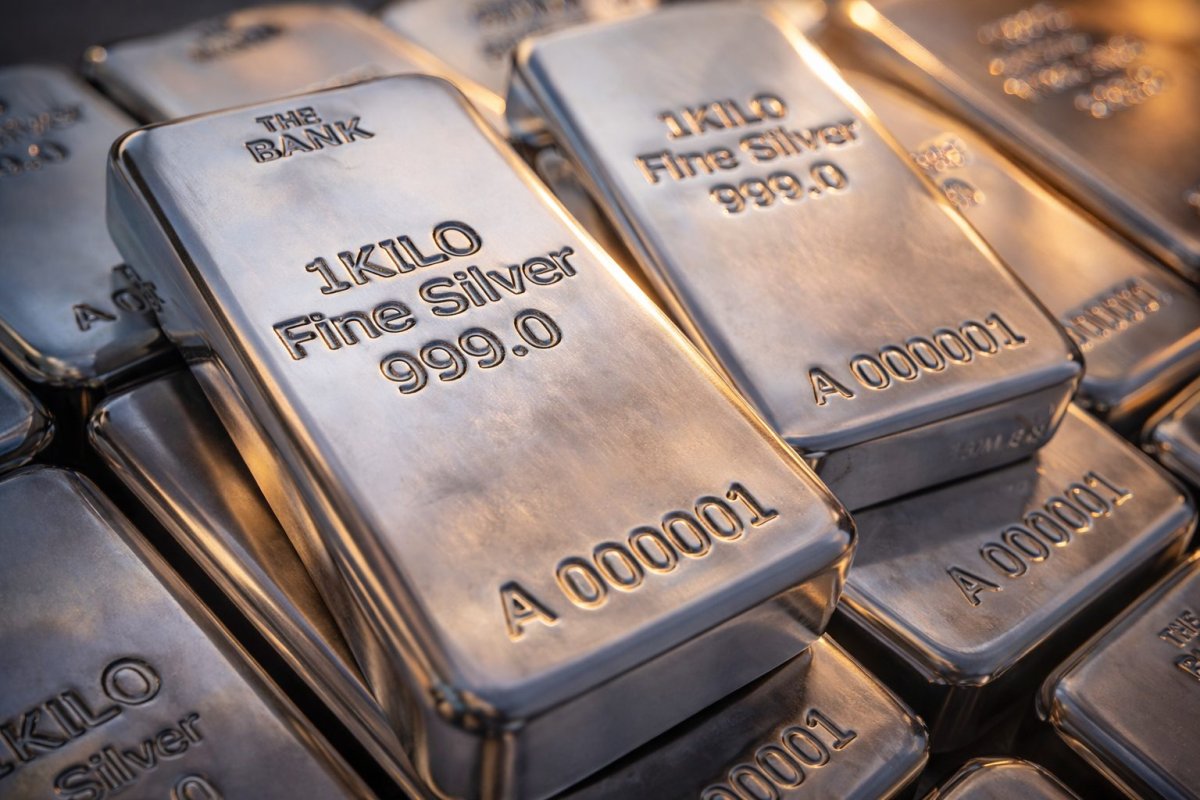
Silver prices rallied sharply on Friday, closing at $82.92 per ounce for a gain of 5.8%. The move was driven by a combination of disappointing U.S. economic indicators and new developments on the trade policy front, which together prompted investors to seek refuge in precious metals.
Economic Data and Policy Shifts Fuel Rally
The February flash U.S. Composite Purchasing Managers' Index (PMI) from S&P Global declined to 52.3, down from January's reading of 53.0. This suggests a moderation in business activity growth at the start of the year. Chris Williamson of S&P Global noted the latest figure is consistent with annualized GDP growth of approximately 1.5%.
Separately, former President Donald Trump announced on Saturday an increase in temporary tariffs on nearly all U.S. imports, raising the rate from 10% to 15%. This adjustment utilizes authority under Section 122, which also requires congressional approval if the tariffs remain in place for more than 150 days.
Market Mechanics and Silver's Dual Nature
The rally underscores silver's renewed status as a direct macro trade, often reacting more sharply than gold to shifts in U.S. monetary policy expectations and geopolitical risks. Its inherent industrial demand component—particularly from sectors like electronics and photovoltaics—typically amplifies price volatility. Investors frequently pivot between viewing the metal as a hedge against economic slowdown and as a play on persistent inflation, especially when the U.S. dollar and Treasury yields exhibit significant movement.
On Friday, U.S. Treasury yields edged higher following a Supreme Court ruling related to tariffs. The benchmark 10-year yield settled at 4.083%, while the two-year yield finished at 3.48%. The U.S. dollar index, meanwhile, dipped 0.14% to 97.75, though it remained on track for its strongest weekly performance since October.
Inflation Outlook and Federal Reserve Watch
The core Personal Consumption Expenditures (PCE) price index, which excludes food and energy, rose 0.4% in December. This pushed the annual core rate to 3.0%. With the January PCE report scheduled for release on March 13, economists suggest that December's firm reading could potentially delay the Federal Reserve's next interest rate cut until after June.
Market participants will be closely monitoring commentary from Federal Reserve officials for clues on the central bank's policy trajectory. Governor Christopher Waller is scheduled to speak on the economic outlook on Monday, February 23, at 8:30 a.m. in Washington. Traders will be listening for any indication that officials are growing more concerned about growth risks or if they remain primarily focused on combating inflation.
Upcoming Data and Demand Risks
The market will receive several key data points in the coming days. U.S. consumer confidence figures for February are due on Tuesday, February 24, at 10 a.m. ET. This release is watched as a gauge of household spending potential, and surprises often trigger swift reactions in bond yields, the dollar, and consequently, silver prices.
The U.S. Producer Price Index (PPI) for January, set for release on Friday, February 27, at 8:30 a.m. ET, will serve as the next major inflation indicator. A strong reading has historically fueled concerns about higher interest rates, which can weigh on non-yielding assets like silver.
However, the rally itself introduces a demand risk. After silver's significant price appreciation over the past year, cost-sensitive industries are exploring substitutions. The photovoltaic sector, which accounts for roughly 17% of global silver demand, is actively working to replace silver with copper in solar panel manufacturing. "Silver is the greatest contributor to the increased cost of manufacturing solar panels," stated Derek Schnee, a senior commercial solar consultant at JK Renewables.
In summary, silver's sharp ascent reflects a complex interplay of macroeconomic fears and specific policy news. Its path forward will likely be dictated by incoming inflation data, Federal Reserve signals, and the ongoing tension between its haven appeal and its sensitivity to industrial demand and interest rate expectations.