Shares of Uber Technologies Inc. (UBER) experienced a modest decline during Thursday's regular trading session, closing down 0.7% at $70.50. The stock opened at $72.34, reached an intraday peak of $72.60, and dipped to a low of $69.48. Trading volume was significant, with nearly 20 million shares changing hands.
The downward movement occurred against a backdrop of broader market unease, particularly within the technology and software sectors. Investors are exhibiting heightened sensitivity regarding the tangible returns from artificial intelligence investments and the potential for widespread business disruption. This sentiment follows a sharp selloff that weighed on major indices. Jack Herr, primary investment analyst at GuideStone Funds, encapsulated the prevailing mood, stating, "We see this as a 'prove it' year for AI. We need to start seeing some return on investments." Market participants are also awaiting the release of U.S. consumer price index data for January, due on Friday, which could influence monetary policy expectations.
Strategic Expansions Amid Market Pressure
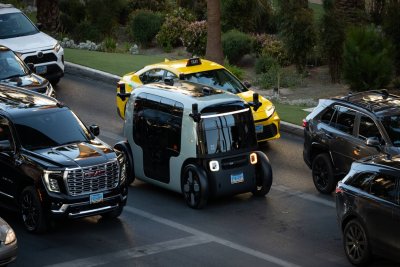
Despite the stock pressure, Uber announced significant operational advancements. In partnership with autonomous vehicle technology firm WeRide, the company launched what it describes as the first commercial robotaxi service in downtown Abu Dhabi. This deployment marks the initial introduction of autonomous vehicles in the city center of the Emirate. The service now covers approximately 70% of Abu Dhabi's core areas, including routes through Khalifa City, Masdar City, Rabdan, and between Corniche Road and the Sheikh Zayed Grand Mosque.
Customers booking an UberX or Uber Comfort ride may be matched with a WeRide Robotaxi GXR or can explicitly select an "Autonomous" option. As part of a phased approach to full autonomy, these vehicles currently operate with a safety specialist on board. This expansion represents a critical step in Uber's long-term strategy to integrate driverless technology into its core platform.
Product Innovation and Business Partnerships
Concurrently, Uber is rolling out new consumer-facing features. The company's Chief Technology Officer, Praveen Neppalli Naga, announced the beta launch of "Cart Assistant" within the Uber Eats application. This tool is designed to assist users in building grocery baskets from typed lists or images, leveraging AI to consider item availability, real-time pricing, and active promotions. Naga characterized the feature as an early step toward "agentic AI"—software capable of taking autonomous actions on behalf of the user, such as adding items to a digital cart.
In a separate business-to-business development, Uber for Business disclosed a new agreement with Mazda North American Operations. The partnership enables Mazda dealerships across the United States to arrange courtesy transportation for service and sales customers directly through Uber's platform. Josh Butler, head of sales for Uber for Business, emphasized that "in the dealership world, the customer experience is everything." Mazda executive Rob Milne noted the tie-up helps dealerships provide "dependable courtesy transportation," potentially enhancing customer retention and satisfaction.
Industry Context and Competitive Landscape
This flurry of product announcements arrives as investors reassess the growth trajectory of the ride-hailing sector. The scrutiny intensified after rival Lyft (LYFT) saw its shares plummet 13% on Wednesday, driven by weaker-than-expected ride growth and a subdued profit outlook for the first quarter. Analysts, including Mark Mahaney of Evercore ISI, suggest Lyft must successfully execute on its "premiumization strategy" and ancillary services to maintain momentum against Uber's formidable scale and diversification efforts.
Uber's strategic narrative continues to evolve beyond its foundational ride-hailing service. The company is increasingly reliant on partnerships in autonomy and the development of tools aimed at making delivery services faster and more habitual for users. While these initiatives can bolster long-term growth, they also introduce complexity, making the company's quarterly performance more challenging to predict as it becomes a multi-faceted mobility and logistics platform.
Potential Risks and Analyst Sentiment
Nevertheless, identifiable risks persist. Regulatory hurdles could delay approval for autonomous vehicle expansions. Any significant safety incident during pilot programs could erode public and investor confidence. Furthermore, a deterioration in the macroeconomic environment might lead consumers to pull back on discretionary spending for rides and food delivery, which could diminish the near-term impact of these new rollouts.
On the analyst front, Arete Research adjusted its outlook on Wednesday, lowering its price target on Uber to $120 from $125 while maintaining a Buy rating. The company also confirmed a key leadership transition. According to a regulatory filing, Chief Financial Officer Prashanth Mahendra-Rajah will step down on February 16. He will be succeeded by Balaji Krishnamurthy, who stated, "It's an honor to step into this important role at such an important time for Uber." This change at the financial helm will be closely watched by the investment community as Uber navigates its next phase of growth.