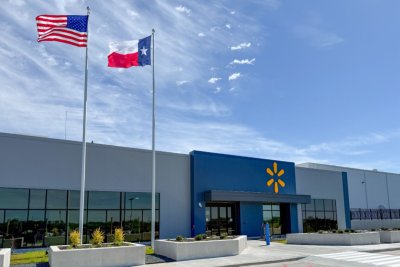
Shares of Walmart Inc. retreated in Friday's trading session, reflecting investor unease with the retail giant's tempered forward guidance despite posting solid quarterly performance metrics. The stock declined $1.90, or 1.5%, to $122.97 by mid-morning, making it one of the notable laggards on the Dow Jones Industrial Average.
Market Reaction to Guidance Overshadows Operational Strength
The market's negative response highlights the heightened sensitivity surrounding Walmart's stock following its ascent to a $1 trillion market valuation. Minor adjustments to forecasts or shifts in management's tone now trigger pronounced reactions. This dynamic was evident as investors quickly parsed the company's latest update, which presented a mixture of robust operational results and a conservative roadmap for the coming year.
Walmart's financial report for the period revealed significant strength in its higher-margin segments. Global e-commerce sales surged 24%, while global advertising revenue jumped an impressive 37%. In its core U.S. market, comparable sales—a key retail metric tracking stores open at least a year—increased 4.6%, excluding fuel. Notably, profit growth outpaced sales growth, indicating successful execution of its strategy to boost profitability.
Management Commentary Highlights Consumer Strain
The company's leadership emphasized the ongoing financial pressure on a significant portion of its customer base. John Furner, the newly installed Chief Executive Officer, explicitly noted that for households earning below $50,000 annually, "wallets are stretched." This commentary underscored a more guarded outlook for the year ahead, as the company anticipates continued consumer caution.
Analysts provided context for the market's interpretation. Greg Melich of Evercore ISI observed, "Historically, management tends to be conservative when providing its initial guide for the year." Meanwhile, David Silverman of Fitch Ratings pointed to Walmart's substantial scale and infrastructure as factors that position it to continue capitalizing on the e-commerce wave. Russell Shor of Tradu interpreted the guidance as indicative of "a resilient but value-focused consumer, with limited appetite for discretionary or big-ticket purchases."
Dividend Increase and Capital Allocation
Amid the cautious outlook, Walmart reaffirmed its commitment to shareholder returns. The company's board of directors approved an increase in the annual dividend for fiscal 2027 to $0.99 per share. The record date for the dividend is set for March 20, 2026, with payment scheduled for April 6. Chief Financial Officer John David Rainey reiterated the company's "diversified capital returns approach," stating that dividends remain a core component of this strategy.
The early Friday decline in Walmart's stock contributed to downward pressure on the broader market indices. The retailer ranked among the top detractors on the Dow during the morning session, illustrating its substantial weight and influence as a bellwether for consumer spending.
Strategic Implications and Forward Risks
The market's focus on Walmart's commentary reveals its evolving role as a barometer for everyday American expenditure—encompassing groceries, deliveries, and general merchandise. While the company's grocery business is expected to remain stable, analysts note a persistent risk. Should lower-income shoppers further tighten their belts, Walmart could face additional strain in its higher-margin general merchandise categories. In such a scenario, gains from its growing advertising and membership fee streams might not immediately compensate for the shortfall.
Traders and long-term investors alike are now weighing the company's strong digital momentum against the macroeconomic headwinds facing its core customer demographic. The juxtaposition of a 24% global e-commerce growth rate with concerns over consumer discretionary spending power encapsulates the current complex investment thesis for the retail titan.