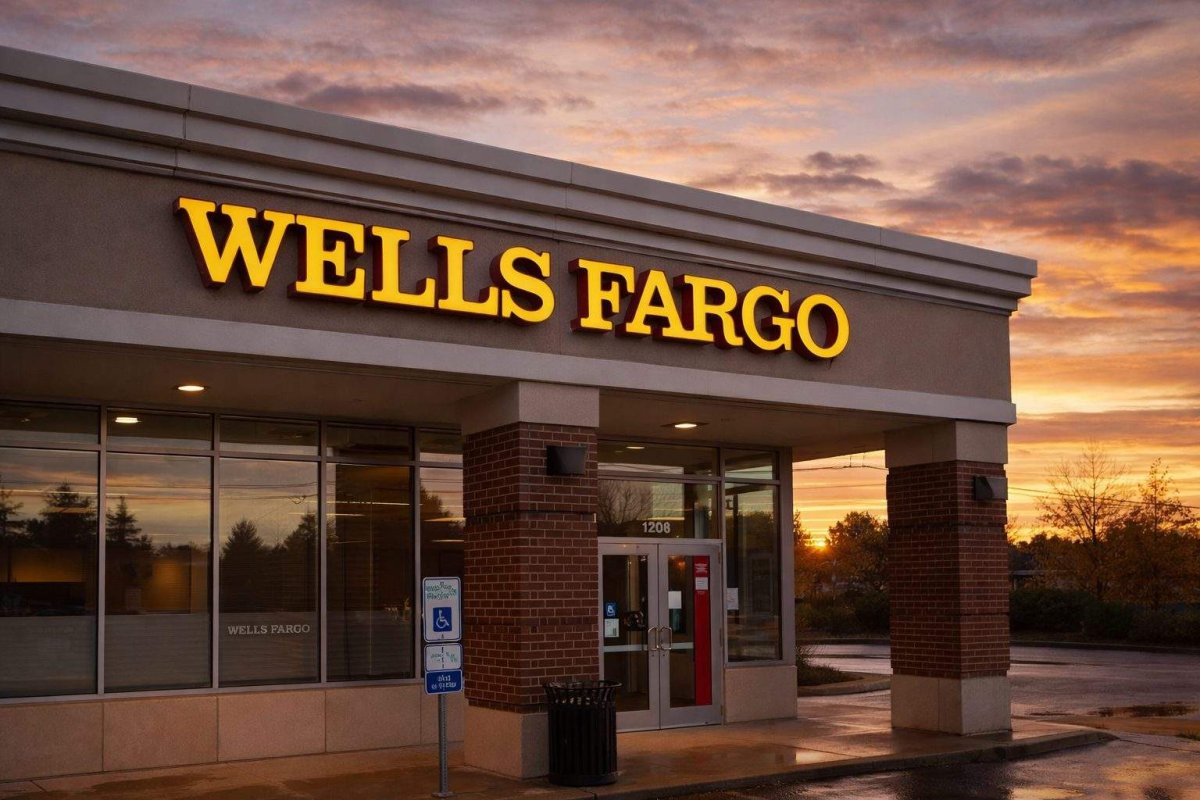
Wells Fargo & Company (WFC) shares advanced significantly in Friday's trading session, closing at $93.97 for a gain of 2.63%. The move higher aligned with a broad-based rebound in U.S. equity indices, which saw the Dow Jones Industrial Average close above the 50,000 milestone for the first time in history. Trading volume for the banking stock, however, remained subdued relative to its 50-day average.
Market Context and Sector Performance
The rally was partly fueled by renewed investor enthusiasm for semiconductor and artificial intelligence-related investments, which propelled major indices. Despite the day's strength, both the Nasdaq Composite and the S&P 500 finished the week in negative territory, reflecting underlying volatility. Within the financial sector, Wells Fargo's peers also posted solid gains. JPMorgan Chase (JPM) surged 3.95%, Bank of America (BAC) rose 2.89%, and M&T Bank (MTB) added 1.74%, indicating a sector-wide uplift.
Dividend Details and Technical Positioning
Investors should note a key corporate action: Wells Fargo shares traded ex-dividend on February 6. This means shareholders of record as of that date are entitled to a quarterly cash dividend of $0.45 per share, scheduled for payment on March 1. Buyers who purchased shares on or after February 6 will not receive this upcoming payout. Despite Friday's advance, Wells Fargo's share price concluded the session approximately 3.9% below its 52-week high.
The bank's recent performance occurs against the backdrop of its multi-year turnaround effort. A significant development in 2025 was the Federal Reserve's removal of a longstanding asset cap, a regulatory constraint that had limited the bank's growth. This removal marks a critical step in management's strategy to move past legacy compliance and operational risk issues.
Macroeconomic Crosscurrents and Data Watch
The financial sector currently finds itself at a crossroads, caught between capital rotation out of overheated technology stocks and persistent uncertainty regarding the Federal Reserve's interest rate path. As Angelo Kourkafas, senior global investment strategist at Edward Jones, noted, "Rate expectations have been remarkably stable over the last couple of weeks." This stability has kept traders intensely focused on upcoming economic data for clues on the timing of potential rate cuts.
A series of high-impact economic releases in the coming week are poised to dictate market direction. The schedule includes U.S. retail sales figures for December on Tuesday, February 10. The spotlight then shifts to Wednesday, February 11, with the release of the delayed January jobs report. The week culminates on Friday, February 13, with the publication of the Consumer Price Index (CPI) for January. These three data points will be scrutinized for signals on the strength of the consumer, labor market tightness, and the trajectory of inflation.
Implications for Wells Fargo and Bank Stocks
The immediate catalyst for Wells Fargo shares on Monday will likely stem from the interest rate environment rather than company-specific news. Banking stocks are highly sensitive to movements in Treasury yields, as shifts in the rate outlook directly impact net interest margins, fee income, and credit risk assessments.
The setup presents a dual risk. On one hand, a softer-than-expected jobs report could reignite recession fears and spark concerns about potential loan losses across the banking industry. Conversely, an inflation reading that surprises to the upside could push market expectations for the Fed's first rate cut further into the future. Such a scenario would apply downward pressure on equity valuations broadly, with rate-sensitive financial stocks particularly vulnerable.
Friday's recovery helped Wells Fargo shares finish the week in positive territory, overcoming a 1.21% decline on Thursday that broke a three-day winning streak. The path forward remains contingent on the interplay between macroeconomic data and the evolving narrative around monetary policy, setting the stage for a volatile period ahead for the bank and its sector peers.