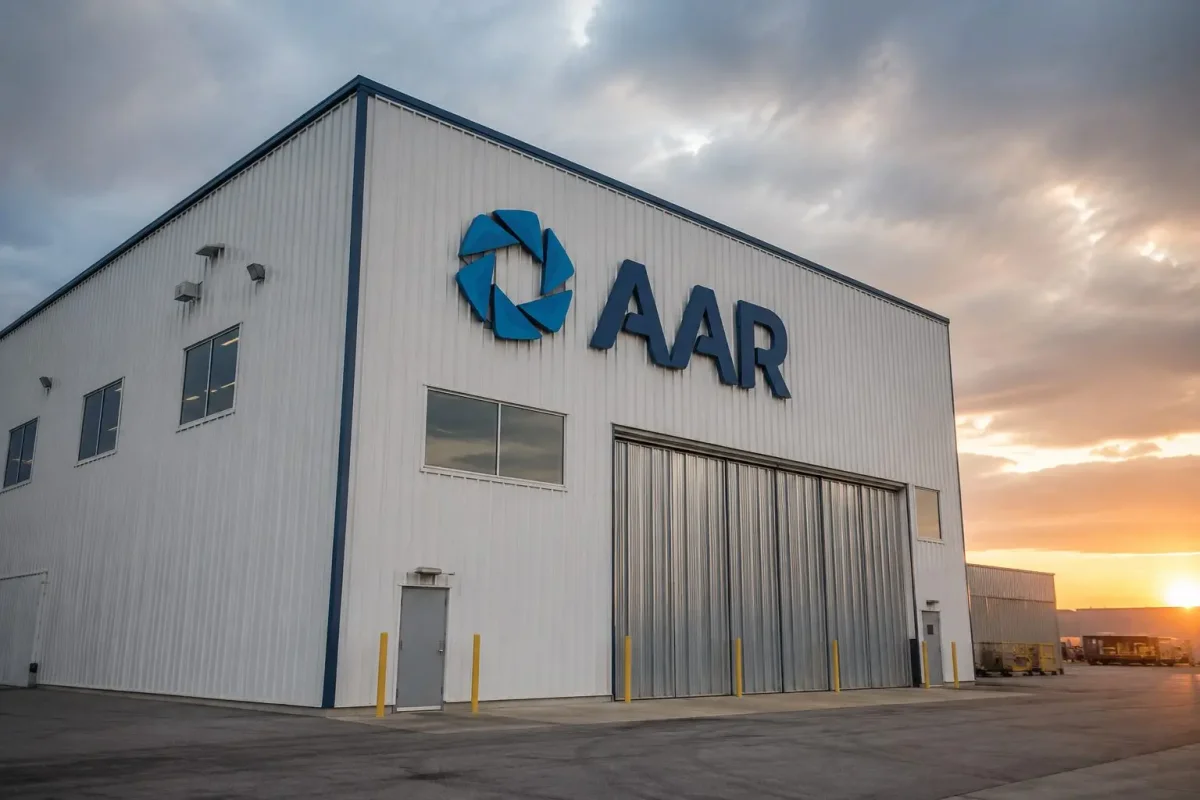
CHICAGO, July 10, 2026 – Shares of AAR Corp. (NYSE:AIR) edged down 0.6% to $135.67 in Friday’s session, capping a week that saw the stock decline 5.5% from Monday’s close. The broader S&P 500 index rose 0.42% on the day, highlighting the stock’s underperformance. Despite the recent dip, AAR shares have surged 81% over the past twelve months, prompting investors to scrutinize valuation more closely.
At current levels, the aviation services company trades at roughly 30 times trailing earnings. Trading volume on Friday was approximately 251,000 shares, or just 54% of the average daily volume of 463,000 shares. This relatively light volume may suggest a lack of strong conviction behind the decline, though it does not confirm a reversal.
AAR is set to report its fiscal fourth-quarter results after the market close on July 21. The company’s guidance calls for total sales growth of 19% to 21%, a deceleration from the 25% increase recorded in the third quarter. Organic sales growth is projected at 6% to 8%, down from 14% in the prior period. Adjusted operating margin is expected to be between 10.2% and 10.5%, essentially flat compared to the 10.2% margin achieved in Q3.
Analyst coverage on AAR remains limited, with only four analysts tracked by Google Finance over the past three months. Of those, three rate the stock a Buy and one a Hold. The average price target stands at $137.50, just 1.35% above Friday’s close. RBC Capital Markets analyst Kenneth Herbert has a $125 target, implying a 7.9% downside, while Jefferies analyst Sheila Kahyaoglu set a $150 target, suggesting a 10.6% upside. The narrow spread between the current price and the consensus target reflects the market’s cautious outlook.
Compared to larger aerospace peers, AAR’s valuation appears stretched. The company’s market capitalization of $5.36 billion is roughly one-fourteenth that of TransDigm Group Inc. (NYSE:TDG), yet AAR’s reported P/E of 29.9 is only about 3% lower than TransDigm’s 30.9. Similarly, AAR is 42% smaller than StandardAero Inc. (NYSE:SARO) by market value, but its P/E is just 6% below StandardAero’s 31.7. These comparisons underscore the premium investors are paying for AAR’s growth story.
CEO John Holmes told investors in May that the company is targeting “consistent above-market sales growth and further margin expansion.” With the midpoint of Q4 organic growth guidance at 7%—roughly half the Q3 pace—the market’s attention has shifted to margins and cash generation. In the third quarter, AAR generated $74.7 million in operating cash flow, and net leverage stood at 2.17 times trailing adjusted EBITDA. Holmes noted that the integration of HAECO is “ahead of schedule” and that the ADI business is “exceeding our expectations.”
The company’s balance sheet provides some flexibility, but risks remain. AAR’s latest quarterly filing highlights potential pitfalls, including integration delays, a shortage of skilled labor, contract overruns, and softer airline demand. If organic growth falls below 6% or margins dip under 10.2%, the current analyst price targets may offer little support. On the other hand, if growth exceeds the upper end of guidance or margins beat 10.5%, the bear case would weaken significantly.
As the market awaits the July 21 report, the stock’s modest decline on low volume leaves the debate wide open. The key question for investors is whether slower sales growth can still translate into higher margins and stronger cash flows. The answer will likely determine whether AAR’s lofty valuation is justified or due for a correction.