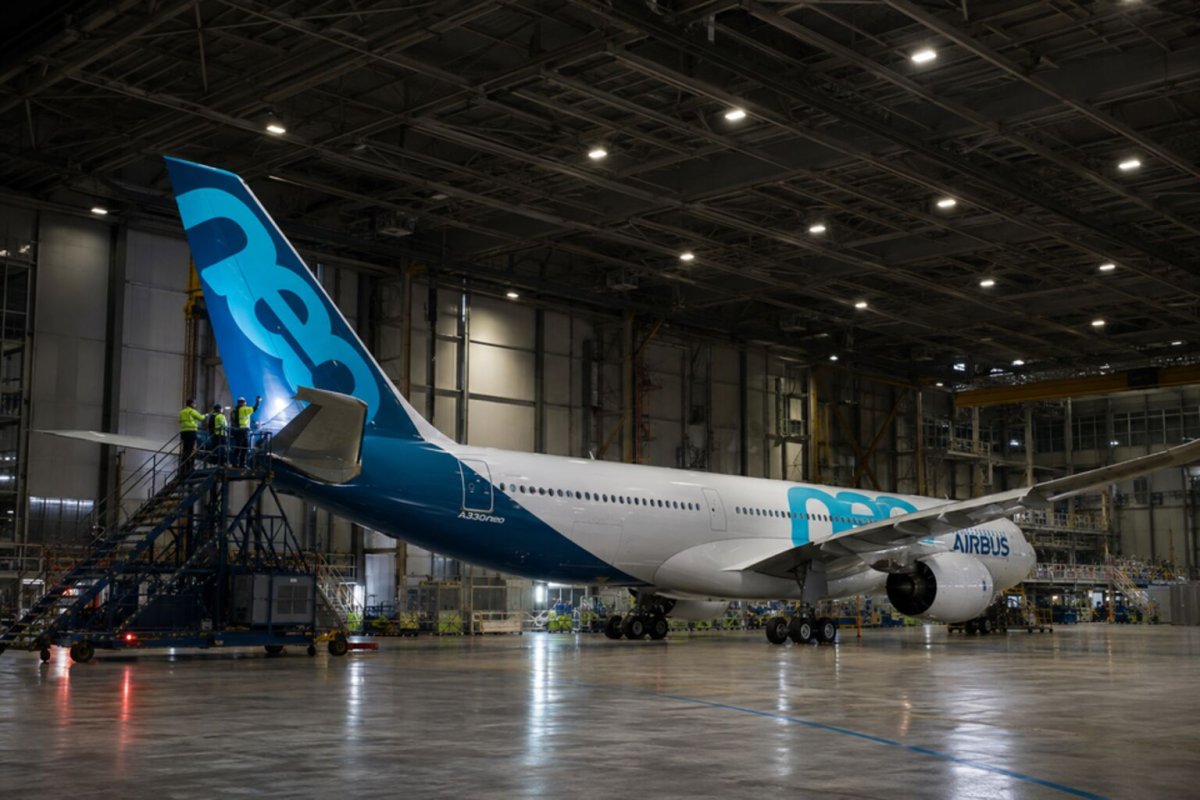
Airbus SE (EPA:AIR) shares edged up 1.0% on Friday to €198.96, buoyed by news that deliveries of its A330neo widebody jets have resumed following a temporary halt for tail-section inspections. The European aerospace giant confirmed that the root cause of the issue had been identified and that deliveries were back on track, according to a statement reported by Reuters.
However, the resolution of this specific bottleneck does little to ease the broader delivery challenges confronting the planemaker. Preliminary figures for August indicate that Airbus must hand over nearly 99 aircraft every month from September through December to achieve its full-year target of 870 deliveries. That pace would represent a 25% increase over the second-quarter average and a 47% jump compared to July's output.
Steep Ramp-Up Required
The math is straightforward. Through the first seven months of the year, Airbus delivered 674 aircraft. With August preliminary figures adding just 57 units, the company has delivered 731 aircraft year-to-date. To reach 870, it must deliver 139 more aircraft in the final four months, translating to an average of 34.75 per month—a significant acceleration.
Breaking it down, the second quarter saw 237 deliveries (79 per month), while July delivered 67. To meet the target, September through December must average 98.8 deliveries per month. This is a substantial increase that will test the company's production and supply chain capabilities.
A330 Issue: Isolated but Symbolic
Airbus characterized the A330 horizontal-tail problem as isolated, with a stray tool discovered during a pre-delivery inspection. The company delivered no A330s in June or July, and August's preliminary tally includes just one. While the A330 represents only 2.8% of first-half deliveries (10 out of 351 aircraft), the disruption serves as a reminder of the execution risks inherent in ramping up production across multiple programs.
The A320 family remains the linchpin, accounting for 271 of the 351 first-half deliveries. Persistent Pratt & Whitney engine shortages continue to constrain output, adding another layer of complexity to the delivery schedule.
Cash Flow Back-End Loaded
Beyond the delivery targets, Airbus faces a significant cash flow challenge. The company reported negative free cash flow before customer financing of €1.17 billion in the first half. With a full-year target of positive €4.5 billion, the second half must generate approximately €5.67 billion—a substantial swing that hinges on successful deliveries.
Airbus has built up inventory to support the production ramp, but that cash is only released when aircraft are completed and handed over to customers. The company's net cash position stood at €8.36 billion in June, down 31% from December, reflecting the working capital drain.
Investor Sentiment and Market Context
Despite Friday's uptick, Airbus shares remain 7.4% below their August 5 close and 9.6% off their January peak. The stock's recent weakness suggests investors are not fully convinced that the delivery and cash flow targets are achievable without further hiccups.
Demand, however, is not the issue. The commercial backlog stood at 9,222 aircraft in June, more than ten times this year's delivery target. The challenge lies in execution—ramping up production while managing supply chain disruptions and quality control.
Chief Executive Guillaume Faury has expressed confidence, stating that "our focus on steady execution is paying off" after a strong second quarter. But the next four months will test that claim at a higher required tempo. More inspections, engine shortages, or delayed customer acceptance could pressure cash flow, while rapid handovers could release inventory and protect guidance.
As trading resumes Monday, all eyes will be on Airbus's official August report, which will provide a clearer picture of whether the company can sustain the pace needed to hit its 870-jet target and deliver the cash flow promised to shareholders.
