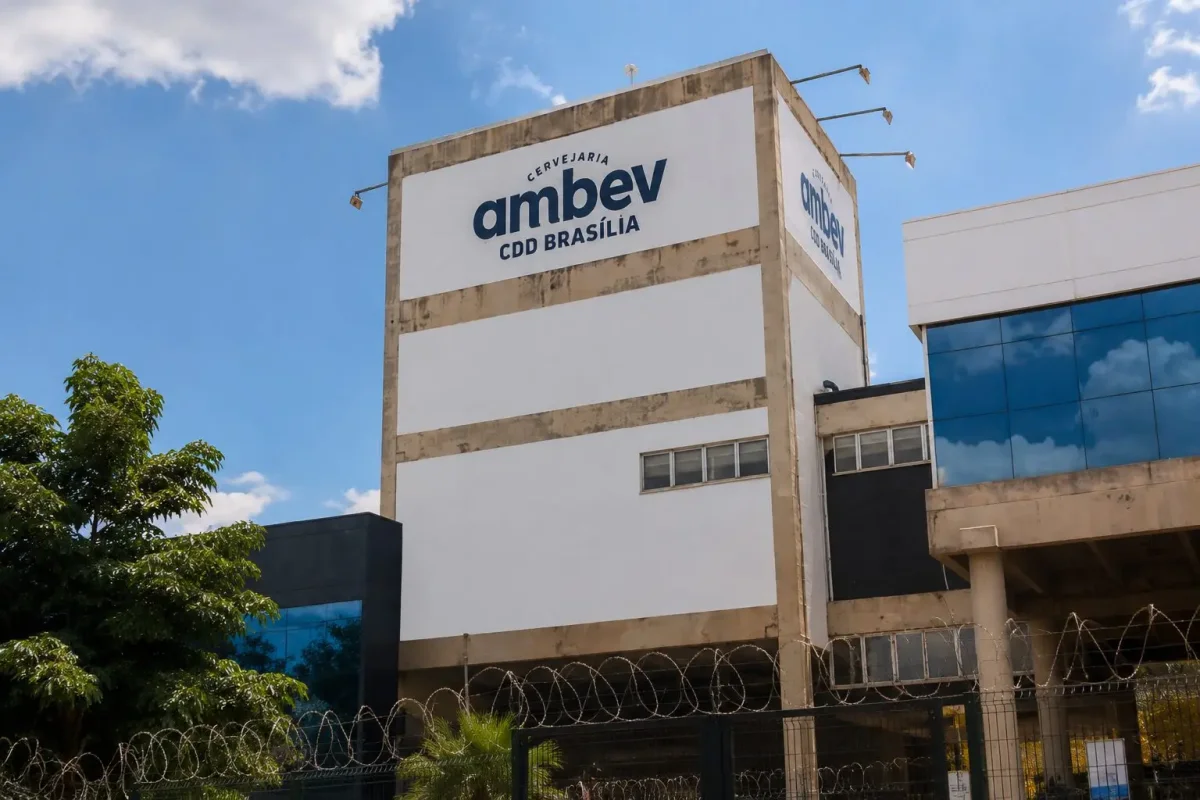
Shares of Ambev S.A. closed at 16.60 reais on the B3 exchange Wednesday, barely changed from the prior session, as the stock continued to trade near its highest levels since 2018. The session saw a narrow range between 16.57 and 16.92 reais, with the high end approaching the 52-week peak of 17.04 reais. The broader Ibovespa index slipped 0.48% to 175,744 points.
The stock's resilience comes amid a sharp divergence among analysts following the company's first-quarter earnings report. Goldman Sachs reaffirmed its sell rating with a 12.90-real price target, citing concerns over weak beer demand and limited pricing power. The bank's analysis, as reported by InfoMoney, pointed to Scanntech data showing a 5% decline in beer sales volumes in April compared to the same period last year.
In contrast, BTG Pactual upgraded Ambev to buy from neutral on Tuesday, raising its price target to 20 reais from 17 reais. Analysts Thiago Duarte and Guilherme Guttila argued that the brewer's pricing strength, underpinned by a portfolio that competitors cannot match, is finally translating into results. They noted that Heineken's long-standing dominance in the premium segment in Brazil is beginning to plateau, while Ambev offers a full spectrum from core to premium beers.
Ambev's first-quarter net profit rose 2.1% to 3.89 billion reais, while normalized EBITDA increased 10.1% organically to 7.56 billion reais. Net revenue grew 8.1% organically to 22.46 billion reais. Brazil beer volume edged up 1.2%, and net revenue per hectoliter climbed 8.3%, driven by pricing and a shift toward higher-end brands. The premium and super-premium segment posted gains in the low twenties, led by Stella Artois, Corona, and Original.
Chief Executive Carlos Lisboa described 2026 as 'the year of socialization,' citing Carnival and the FIFA World Cup as catalysts for beer sales. He noted that the World Cup typically adds 0.3 to 0.4 percentage points to annual industry growth. The stock surged 15.3% to 16.65 reais on May 5, its best finish since 2018 and the largest one-day move since the company's creation, except for one instance.
However, risks remain. If consumer behavior does not meet expectations, weaker beer volumes in April could persist, or households may resist further price increases. This would make it challenging for Ambev to sustain margins, especially as its Brazil beer cash cost per hectoliter is still expected to rise 4.5% to 7.5% this year. In such a scenario, cost pressures, currency fluctuations, and commodity prices could overshadow the company's portfolio strategy.
For now, the stock is caught between these two narratives. The next major catalyst is the second-quarter earnings report, scheduled for July 30, which will provide clarity on World Cup demand and whether Ambev's premium push can overcome the broader weakness in the beer segment.
