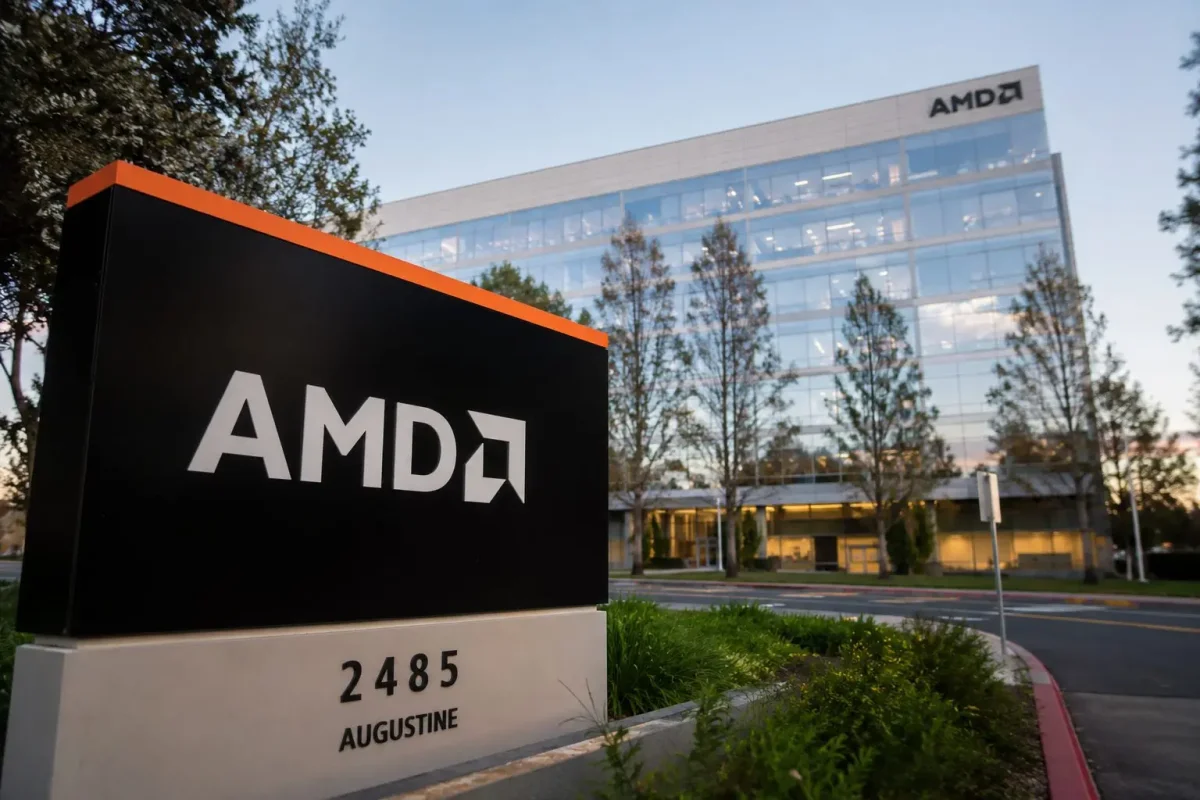
Advanced Micro Devices (AMD) shares ended last week at $516.10, climbing roughly 10% from $467.51 seven days earlier, as the company rode a wave of enthusiasm for artificial intelligence chips. The stock is now trading near its May highs, with the Nasdaq Composite and S&P 500 both closing at fresh record levels on Friday.
The rally in AMD underscores investor appetite for AI spending beyond Nvidia, the sector's dominant player. While Nvidia remains the leader in graphics processing units (GPUs) used for AI training and inference, AMD's central processing units (CPUs) for PCs and servers offer an alternative path into cloud and enterprise budgets. The company's data-center sales surged 57% in the first quarter to $5.8 billion, and management guided second-quarter revenue to $11.2 billion, above Wall Street estimates.
Key Catalysts Ahead
This week brings several events that could test the chip sector's momentum. Broadcom is set to report earnings on Wednesday, followed by the U.S. jobs report on June 5. A hotter-than-expected jobs figure, combined with stubborn inflation, could push bond yields higher and pressure growth stocks like AMD. Liz Ann Sonders, chief investment strategist at the Schwab Center for Financial Research, warned that such a scenario could "change the outlook for Fed policy."
Additionally, Nvidia and Microsoft are expected to unveil the first Windows PCs powered by Nvidia processors next week, intensifying competition in the PC chip market. Qualcomm already offers Arm-based CPUs for Windows laptops, while Intel and AMD remain the largest players.
China Exposure and Risks
China accounts for roughly 20% of AMD's revenue, a factor that adds geopolitical risk. CEO Lisa Su has maintained a lower profile in China compared to Nvidia's Jensen Huang, as both navigate U.S.-China chip tensions. Nvidia's share of China's AI-chip market has dropped from 50% to nearly zero over the past year, according to Huang. Market research firm IDC estimates AMD holds about 4% of China's AI-chip sales.
Su has emphasized that AMD will "partner very closely" with Chinese customers, but the company faces headwinds from higher memory costs for PCs and gaming. Executives expect second-half PC shipments to decline and gaming revenue to fall more than 20% from the first half.
Market Sentiment and Outlook
Despite the rally, some analysts caution that optimism may be stretched. "There's euphoric sentiment around AI, but the move up is driven by earnings," said Ohsung Kwon of Wells Fargo. The Philadelphia Semiconductor Index has surged roughly 80% from its March 30 low, making any earnings miss particularly impactful.
AMD's share price already reflects high expectations. The company must now deliver on margins and supply levels while navigating macroeconomic uncertainties. As traders eye the jobs report and Broadcom's results, the AI trade faces its next big test.