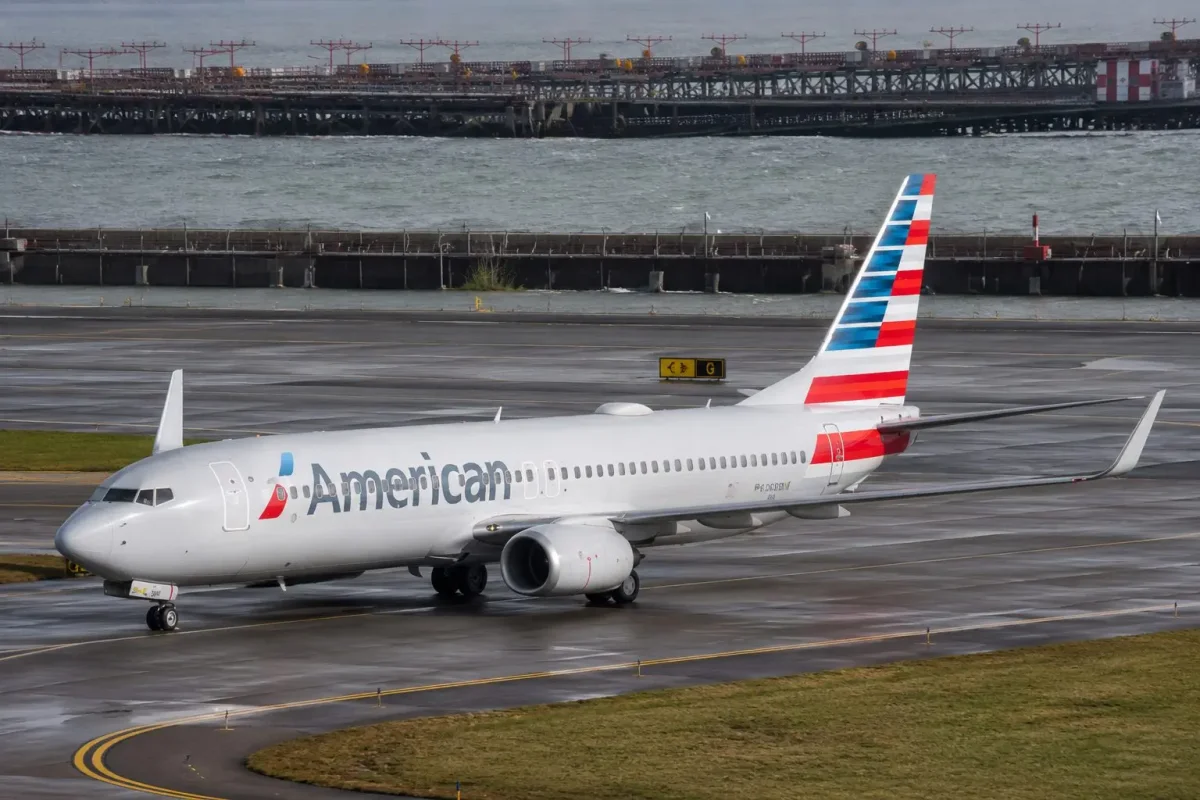
American Airlines Group (AAL) shares rose 1.6% on Tuesday, closing at $15.71 after reaching an intraday high of $16.17. The stock gained as oil prices continued their two-day slide, providing relief to U.S. carriers grappling with elevated fuel costs. The move came as Jefferies raised its price target on the airline, reinforcing investor optimism.
Brent crude oil settled at $78.96 per barrel, while U.S. West Texas Intermediate closed at $76.05, both marking lows not seen since early March. The sharp decline followed reports of a potential temporary U.S.-Iran agreement that could lead to the reopening of the Strait of Hormuz, a critical chokepoint for global oil shipments. Approximately 20% of the world's oil transits through the waterway, and its closure earlier this year had driven fuel prices higher, pressuring airline margins.
Bob Yawger, director of energy futures at Mizuho, noted in a market commentary that crude is dropping rapidly as traders bet on the Strait's reopening. However, he cautioned that shipping and energy exports could take weeks to resume fully, even if a deal is reached. Any delays or renewed hostilities could quickly reverse the oil price decline.
Jefferies analyst Sheila Kahyaoglu raised her price target on American Airlines to $15 from $13, while maintaining a Hold rating. Following a meeting with management, she highlighted that demand remains solid, with fares tracking 20% higher year-over-year. She also noted only modest customer churn, suggesting the airline is retaining its customer base despite higher ticket prices.
American Airlines had previously guided for second-quarter adjusted earnings per share (EPS) in a range of a loss of $0.20 to a gain of $0.20, excluding one-time items. For the full year 2026, the company projects adjusted EPS between a loss of $0.40 and a profit of $1.10, even as it faces over $4 billion in additional costs from higher jet fuel prices. CEO Robert Isom told investors last month that the airline is not making any changes to its forecast, despite fuel costs projected to rise by $4 billion to $5 billion this year. He noted that corporate travel is up 13% year-over-year and described leisure demand as incredibly strong.
The broader airline sector showed mixed performance on Tuesday. Delta Air Lines (DAL) fell 1.1%, and United Airlines (UAL) slipped 1.2%, while Southwest Airlines (LUV) gained 3.0%. The divergence came after airlines rallied broadly on Monday, with investors now sorting through winners and losers amid shifting fuel cost dynamics.
Stock markets were mixed overall. The Dow Jones Industrial Average closed at a record high for a second consecutive day, while the Nasdaq Composite and S&P 500 ended lower as technology shares faced profit-taking ahead of the Federal Reserve's policy decision. The market's direction remains tied to oil price developments and the potential reopening of the Strait of Hormuz, which carries significant execution risk.
The outlook for American Airlines remains sensitive to oil price movements. Any resurgence in crude prices, a breakdown in the Strait of Hormuz talks, or renewed geopolitical tensions could quickly erode the recent gains. With the company's guidance still spanning from a full-year loss to a profit, investors are closely watching fuel costs, debt levels, and the broader economic environment.