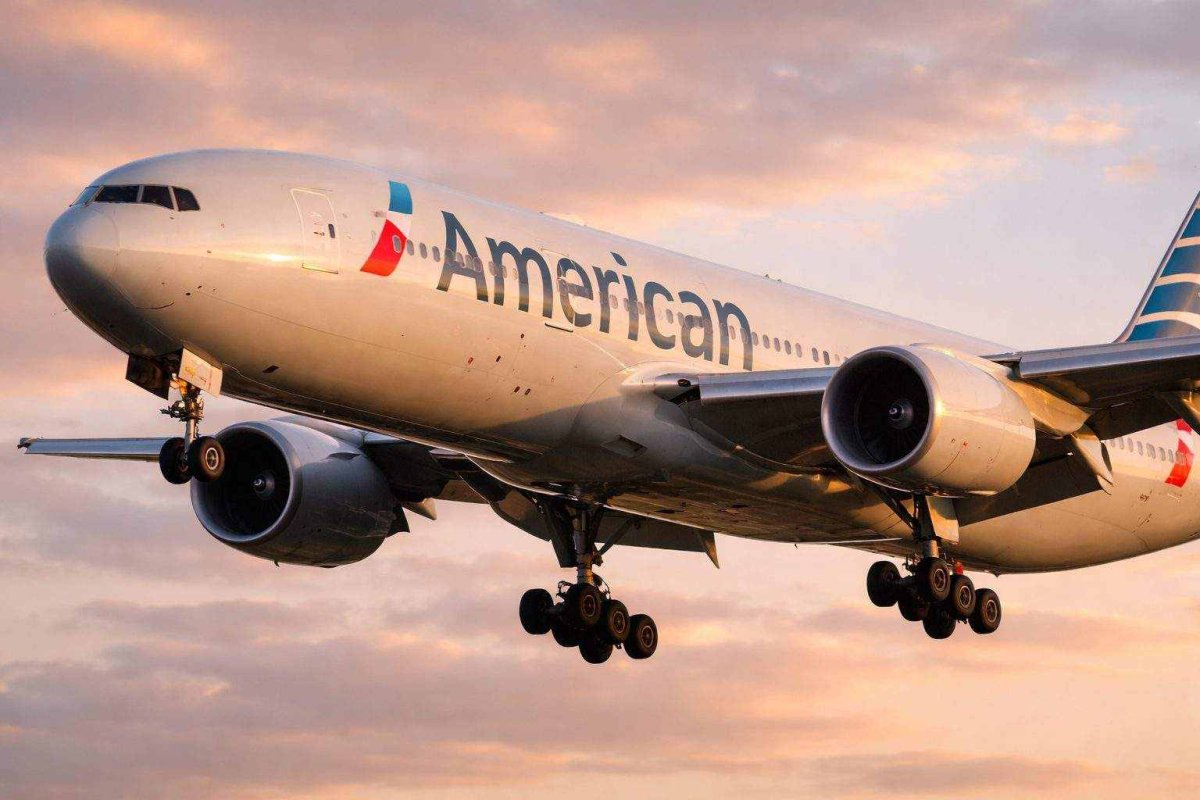
The Australian Competition and Consumer Commission (ACCC) has provided interim approval for American Airlines Group Inc. and Qantas Airways to maintain their trans-Pacific joint business agreement, offering a temporary reprieve as a comprehensive regulatory assessment continues. The provisional authorization, announced just days before the existing arrangement was set to expire on April 16, permits the carriers to continue coordinating flights, schedules, pricing, and capacity on routes connecting Australia and New Zealand with North America, including the United States, Canada, and Mexico.
This interim decision prevents an immediate disruption to the airlines' integrated network while the ACCC conducts a fuller investigation, with a final ruling anticipated in June. The regulator explicitly noted that this provisional clearance does not guarantee a full five-year extension and can be revoked at any time prior to the final determination. Should the ultimate decision go against the carriers, any coordinated activities planned beyond April 16 may need to be unwound.
The alliance between American Airlines and Qantas extends far beyond a standard codeshare. Under the joint business agreement, the partners align flight schedules, manage shared seat inventory, coordinate capacity, pool revenues on covered routes, conduct joint marketing, and link their frequent-flyer programs. This deep integration is designed to offer customers a more seamless and extensive network across the Pacific, with improved connectivity and loyalty benefits.
This regulatory development arrives as American Airlines navigates a challenging operating environment marked by a significant spike in jet fuel expenses. On March 17, the carrier advised investors that while first-quarter revenue was pacing more than 10% above the prior-year period, elevated fuel costs would likely push results toward the lower end of its earlier loss forecast. U.S. wholesale jet fuel prices have recently ranged between $4 and $5 per gallon across most regions, applying pressure to airline margins industry-wide.
American's leadership had previously expressed optimism about the company's trajectory for 2026. In January, Chief Executive Robert Isom highlighted "significant upside" following a year of record revenue, a planned $2.1 billion reduction in total debt for 2025, and $9.2 billion in available liquidity at the end of the last year. These strengthened financial metrics were seen as creating room for strategic initiatives, including expansion in premium cabins, partnership growth, and long-haul route development—initiatives now complicated by the fuel cost surge.
The partnership itself has a long regulatory history. Qantas and American first received ACCC authorization for their alliance in 2011, with subsequent extensions granted in 2016 and 2021. The carriers also sought and received approval from U.S. regulators in 2019 for deeper collaboration, arguing that the tie-up would facilitate new routes, smoother passenger connections, and an enhanced frequent-flyer experience.
Market conditions remain difficult for the broader airline sector. The fuel price increase coincides with intense competition, as noted by analysts. Kpler analyst Matt Smith observed, "Even if the U.S. had plenty of jet fuel, it has plenty of airlines too." Reflecting these pressures, shares of American Airlines declined approximately 2.7% in Thursday trading. Other major U.S. carriers also saw declines, with United Airlines Holdings down about 3% and Delta Air Lines falling 1.2%.
The ACCC's conditional approval underscores the provisional nature of the current arrangement. The regulator emphasized that its interim decision is based on the need to maintain market stability while its review is completed and does not prejudge the final outcome. The airlines must now operate under a cloud of uncertainty until June, managing pricing, scheduling, and sales for long-haul flights without assurance of a long-term extension for their critical partnership.