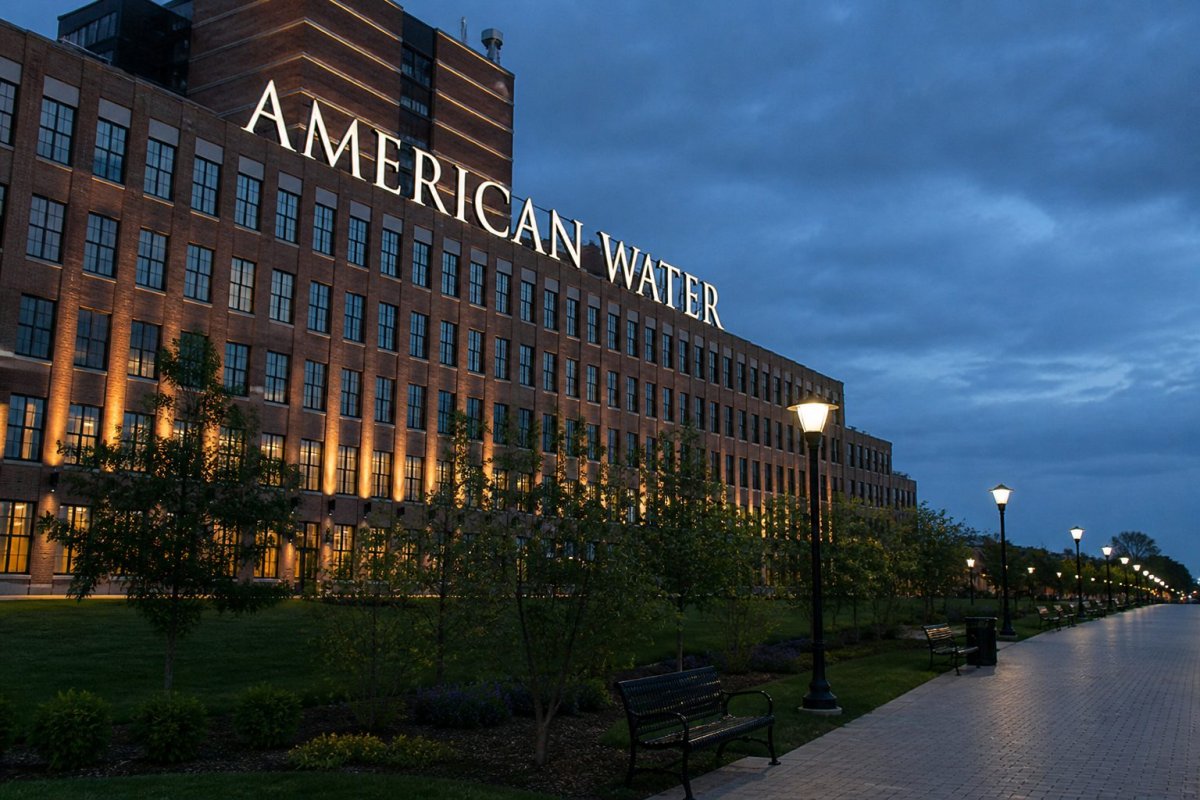
Illinois American Water, a subsidiary of American Water Works Company, Inc. (NYSE: AWK), has selected 14 nonprofit organizations to receive its 2026 Water and Environment grants. The awards are funded through the American Water Charitable Foundation's Keep Communities Flowing program, which aims to support watershed protection, water education, and conservation initiatives across the state.
Grant Details and Corporate Context
The announcement comes during the same week that American Water Works, the largest publicly traded water and wastewater utility in the United States, reiterated its 2026 adjusted earnings per share (EPS) guidance of $6.02 to $6.12. The company also confirmed plans to invest approximately $3.7 billion in capital expenditures this year. Adjusted EPS, which excludes certain items, is intended to provide a clearer picture of ongoing operational performance.
Despite these positive signals, the company's stock closed Thursday at $128.42, down 2.69%. Other water utilities, including Essential Utilities, American States Water, and California Water Service, also experienced declines, reflecting broader sector weakness amid ongoing infrastructure spending.
Community Impact and Local Projects
In Illinois, the grants will fund a diverse array of projects, including rain gardens, watershed research, water-safety training, river cleanups, and stream restoration. Rebecca Losli, president of Illinois American Water and a trustee of the foundation, highlighted the importance of these initiatives in helping communities protect their watersheds.
Among the recipients, HeartLands Conservancy will use its grant to expand an "Exploration Garden" that illustrates the journey of a raindrop through local ecosystems. Mary Vandevord, president and CEO of HeartLands Conservancy, noted that the funding enables the organization to demonstrate "nature-based solutions" that enhance both biodiversity and water quality.
National Reach and Financial Performance
Nationally, the American Water Charitable Foundation distributed over $1.5 million to 86 organizations across 13 states. Carrie Williams, who leads the foundation, emphasized that the grants support efforts to "protect clean water," promote conservation, and expand environmental education.
In Iowa, Iowa American Water is allocating more than $57,000 among six groups, with funds directed toward Girl Scouts' river and climate initiatives, water-quality test kits, safe medication disposal programs, and cleanup teams in the Quad Cities. Brad Nielsen, president of Iowa American Water, stressed the importance of collaboration in watershed protection and conservation.
American Water Works reported first-quarter adjusted EPS of $1.01, slightly below the $1.02 recorded in the same period last year. Revenue gains from new rate adjustments were offset by higher operating expenses, depreciation, and financing costs. CEO John Griffith described the results as "solid" and reaffirmed the company's long-term targets for earnings and dividend growth of 7% to 9%.
Infrastructure Investments and Regulatory Risks
While the grants are modest relative to the company's capital requirements, they underscore the ongoing narrative of aging infrastructure, water safety, and rate recovery. In West Virginia, the subsidiary has announced plans to replace 800 feet of aging pipe in Dunbar, a project costing $500,000. This is part of a broader $134 million investment expected across the state in 2026.
The company faces several risks, including higher interest expenses related to debt used for capital projects. Additionally, rate cases are pending in five jurisdictions, with $518 million in annualized revenue awaiting regulatory approval. Delays or customer resistance could hinder earnings growth relative to construction spending.
Valuation and Merger Outlook
Valuation remains a concern, with Simply Wall St noting that American Water is trading approximately 18.9% above its estimated fair value, despite the stock price being below the consensus analyst target. The research firm also highlighted issues with debt coverage and ongoing free-cash-flow pressure as notable risks.
The proposed all-stock merger with Essential Utilities adds another layer of uncertainty. Last week, Kentucky regulators approved the deal, marking the first state-level clearance. The companies expect the merger to close by the end of the first quarter of 2027, pending additional regulatory approvals.
