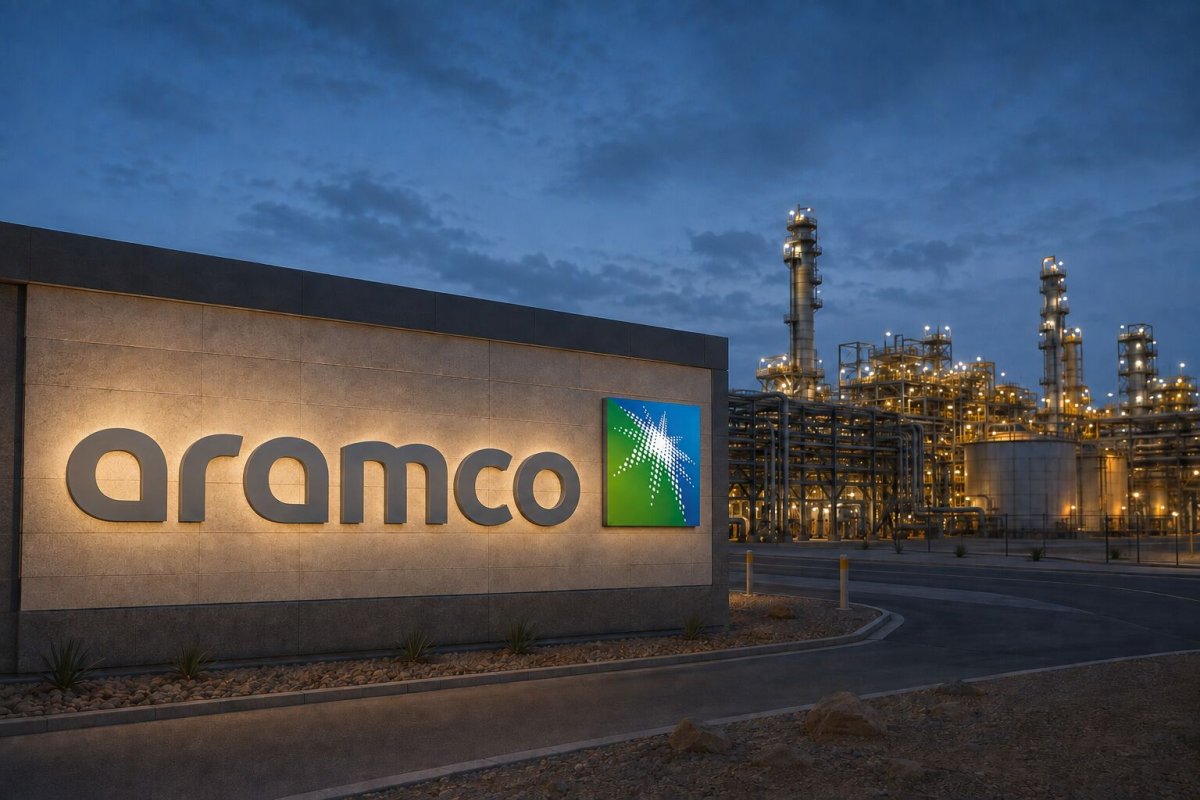
Saudi Arabian Oil Company (TADAWUL: 2222), better known as Saudi Aramco, is facing renewed uncertainty at its Jazan complex on the Red Sea coast. Reports emerged on September 7 of a second strike on the facility within a month, raising fresh questions about the resilience of its downstream operations. While the site's nameplate capacity is well known, the immediate concern for investors is not the theoretical maximum output but rather the actual throughput that may have been halted and the duration of any disruption.
The Financial Times, citing sources familiar with the matter, reported that facilities in Jizan had been targeted. Damage assessment was still underway at the time of the report, and Aramco had not issued an official comment. Additionally, no group had claimed responsibility for the attack, leaving many details shrouded in ambiguity. As a result, this remains an incident report rather than a definitive production-loss statement.
Aramco shares closed at SAR 25.96 on September 7, down 0.15%, with 4.68 million shares traded, according to Argaam market data. The Saudi market had already closed before the full extent of any operational impact was known, meaning Tuesday's trading session will be the first real test of how shareholders price in this uncertainty.
Jazan: What We Know and What We Don't
The Jazan complex is a major integrated facility, designed around a refinery capable of processing 400,000 barrels of crude oil per day. It produces a range of refined products, including gasoline, ultra-low-sulfur diesel, benzene, and paraxylene. The site also houses a 3.8-gigawatt integrated gasification and power plant.
However, that 400,000 bpd figure represents a ceiling on exposed refining capacity, not evidence that 400,000 barrels have been removed from supply. To estimate the financial impact, investors need specifics: which units were affected, what was the pre-incident utilization rate, how much inventory is available to cover commitments, and what is the expected restart date.
The distinction between a refinery outage and lost upstream production is crucial. Crude oil can often be redirected to other markets, and product commitments may be fulfilled from inventories or other refineries. Each of these workarounds carries its own costs, including freight, margin adjustments, and working capital requirements.
There is a recent precedent that offers some context, though it cannot settle the current situation. Saudi authorities reported that a fire at an Aramco facility was extinguished after an August 9 attack in Jizan. No casualties were reported. Al Jazeera quoted Aramco CEO Amin Nasser as saying that earlier attacks had interrupted operations but did not materially affect the company's financial performance.
Oil Prices Rally, But Refinery Questions Linger
Brent crude settled at USD 97.31 per barrel on September 7, up 1.1%, after touching USD 98.06 earlier. West Texas Intermediate (WTI) was up 1.3% at USD 92.65, though there was no official settlement due to the Labor Day holiday. Reuters attributed the rally to heightened regional and shipping risks, including the Jizan report.
While higher crude prices can boost Aramco's upstream revenues, they do not automatically compensate for a downstream outage, emergency logistics, or repairs. The East-West pipeline offers an alternative route for crude exports, but it cannot replace Jazan's conversion capacity, which turns crude into specific products on the Red Sea coast.
Financial Position: Room to Absorb, But Not Immune
Aramco entered this incident with strong earnings, though its quarterly cash flow comparison was less favorable. In the second quarter, adjusted net income was USD 33.4 billion, while free cash flow came in at USD 12.3 billion after a USD 13.6 billion working capital build. The declared base dividend was USD 21.9 billion.
Based on those reported figures, quarterly free cash flow covered about 56% of the base dividend. That ratio is a snapshot, not a forecast. Working capital can reverse, and oil prices above USD 97 would improve the upstream price backdrop if sustained. Still, the comparison makes outage duration and repair costs relevant to income-focused shareholders. Gearing had already risen to 6.2% at June 30, up from 4.8% at March 31.
On the other hand, the Saudi Exchange filing shows second-quarter revenue reached SAR 450.77 billion (USD 120.21 billion), as higher prices offset lower volumes. A brief Jazan interruption could therefore be absorbed within the vast integrated system. A prolonged shutdown would be harder to dismiss.
What Would Move the Story Forward
To turn this incident report into a clear assessment, investors will be looking for:
- An official statement from Aramco or the Saudi energy ministry identifying the affected units and current operating rates.
- A restart timetable, product shipment updates, or evidence that other refineries are covering commitments.
- A credible repair cost estimate and any changes to third-quarter capital spending or working capital.
- Confirmation from Tuesday's Saudi session that the stock and crude market are pricing in more than a short disruption.
Until those facts emerge, 400,000 bpd should be viewed as an exposure measure, not an outage estimate. The next sustainable move in Aramco shares will likely depend on the duration of any disruption and the associated costs.
