Archer Aviation Inc. (NYSE: ACHR) saw its shares climb approximately 4.7% to $6.69 on Wednesday, with trading volume exceeding 36 million shares. The uptick came despite the company posting a net loss of $217.7 million for the first quarter, as investors focused on significant advancements in the Federal Aviation Administration (FAA) certification process for its Midnight air taxi.
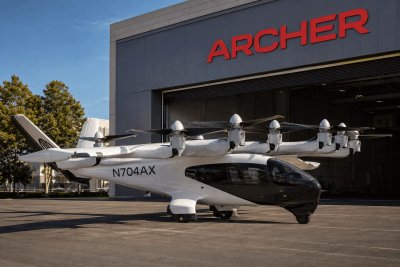
During the first quarter, Archer completed Phase 3 of the FAA's four-phase type certification process for the Midnight aircraft. The company has now entered Phase 4, which involves rigorous testing and analysis to prove the aircraft's airworthiness. However, full type certification—the FAA's formal approval that the aircraft design meets all safety regulations—remains outstanding.
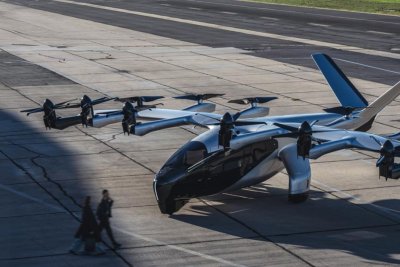
Archer expects to begin initial U.S. operations this year under the federal eVTOL Integration Pilot Program (eIPP), a White House initiative aimed at integrating electric vertical takeoff and landing (eVTOL) aircraft into the national airspace. The company's expanded fleet is currently conducting piloted vertical and conventional takeoff flights almost daily, according to its SEC filing.
Despite the certification progress, Archer reported first-quarter revenue of just $1.6 million, a sharp increase from $300,000 in the prior quarter, as it ramps up operations at Los Angeles' Hawthorne Airport. The net loss widened to $217.7 million from $188.9 million in Q4 2025, while adjusted EBITDA loss came in at $172.5 million. The company expects its Q2 adjusted EBITDA loss to land between $170 million and $200 million.
Cash remains a critical buffer for Archer. The company ended March with $1.78 billion in cash, cash equivalents, and short-term investments, a decrease of $188.8 million from year-end 2025. Operating activities consumed $149.1 million during the quarter, with an additional $32.6 million spent on property and equipment.
Archer's progress comes amid intensifying competition in the eVTOL sector. In March, the FAA and U.S. Department of Transportation selected eight eIPP projects spanning 26 states, covering air taxis, regional travel, cargo, and medevac operations. Archer, Joby Aviation, BETA Technologies, and Wisk were all named as partners. BETA Technologies reported $10.1 million in Q1 revenue alongside a $122.3 million net loss, while Joby has indicated plans to launch initial operations this year.
CEO Adam Goldstein described the initial rollouts as a test not only for aviation but also for public acceptance. "The goal is to have half a million people in the biggest cities in the country start to see these aircraft as part of your everyday commute," he said during the company's May 11 earnings call.
However, risks remain significant. Archer's filing notes that there is no guarantee its planned operations, defense contracts, vertiport buildout, or third-party deals will materialize as expected. The company still generates no passenger revenue, and quarterly losses exceed $200 million. The FAA has yet to fully certify the business model, leaving investors to weigh improved regulatory prospects and a strong cash position against ongoing financial losses and execution uncertainty.