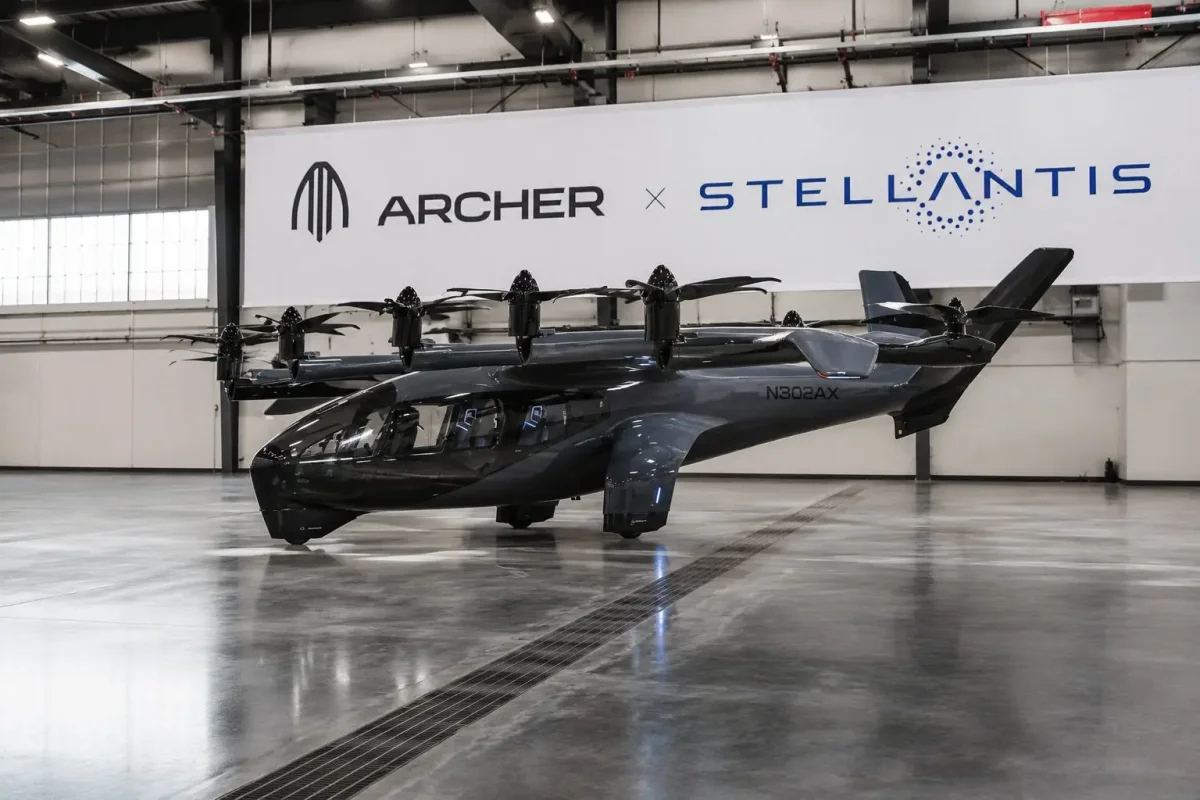
Archer Aviation (NYSE: ACHR) closed Friday's trading session down 4.15% at $5.08, underperforming the broader market as the S&P 500 ETF (SPY) gained 0.57% and the Nasdaq-100 ETF (QQQ) added 0.59%. The decline brought the company's market capitalization to approximately $3.9 billion, with shares fluctuating between $5.00 and $5.39 during the day.
Insider Filing Sparks Concerns
Investor attention was drawn to a Form 144 filed by Archer officer Eric Lentell on June 11, disclosing a plan to sell 3,754 Class A shares valued at roughly $18,764. While the size of the sale is relatively small compared to Archer's 759.6 million outstanding shares, it adds to a series of insider transactions over the past three months. This filing reignited ongoing debates about corporate governance and the potential for future dilution, especially as the company continues to burn through cash.
Financial Pressures Mount
Archer's financial performance reflects the challenges of a pre-commercial aerospace company. In the first quarter, the company reported just $1.6 million in revenue, while posting a net loss of $217.7 million and an adjusted EBITDA loss of $172.5 million. Adjusted EBITDA, which excludes interest, taxes, depreciation, amortization, and other items, offers a clearer view of operational losses. Management has guided for a second-quarter adjusted EBITDA loss between $170 million and $200 million, underscoring the heavy spending required to advance its electric vertical takeoff and landing (eVTOL) aircraft.
Regulatory Milestones and Cash Position
Despite the financial strain, Archer maintains a strong cash position. The company ended the first quarter with $1.78 billion in cash, cash equivalents, and short-term investments. On the regulatory front, Archer achieved a significant milestone by becoming the first eVTOL developer to complete Phase 3 of the Federal Aviation Administration's Type Certification process for its Midnight aircraft. CEO Adam Goldstein described this as "record FAA certification progress" and noted it marked the company's "most expansive flight testing to date."
The Midnight aircraft, a battery-powered eVTOL, can take off vertically like a helicopter and transition to forward flight like a conventional airplane. The next critical step is Phase 4 of the certification process, which involves demonstrating that the aircraft meets all safety and performance standards through rigorous testing and analysis. Archer aims to begin U.S. commercial service this year under the eVTOL Integration Pilot Program and is targeting operations in time for the LA28 Olympic Games. Additionally, the company is exploring potential defense contracts through its partnership with Anduril.
Market Outlook and Analyst Views
Archer trades as a high-risk, pre-revenue stock, with its valuation tied entirely to future certification and commercialization prospects. A recent analysis by Motley Fool compared Archer to competitor Joby Aviation, noting that both companies must complete the FAA process before launching U.S. commercial services. Approval could be delayed until late 2026 or 2027, leaving investors exposed to risks of further delays, cash burn, and potential equity dilution.
TipRanks rates Archer as a Moderate Buy, with three analysts providing ratings over the past three months and an average price target of $13. This implies significant upside if the company successfully achieves FAA certification and launches commercial operations. However, that optimism hinges on milestones that remain uncertain, including Phase 4 approval, the start of U.S. routes, defense contracts, and meaningful revenue generation.
For aggressive growth investors, Archer represents a speculative opportunity in the emerging air-mobility sector. More cautious investors, however, may view the stock as vulnerable until the company can demonstrate sustainable revenue and control its cash burn. The next key catalyst will be progress on FAA Phase 4 testing, which will determine whether Archer can convert its ambitious plans into a operational reality by 2026.


