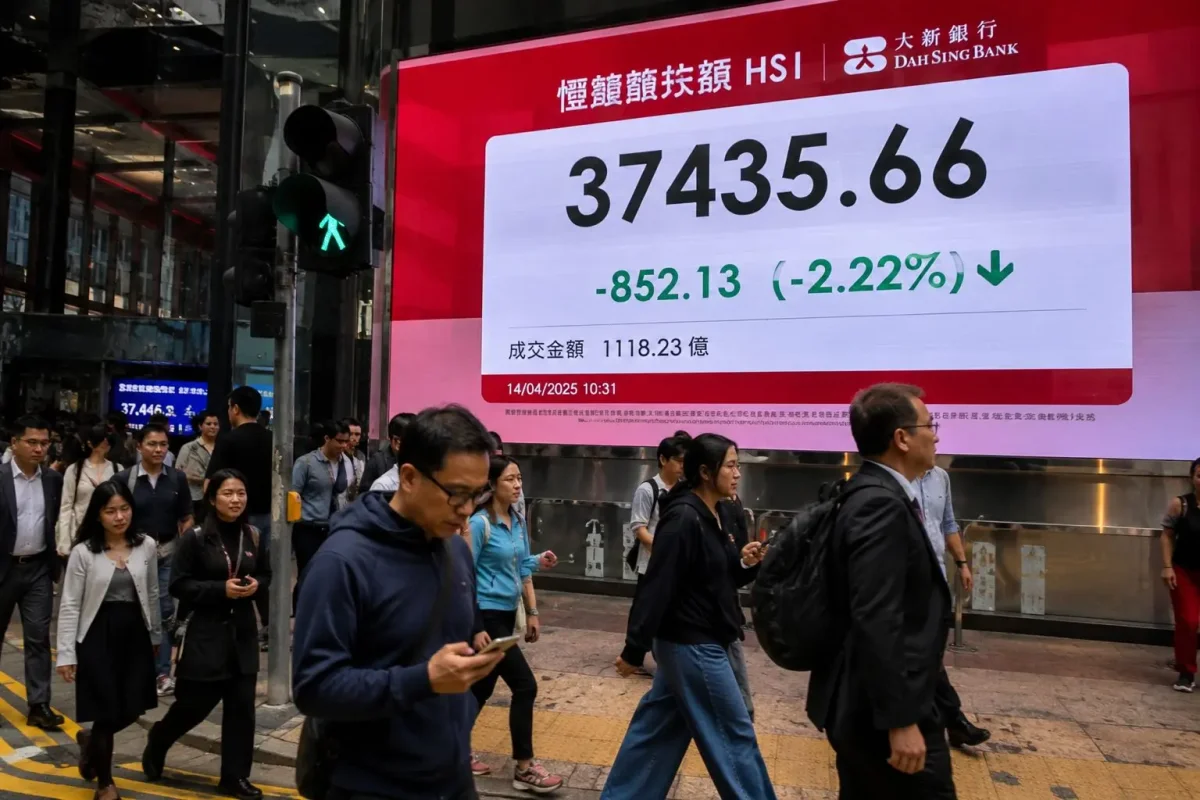
Asian equity markets declined on Thursday, dragged lower by a surge in crude oil prices triggered by escalating tensions between the United States and Iran, and a slowdown in the artificial intelligence (AI)-driven rally that had buoyed stocks in recent weeks. Japan's Nikkei 225 fell 0.47% to 64,693.12, Hong Kong's Hang Seng Index dropped 1.32% to 24,994.31, and Australia's All Ordinaries slid 1.40%. Mainland China's Shanghai Composite bucked the trend, edging up 0.07%.
Brent crude oil rose 2.62% to $96.76 per barrel, as investors priced in heightened geopolitical risk in the Middle East, particularly around the Strait of Hormuz, a critical chokepoint for global oil shipments. The yen weakened to near 160 against the dollar, a level that has previously prompted intervention by Japanese authorities. U.S. Treasury yields climbed, with the 10-year note reaching 4.528%.
The rise in oil prices threatens to stoke inflation, which could discourage central banks from cutting interest rates or even force them to raise rates again. This would particularly pressure high-valuation growth stocks, including those in the AI sector, which have led recent market gains. Mizuho Bank's Tan Boon Heng noted that mixed signals on a potential U.S.-Iran deal have weighed on risk sentiment, curbing demand for equities.
India's markets were closed for the Bakri Id holiday, with the National Stock Exchange's Nifty 50 board holding its previous close from May 27. The Bank of Korea kept its base rate unchanged at 2.50%, but two of seven board members called for a 25-basis-point hike, signaling a hawkish tilt. Governor Shin Hyun Song indicated the debate is now about the timing and pace of rate increases.
South Korea's export data offered a bright spot, with a Reuters poll projecting a 48.4% jump in May exports, driven by a more than tripling of chip sales in the first 20 days of the month. Stephen Lee, economist at Meritz Securities, said second-quarter export growth is outpacing forecasts, while Park Sang-hyun at iM Securities expects the strong export run to continue, supported by robust manufacturing and chip demand.
In Japan, stocks eased after a strong run, but foreign investors continued to pile in, purchasing a net 1.08 trillion yen in Japanese equities in the week ended May 23, marking the eighth consecutive week of inflows. SoftBank Group jumped 17.62% last week, and Socionext added 12.26%, riding momentum from Nvidia's AI chip outlook.
The market remains highly sensitive to headlines. A credible ceasefire in the Middle East and smoother Gulf shipping could send oil prices lower and revive demand for growth stocks, while further attacks or insurance fears that deter tankers would reinforce inflation, push yields higher, and further compress equity valuations in Asia.