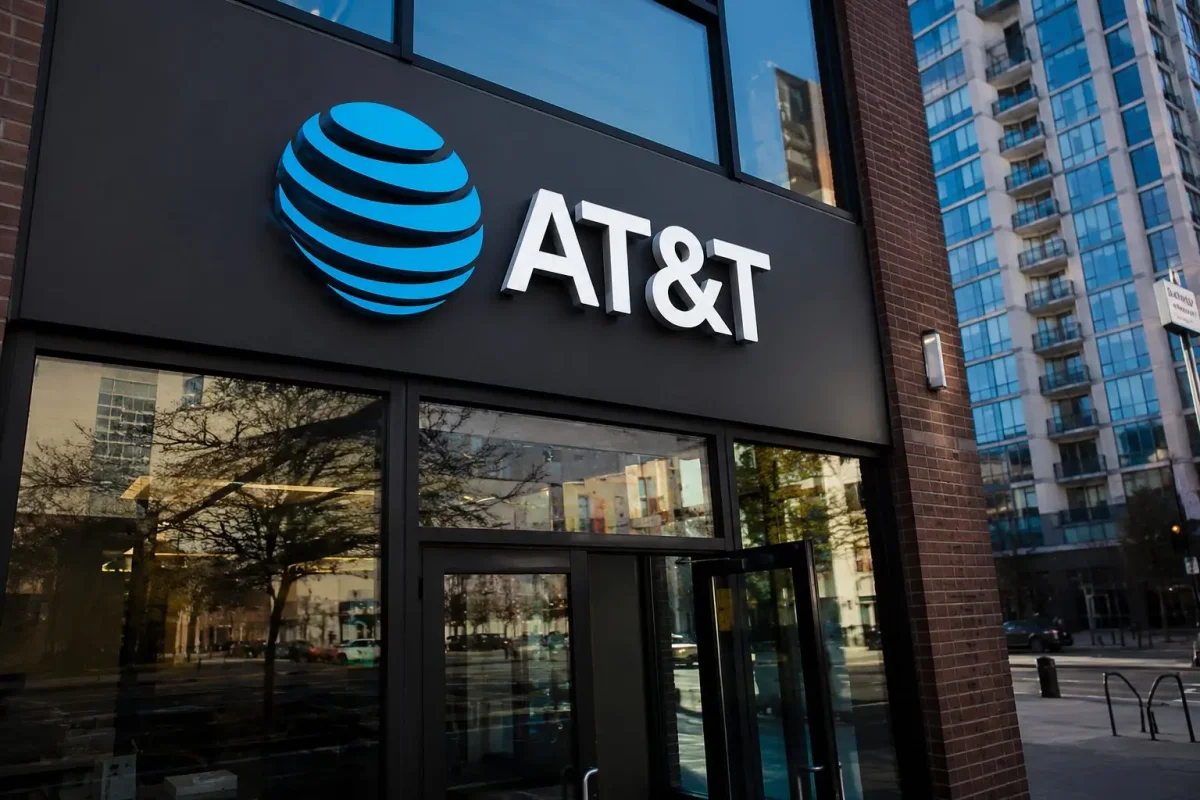
AT&T Inc. shares closed Friday at $23.58, up 2.52% on the day, outperforming both the S&P 500 and the Dow Jones Industrial Average. The stock gained 58 cents, though it eased slightly to $23.53 in after-hours trading. The broader market saw the S&P 500 rise 0.50% and the Dow gain 0.70%.
The catalyst for AT&T's rally came from a fresh bullish analyst call. On June 12, Freedom Broker initiated coverage on the telecom giant with a Buy rating and a $30 price target. That target sits above Friday's closing price, reflecting optimism about the company's growth trajectory. According to data from Benzinga, the consensus among analysts tracked by Investing.com remains positive, with 16 Buy ratings, 10 Hold ratings, and no Sell recommendations. The average 12-month price target stands at $30.28.
AT&T's recent performance has been driven by its wireless and fiber expansion. In the first quarter, Advanced Connectivity service revenue grew 3.6% year-over-year, while segment operating income climbed 14.8% and EBITDA rose 5.6%. The company reported 584,000 net internet additions, split between fiber and fixed wireless, and 294,000 postpaid phone net adds, exceeding the FactSet consensus estimate of 272,000. Total revenue reached approximately $31.5 billion, beating the LSEG analyst forecast of $31.25 billion, as reported by Reuters.
Bundling continues to be a key strategy. Roughly 42% of AT&T's home internet customers also subscribe to its wireless services. "Data is going to be the revenue of the future," noted Brian Mulberry, chief market strategist at Zacks Investment Management, in a Reuters article. This integrated approach is seen as a competitive advantage in a market where subscribers increasingly expect seamless connectivity.
However, the bullish narrative is tempered by concerns over free cash flow and rising competition. AT&T's shares dipped after the first-quarter report when the company guided second-quarter free cash flow between $4.0 billion and $4.5 billion, below the $4.6 billion consensus from Visible Alpha. Free cash flow is critical for funding dividends, reducing debt, and maintaining network investments. The company's trailing price-to-earnings ratio stands at 7.91, with a dividend yield of 4.71% as of June 12, according to WSJ market data. The board recently declared a common dividend of $0.2775 per share, payable May 1, which continues to attract income-focused investors.
A new threat has emerged from satellite broadband. Reuters reported that Oppenheimer views SpaceX's Starlink as a potential disruptor for the $1.6 trillion U.S. communications sector, with legacy broadband players like AT&T among the most exposed. Any weakness in broadband or wireless subscriber growth could undermine market confidence that fiber and 5G can offset legacy declines.
AT&T is scheduled to report its second-quarter 2026 results before the New York Stock Exchange opens on July 22, followed by an 8:30 a.m. ET conference call. The upcoming earnings release will be a critical test. Investors will scrutinize subscriber additions, Advanced Connectivity revenue trends, and especially free cash flow generation. The data must demonstrate that growth in subscriber and revenue metrics translates into sufficient free cash flow to sustain dividends, fund network upgrades, and strengthen the balance sheet.
For now, AT&T presents a moderately attractive profile for income investors, with a low P/E, a solid dividend yield, and analyst upside. But the stock carries risks tied to competitive pressures and cash flow uncertainty. The July report will be pivotal in determining whether the current valuation is justified or if the bears' concerns will take hold.