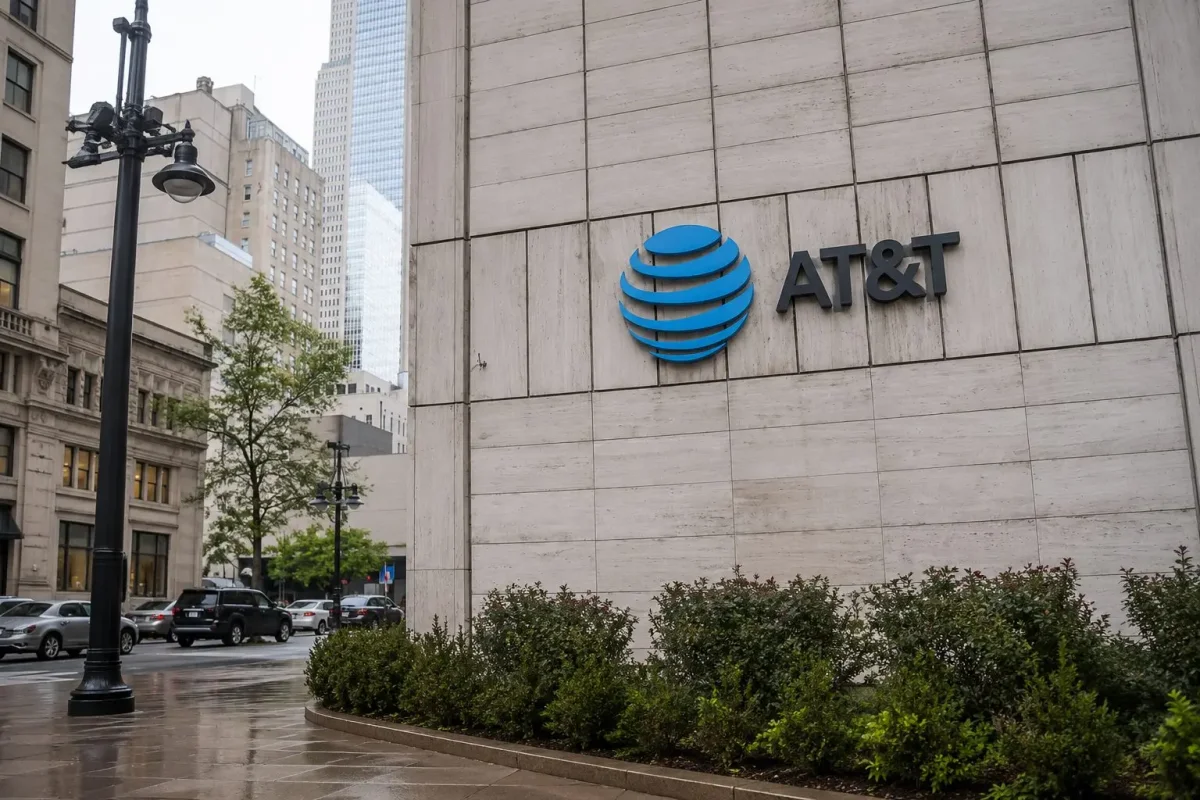
AT&T Inc. shares climbed 1.1% to $23.02 in late trading Friday, recovering some ground after a turbulent week marked by heightened concerns over competitive threats from SpaceX's Starlink satellite broadband service. The modest uptick came as investors reassessed the telecom giant's outlook in light of a bearish analyst note and broader market volatility.
Oppenheimer Downgrade Sparks Selloff
The week's downturn was triggered by Oppenheimer analyst Timothy Horan, who downgraded AT&T from Outperform to Perform and removed his $32 price target. Horan warned that Starlink, which is expected to debut on the Nasdaq on June 12 with a valuation of approximately $1.75 trillion, could disrupt the $1.6 trillion U.S. communications industry. “We think longer-term broadband subscriber growth and eventually mobile is at risk,” Horan stated in a research note. He highlighted that low-earth orbit (LEO) satellites reduce latency and are increasingly competitive with terrestrial networks.
Market Context and Sector Moves
The broader market faced headwinds after the U.S. economy added 172,000 jobs in May, far exceeding expectations. The strong labor data dampened hopes for Federal Reserve rate cuts, with some economists now speculating about a potential rate hike. The SPDR S&P 500 ETF dropped 2.4% on the week. Among AT&T’s peers, Verizon Communications Inc. rose 2.6% and T-Mobile US Inc. gained 2.2%, as the sector showed mixed reactions to the Starlink news.
Divided Views on Starlink Threat
Telecom executives remain split on the severity of the Starlink challenge. T-Mobile CFO Peter Osvaldik argued that satellite broadband cannot realistically compete with terrestrial networks on price or reliability. However, Horan noted that Starlink’s pricing is “on par with legacy broadband,” raising the prospect of slower subscriber growth, increased promotional spending, and delayed returns on network investments for traditional operators.
AT&T's Strategic Focus
AT&T continues to emphasize its fiber expansion and shareholder returns. In the first quarter, the company reported revenue of $31.5 billion, with 294,000 postpaid phone net additions and 292,000 fiber net additions. Free cash flow for the quarter stood at $2.5 billion, and management reaffirmed its 2026 free cash flow target of over $18 billion, along with plans for approximately $8 billion in share buybacks.
Beyond core connectivity, AT&T is broadening its portfolio. On Wednesday, the company announced the addition of LiveOne and Cisco to its Connected Car platform. “The platform was built to help automakers move faster to scale and personalize digital experiences,” said Matt Harden, AT&T’s vice president for Connected Solutions.
Upcoming Catalysts
Investors will closely watch AT&T CFO Pascal Desroches’s presentation at the Mizuho Technology Conference on June 9. Second-quarter earnings are scheduled for release before the New York Stock Exchange opens on July 22. The company has guided for second-quarter free cash flow of $4.0 billion to $4.5 billion.
While Friday’s rebound provided some relief, the Starlink risk remains a key overhang. AT&T’s ability to sustain fiber growth, manage churn, and deliver on cash return commitments will be critical as SpaceX moves closer to becoming a public market benchmark.