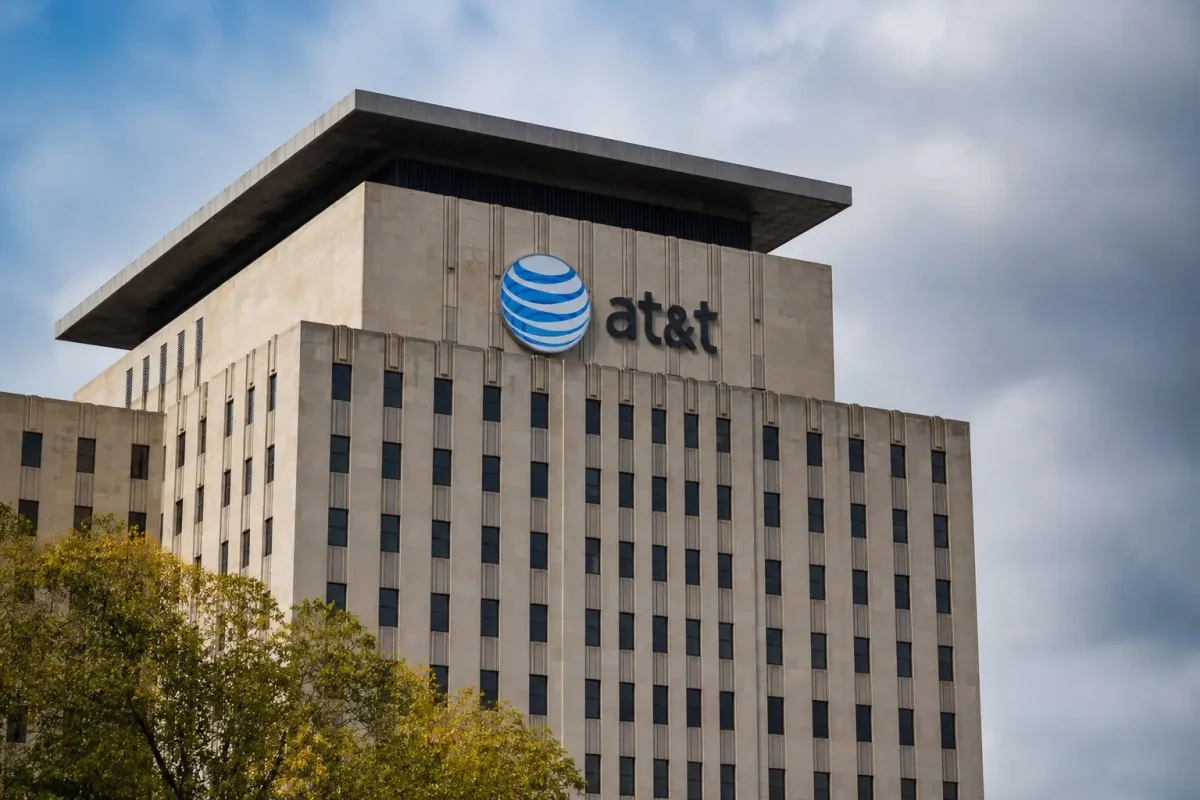
AT&T Inc. (NYSE:T) shares slipped 0.36% in premarket trading on Tuesday to $21.87, as investors brace for second-quarter earnings that are expected to highlight a growing tension between revenue growth and cash flow generation. The telecommunications giant is set to report results on Wednesday at 8:30 a.m. EDT, with Wall Street forecasting adjusted earnings of $0.59 per share on revenue of $32.04 billion. While these figures would represent year-over-year improvements of 9.3% and 3.9%, respectively, the company's free cash flow outlook tells a different story.
Cash Flow Squeeze Intensifies
AT&T has guided for second-quarter free cash flow in the range of $4.0 billion to $4.5 billion, down from $4.4 billion in the same period last year. At the midpoint of $4.25 billion, that would represent a 3.4% decline. This divergence between earnings growth and cash flow is a critical issue for investors, as it directly impacts the company's ability to fund its dividend and share buyback programs.
For the first half of 2026, cumulative free cash flow stands at $6.75 billion—$2.5 billion from Q1 plus the Q2 midpoint. That leaves $11.25 billion needed in the second half to reach the stated annual minimum of $18 billion, meaning 62.5% of the target must be achieved in the final two quarters.
Dividend Coverage Under Pressure
With approximately 6.95 billion shares outstanding, AT&T's annual dividend of $1.11 per share amounts to roughly $7.7 billion in total payouts. When combined with the planned $8 billion in share repurchases for 2026, total cash returns to shareholders reach nearly $15.7 billion—representing 87% of the $18 billion free cash flow floor. That leaves only about $2.3 billion for debt reduction and other uses, a slim margin that has investors questioning the sustainability of the current payout policy.
Net debt stood at $126.4 billion after the first quarter, and legacy revenue continued its decline, falling 25.3% year over year. The company's heavy investment in fiber expansion has been a primary driver of lower cash flow, and any slowdown in subscriber growth could further erode the dividend buffer.
Operational Strengths Provide Some Support
Despite the cash flow challenges, AT&T's operating metrics remain solid. Advanced Connectivity service revenue rose 3.6% in the first quarter, while EBITDA increased 5.6%. The company added 584,000 new fiber and fixed-wireless internet subscribers, with 42% of advanced home internet customers also subscribing to AT&T wireless services. Excluding acquired fiber customers, the convergence rate was nearly 45%, highlighting the success of bundling strategies in improving customer retention and spreading acquisition costs.
In April, Brian Mulberry, chief market strategist at Zacks Investment Management, told Reuters that AT&T views data as "the revenue of the future," a perspective that underpins the company's significant capital investment in fiber and 5G networks.
Valuation Discount Persists
AT&T closed last week at $21.81, up about 3.2% from the prior Friday. On Monday, shares rose another 0.64% even as the S&P 500 slipped 0.19%. Despite the modest gains, the stock continues to trade at a steep discount to peers. AT&T is valued at roughly 7.4 times trailing earnings, compared to Verizon Communications Inc. (NYSE:VZ) at 10.6 times and T-Mobile US Inc. (NASDAQ:TMUS) at 20.8 times.
Jonathan Atkin of RBC Capital Markets reiterated a Buy rating on July 19, with a price target of $27, implying approximately 23% upside from Monday's close. He sees the company's fiber investments as a long-term growth driver that could eventually close the valuation gap.
Week of Telecom Earnings Ahead
AT&T's results on Wednesday will kick off a busy week for the telecom sector. T-Mobile reports on Thursday, followed by Verizon on Friday, giving investors three data points on subscriber trends and promotional intensity. The market will be watching closely to see if AT&T can maintain its subscriber momentum while managing the cash flow pressures that have become the central challenge for the company.
The duration of AT&T's low valuation will ultimately depend on its ability to generate sustainable free cash flow. While revenue and earnings growth are encouraging, the cash conversion cycle remains the critical metric for investors seeking a re-rating of the stock.