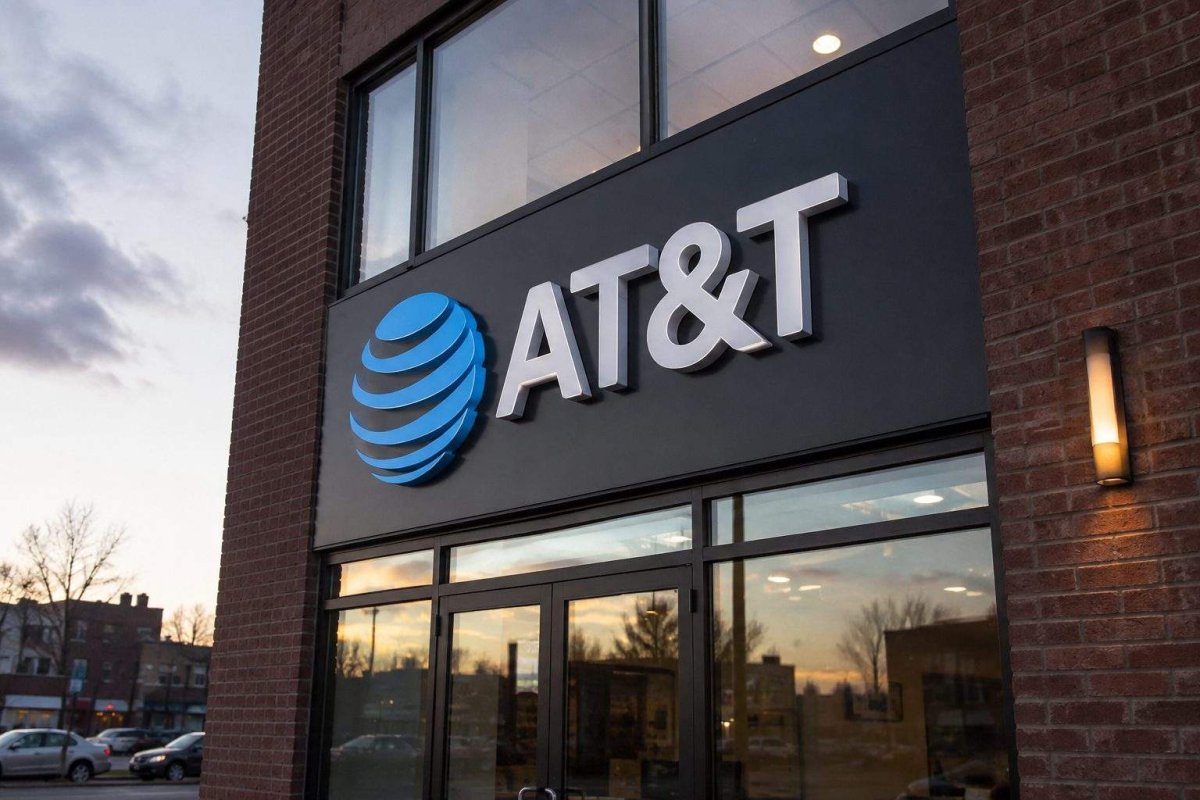
AT&T Inc. (NYSE: T) saw its shares decline 2.1% to $23.10 in late morning trading on Tuesday, even as the broader market advanced. The SPDR S&P 500 ETF Trust (NYSEARCA: SPY) gained 1.3%, highlighting the telecom giant's underperformance. The drop came after the company announced a $1 increase to its administrative fee on postpaid wireless lines, effective August 5.
Based on AT&T's reported 74.921 million postpaid phone customers as of June 30, the additional $1 per month could translate to approximately $899.1 million in annual gross revenue. This preliminary estimate does not account for exemptions, customer churn, or associated costs, and should not be interpreted as company guidance.
Fee structure and revenue potential
The company will raise its consumer Administrative & Regulatory Cost Recovery Fee from $3.99 to $4.99 per postpaid line. For business and government accounts, the administrative fee will increase by $1, reaching a maximum of $3.49. AT&T emphasizes that these are company charges, not government-mandated taxes.
To put the potential revenue in perspective, if 50% of the phone base is billed, the yearly gross gain would be approximately $450 million. A full implementation would represent about 5% of AT&T's projected 2026 free cash flow of over $18 billion, or roughly 9% of its planned $10 billion share repurchases for the year.
Strategic context and recent investments
The fee increase comes on the heels of AT&T's $23 billion spectrum purchase completed on July 28, which added approximately 50 MHz of low- and mid-band spectrum across nearly all U.S. markets. The additional revenue could help offset costs related to interconnection, cell sites, and regulatory expenses, as well as support ongoing network investments.
AT&T's second-quarter results showed momentum, with 432,000 net postpaid phone additions and 646,000 new internet connections. Postpaid phone churn remained stable at 0.86%, and free cash flow reached $4.7 billion. The company also reported that 42.5% of advanced-home-internet households subscribe to its wireless service, indicating successful cross-selling efforts.
Market reaction and valuation
Investors are watching to see if the fee increase will impact churn rates. AT&T trades at 7.7 times trailing earnings, compared to 12.0 times for Verizon (NYSE: VZ) and 18.4 times for T-Mobile (NASDAQ: TMUS). The company's annual dividend of $1.11 per share yields approximately 4.8% at Tuesday's close.
Risks include some postpaid lines not incurring the fee, potential customer pushback leading to higher churn, and the possibility that much of the gross revenue could be absorbed by network and spectrum investments. The key test will come with third-quarter results, where investors will assess whether the pricing increment offsets any customer attrition.