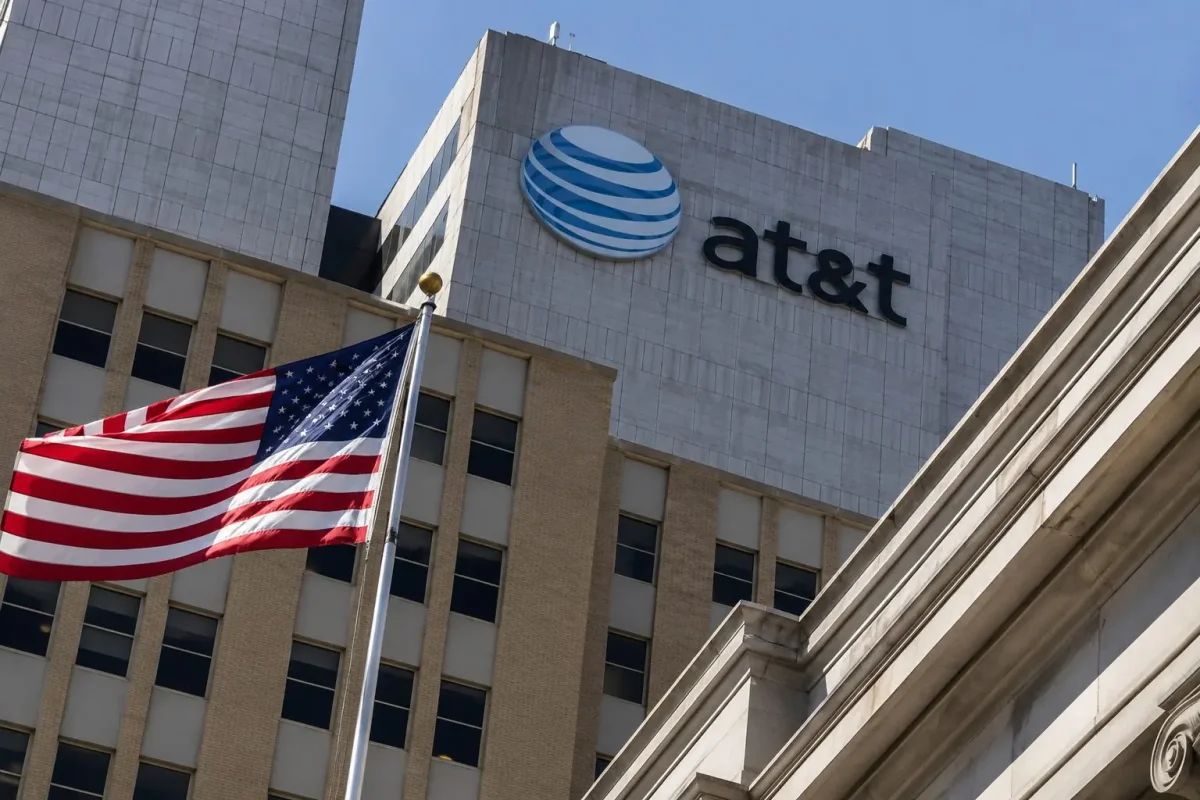
AT&T Inc. (T) shares closed Thursday at $22.01, down 1.9% on the day and marking a 5.5% decline for the holiday-shortened week, as the company faces mounting regulatory pressure in California over its plan to discontinue traditional copper-wire phone service. The selloff pushed the stock to its lowest level since early June, just ahead of the Juneteenth market closure on Friday.
California regulators have asked a state court and the Federal Communications Commission to reject AT&T's bid to stop offering copper-based phone service to new customers in parts of the state. The California Public Utilities Commission (CPUC) argues that AT&T has not demonstrated that all affected customers would have adequate replacement service. AT&T counters that maintaining the copper network costs approximately $1 billion annually and now serves only 3% of households in its California territory.
The company plans to discontinue legacy copper-based residential and business service across portions of 360 wire centers starting in June 2027, impacting roughly 184,000 residential and 15,000 business customers. AT&T declined to comment on the CPUC filings, Reuters reported.
The regulatory battle strikes at a core element of AT&T's strategic narrative: redirecting capital from aging copper infrastructure toward fiber broadband and 5G wireless networks. The term "carrier of last resort" is central to the dispute, referring to the legal obligation to provide basic service even where newer networks exist.
AT&T's stock performance this week reflects investor unease. The shares fell 1.92% on Thursday, following declines of 1.23%, 0.56%, and 3.11% earlier in the week, according to historical market data. Verizon (VZ) also declined Thursday, while T-Mobile (TMUS) edged higher, providing a mixed read-through for the telecom sector.
The selloff sharpens the stakes for AT&T's strategic messaging. The company has reiterated its commitment to 2026 and multi-year financial targets, including second-quarter free cash flow of $4.0 billion to $4.5 billion. Free cash flow is critical for dividends, debt reduction, and share buybacks. AT&T also announced a CFO transition, with Pascal Desroches retiring at year-end and Jennifer Biry set to become deputy CFO on July 6 and CFO on January 1, 2027.
Meanwhile, competitive pressures are intensifying. Verizon this week announced simplified wireless plans, the elimination of activation and upgrade fees, and new loyalty rewards as it battles AT&T and T-Mobile in a mature U.S. market. Verizon consumer executive Alfonso Villanueva told Reuters the aim is a value proposition for "every cohort."
AT&T's counter-strategy centers on bundling. CEO John Stankey said in April that the company had its "best first quarter ever" for advanced connectivity internet customer additions, emphasizing the ability to sell both fiber and 5G from one provider. AT&T reported 294,000 postpaid phone net additions and 584,000 advanced connectivity internet net additions in the first quarter.
However, risks are mounting. If California or the FCC forces AT&T to maintain copper spending longer than planned, cost savings could erode. Promotional pressure from Verizon and T-Mobile could squeeze wireless margins. Additionally, the emergence of low Earth orbit satellite broadband networks could nibble at rural broadband demand, challenging AT&T's fiber buildout assumptions. Oppenheimer analyst Timothy Horan recently downgraded AT&T to Perform from Outperform, citing longer-term broadband subscriber risk.
With U.S. markets closed Friday for Juneteenth, investors will return Monday to a stock that has already broken lower this week. The next major company catalyst is AT&T's second-quarter earnings call scheduled for July 22.