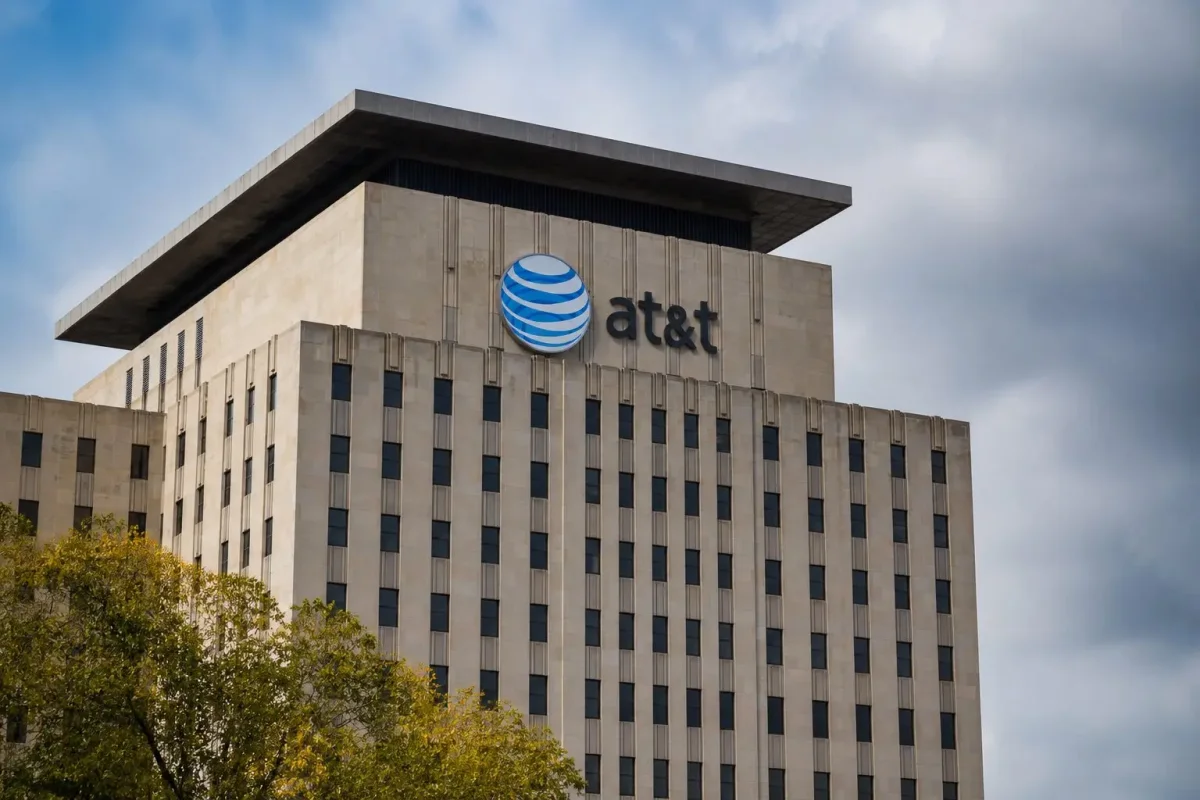
Shares of AT&T Inc. (NYSE:T) edged up 0.7% to $23.38 by midday Friday, recovering from a sharp two-day decline that followed the closing of its $23 billion spectrum acquisition from EchoStar Corp. (NASDAQ:ECHO). The stock had fallen 5.9% over Wednesday and Thursday as investors shifted focus from network performance to the company's financing strategy.
The telecommunications giant funded the acquisition with a mix of short-term loans and cash. According to the company, $14.5 billion of the purchase price was covered by term loans with maturities of two years or less, while an estimated $8.5 billion came from existing cash reserves. The loan package includes an $11.5 billion two-year term loan and a $3.0 billion 364-day facility.
This aggressive use of short-term debt has raised concerns among analysts, as AT&T's leverage is projected to climb to 3.2 times EBITDA following the deal, up from 2.68 times at the end of June. Management expects to reduce leverage to approximately 3.0 times by year-end, but the company's stated goal of 2.5 times remains about three years away.
The spectrum purchase, which includes 30 MHz at 3.45 GHz and 20 MHz at 600 MHz, is designed to enhance AT&T's 5G capacity, uplink speeds, and overall network performance. The company reaffirmed its full-year financial guidance after the transaction closed, despite the added debt burden.
Chief Financial Officer Pascal Desroches noted that combined dividends and share buybacks in 2026 are expected to reach approximately $18 billion, which would consume nearly all of the company's projected free cash flow. The acquisition cost represents 128% of the company's minimum free cash flow guidance of $18 billion, while the new debt draws account for 81% of that figure.
AT&T's core business showed resilience in the second quarter, with postpaid phone net additions of 432,000, well above the 338,500 expected by analysts. Phone churn remained steady at 0.86%. However, the company's free cash flow-to-revenue ratio of 14.9% lagged behind rivals Verizon (NYSE:VZ) at 18.7% and T-Mobile (NASDAQ:TMUS) at 21.1%.
CEO John Stankey defended the accelerated share repurchase program, which now totals approximately $10 billion for the year, calling it a demonstration of confidence rather than a response to pressure. "We are accelerating the pace of our planned share repurchases this year," he said in a statement.
Market reaction has been mixed. AT&T shares trade at a trailing P/E of 7.8, the lowest among its peers, reflecting concerns about the elevated leverage and declining legacy revenue, which fell 25.9% in the quarter. Meanwhile, service revenue in the company's newer connectivity segment rose 5.1%.
Investors will be watching closely to see if AT&T can deliver on its deleveraging promise while maintaining subscriber growth momentum. The company faces significant refinancing risk due to the short maturity of its new debt, and any slowdown in customer additions or cash flow could delay its balance sheet recovery.