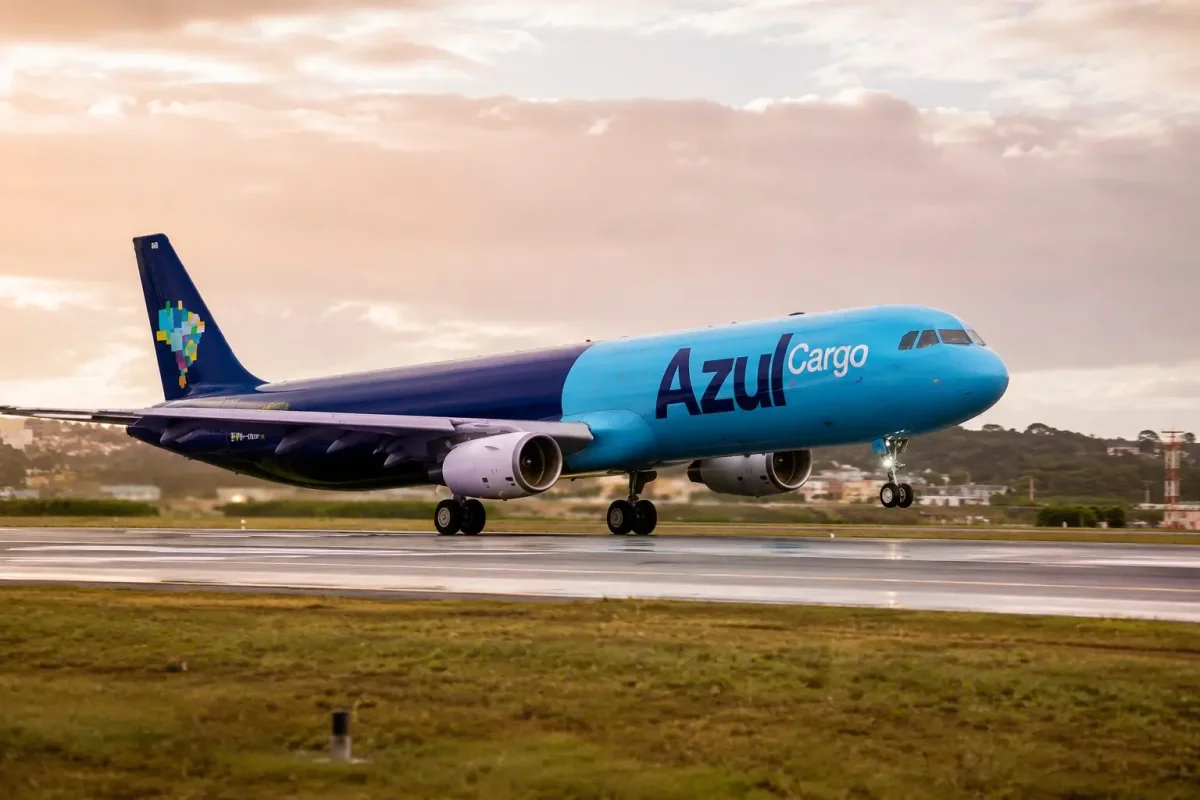
Azul Logística has inaugurated a dedicated cargo route connecting Campinas in São Paulo to Porto Velho, Rondônia, a move that promises to dramatically reduce delivery times to Brazil's northern region. The new service, operating three times weekly, aims to slash transit from over 10 days to just 3 to 4 days, leveraging the speed of air freight over traditional road and river transport.
Strategic Expansion in Northern Brazil
The debut flight carried approximately 20 tonnes of cargo, signaling Azul's commitment to capturing demand in a region where logistics have historically been hampered by vast distances and challenging infrastructure. The route is specifically targeting e-commerce, pharmaceuticals, auto parts, and general cargo, appealing to shippers willing to pay a premium for faster delivery.
Izabel Reis, director of Azul Logística, described Porto Velho as a strategic market in a statement to local media. She emphasized that the new service will accelerate connections for Rondônia and neighboring cities to major distribution hubs in Brazil, strengthening the region's economic integration.
Operational Details and Fleet
Azul is deploying Airbus A321P2F aircraft for the route—passenger planes converted for cargo use. The airline currently operates two such freighters and has plans to expand its dedicated freighter fleet to six by the end of 2027. This marks a transition from the older Boeing 737-400F freighters previously used.
The flight schedule includes departures from Campinas on Mondays, Wednesdays, and Fridays, with return flights from Porto Velho on Tuesdays, Thursdays, and Saturdays. Campinas serves as Azul's main cargo hub, connecting its freighter flights with ground and river networks to reach areas lacking robust transport links.
Post-Bankruptcy Growth Strategy
The route launch comes weeks after Azul exited U.S. Chapter 11 bankruptcy protection. In February, the airline shed approximately $2.5 billion in debt and leases during the process. CEO John Rodgerson has articulated a strategy of "responsible growth," focusing on expanding cargo capacity where distance drives demand for air freight without overextending the network prematurely.
Azul recently rebranded its cargo unit from Azul Cargo to Azul Logística, integrating air, road, and maritime transport under one umbrella. The logistics network now reaches over 5,100 municipalities in Brazil, utilizing more than 200 passenger aircraft for belly cargo in addition to dedicated freighters. The unit handled approximately 21.6 million cargo shipments in 2025.
Competitive Landscape and Challenges
Azul faces stiff competition in Latin America's cargo market. LATAM Cargo is a major regional player with domestic operations in Brazil, while GOLLOG has been aggressively marketing itself for fast-delivery, healthcare, and e-commerce shipments—segments Azul is now targeting in the North.
The success of the Porto Velho route hinges on achieving sufficient load factors on the A321 flights. Additionally, potential delays in ground distribution after cargo arrives in Porto Velho—whether by road or river—could erode the promised time savings. Investors will be watching load factor data and demand trends closely as Azul tests its post-restructuring strategy.
