LONDON, July 24, 2026 – BAE Systems (OTC: BAESY) shares traded at 1,963p, slipping 0.1% on Friday, while the broader FTSE 100 gained 0.7%. The stock held onto most of its 2.1% advance from Thursday, following the announcement of a £708 million extension to the Future Combat Air System (FCAS) program. Despite the modest impact on near-term earnings, the contract solidifies BAE's strategic role in the UK's next-generation combat air initiative.
Contract Details and Financial Impact
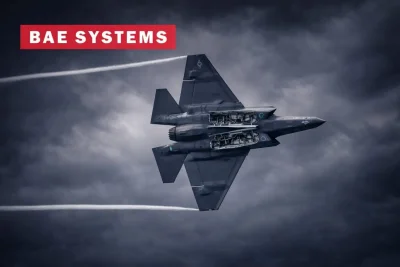
The £708 million FCAS extension represents just 0.8% of BAE's total order backlog for 2025 and about 2.3% of its projected 2025 sales. While the deal is not transformative in size, it secures the company's position within the broader Global Combat Air Programme (GCAP), a multinational effort valued at £8.6 billion over four years. That larger program, however, is not guaranteed future BAE revenue, as it depends on government budgets, project milestones, and partner decisions.
On an Air segment basis, the contract accounts for 7.6% of annual sales and 2.2% of the division's backlog. The Air segment generated £9.30 billion in revenue last year, with a £32.6 billion order book, representing 30% of BAE's total sales and 39% of its group backlog. Increased FCAS activity contributed to a 9% rise in Air segment sales, while the underlying margin stood at 11.9%.
Strategic and Risk Considerations
Simon Barnes, BAE's group managing director, stated that the additional funds would enable partners to "continue pushing the boundaries of digital engineering." The program supports over 4,500 jobs and nearly 600 UK-based suppliers and institutions. However, Chief Executive Charles Woodburn warned that UK defence spending "falls well short of what is needed to protect the country," highlighting ongoing demand-side pressures.
BAE is also investing its own capital ahead of confirmed contracts. The company has committed hundreds of millions of pounds to the Brontanax uncrewed fighter project without the usual government funding partnership, with flight testing scheduled for 2027. BAE aims to deliver 70% to 80% of traditional fighter performance for under 25% of the price, a strategy that could open new market opportunities but also increases development and execution risks.
Market Outlook and Earnings Focus
BAE reaffirmed its 2026 guidance in May, projecting sales growth of 7% to 9%, with underlying EBIT and EPS each expected to rise by 9% to 11%. Free cash flow is anticipated to exceed £1.3 billion. Based on these forecasts, underlying EPS is estimated between 82.0p and 83.5p, giving a price-earnings multiple of roughly 23.5 to 23.9 at the current share price of 1,963p.
The half-year results, due on July 30, are likely to be more impactful than the FCAS contract in the near term. Investors are focused on Air segment margins, order conversion rates, and cash generation in the first half. A change in guidance would be particularly significant. Additionally, risks remain: a five-cent movement in the sterling-dollar exchange rate affects BAE sales by approximately £500 million and underlying EPS by about 1.4p. The Brontanax self-funding approach adds further risk until production orders are secured.
In summary, the £708 million contract reinforces BAE's long-term strategic position but serves as a step toward increased investment rather than a catalyst for immediate earnings growth. The market's attention now turns to the upcoming half-year report for clearer signals on profitability and cash flow.