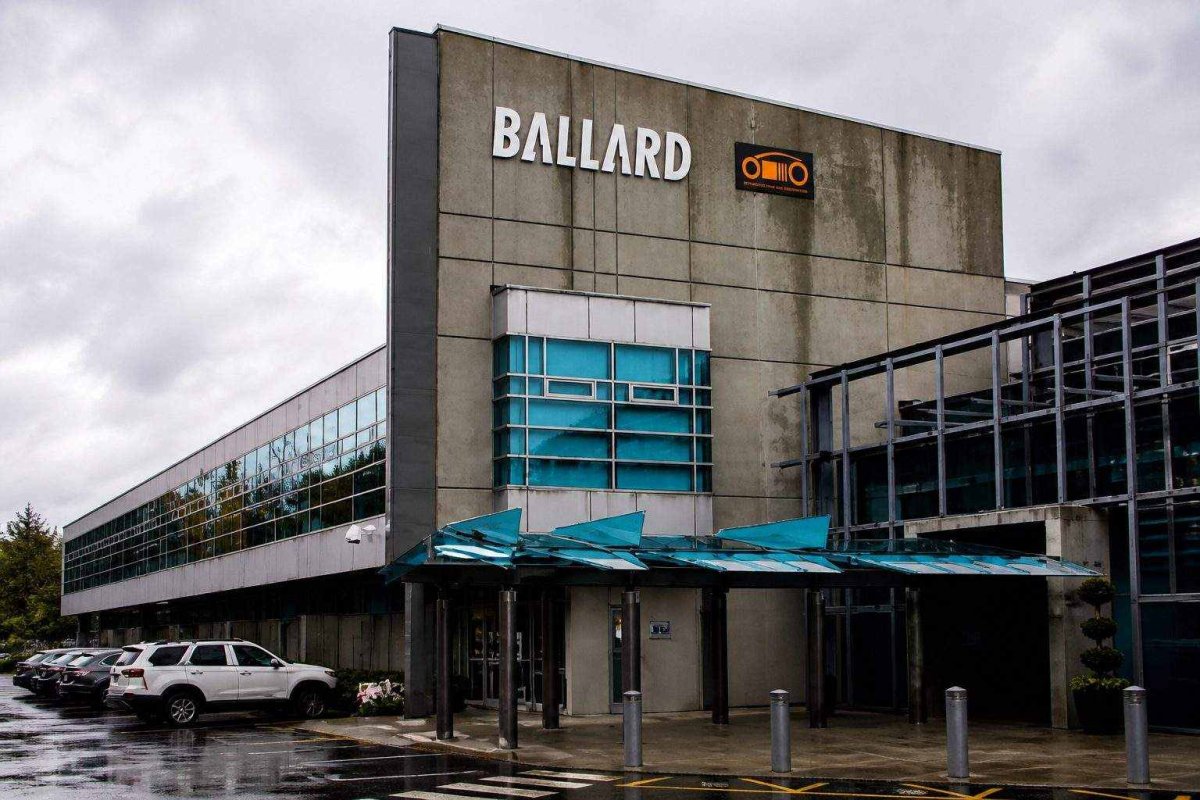
Ballard Power Systems Inc. (BLDP) saw its Nasdaq-listed shares jump roughly 24% on Tuesday, as the Canadian fuel-cell company reported a narrower quarterly loss, stronger revenue, and a return to positive gross margins—signs that cost-cutting measures are taking hold. The stock last traded at $4.07 with volume exceeding 14.8 million shares.
Q1 Financial Highlights
For the first quarter ended March 31, 2026, Ballard posted revenue of $19.4 million, a 26% increase from the same period last year. Net loss narrowed to $11.4 million, or $0.04 per share, compared to a loss of $21.0 million, or $0.07 per share, in Q1 2025. Gross margin swung into positive territory at 14%, driven by product cost reductions and lower manufacturing overhead, the company said in its earnings release.
“In Q1, we made continued progress toward positive cash flow,” said Marty Neese, Ballard’s president and CEO. He attributed the revenue growth to higher engine shipments and disciplined cost management.
Segment Performance
Results were mixed across end markets. Bus revenue fell 46% to $6.8 million, while rail revenue surged to $5.1 million from a negligible base. Stationary power revenue rose to $5.2 million. Geographically, North American sales more than doubled, but the company pointed to weaker sales in Europe, China, and other regions in its management discussion and analysis filed with the U.S. Securities and Exchange Commission.
Cost Control and Cash Flow
Operating expenses, excluding specified items, dropped 37% to $15.8 million, reflecting cuts in research and product development as well as lower sales and marketing spending. The company attributed the improved gross margin to product cost reductions and trimmed factory overhead resulting from restructurings in September 2024 and July 2025.
Cash and cash equivalents stood at $516.8 million as of March 31, down from $527.1 million at year-end. Cash outflows from operating activities fell sharply to $7.8 million from $24.4 million in the prior-year quarter, indicating lower cash burn.
Outlook and Order Book
Ballard did not provide revenue or profit guidance for 2026, citing the nascent state of the hydrogen fuel-cell market. The company expects revenue to be weighted toward the second half of the year, with operating expenses projected at $65 million to $75 million and capital expenditures of $5 million to $10 million.
The company highlighted its March agreement with New Flyer, a unit of NFI Group Inc., to supply 500 FCmove-HD+ fuel-cell engines, representing 50 megawatts of capacity. This is the largest order New Flyer has placed since its partnership with Ballard, with deliveries for North American hydrogen buses beginning in 2026. Neese called it evidence of “accelerating fleet adoption in North America.”
Ballard also noted progress with two bus manufacturers in the UK and European Union that are developing hydrogen bus platforms around its FCmove-SC engine. The company’s engines have now accumulated over 300 million kilometers in fleet service.
Competitive Landscape and Risks
Competitor Bloom Energy Corp. (BE) reported Q1 revenue of $751.1 million and raised its 2026 outlook to $3.4 billion–$3.8 billion, driven by demand for on-site power. Meanwhile, Oracle and BorderPlex Digital Assets announced plans for an AI data-center campus in New Mexico that could use up to 2.45 gigawatts of Bloom fuel-cell capacity, signaling a shift in investor focus toward data centers rather than transit fleets.
Ballard acknowledged risks including a concentrated customer base, potential order cancellations or delays, evolving demand, hydrogen infrastructure development, supplier reliability, policy support, and currency volatility.