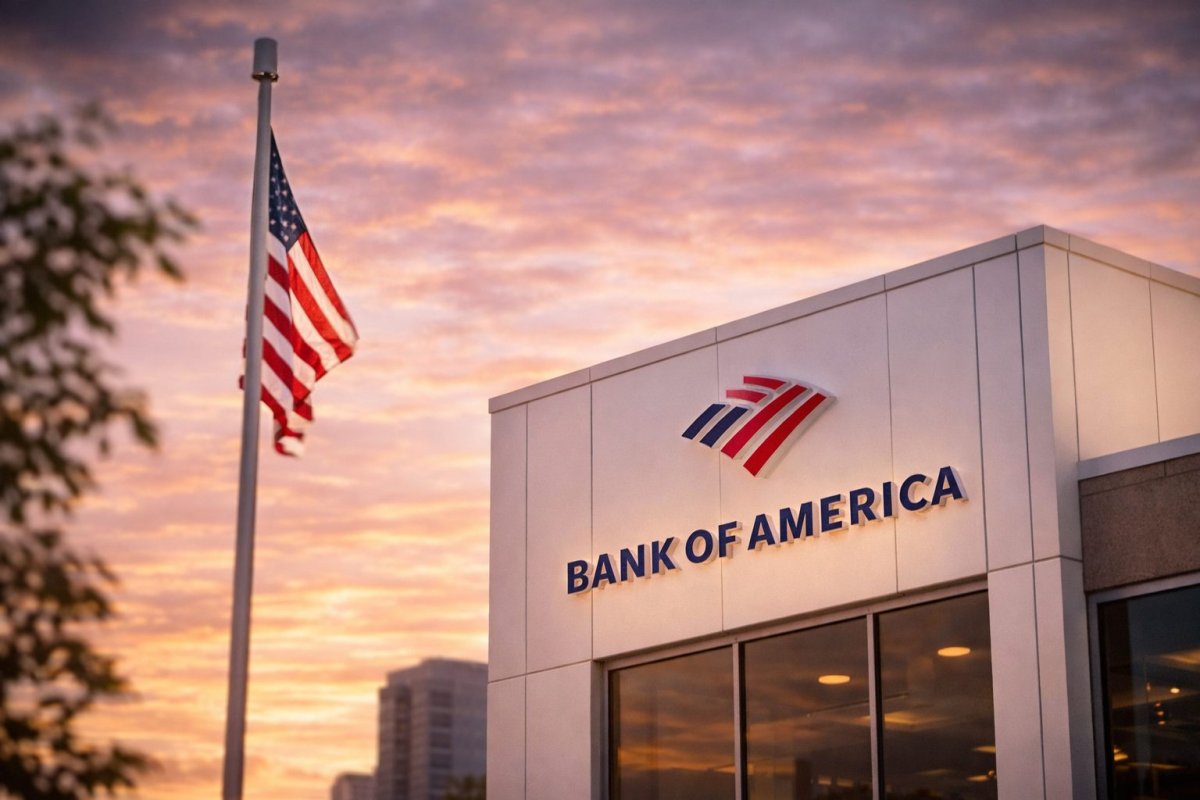
Shares of Bank of America Corp. (BAC) edged lower in pre-market trading on Friday, February 13, 2026, extending losses from the prior session. The stock declined approximately 0.3% ahead of the opening bell, following a significant 2.47% drop on Thursday that closed at $52.52 per share. This movement reflects a broader retreat across the financial sector and occurs against a backdrop of heightened market sensitivity to upcoming economic data and ongoing legal developments.
Market Awaits Key Inflation Data
Investor focus is squarely on the January Consumer Price Index (CPI) report, scheduled for release at 8:30 a.m. Eastern Time. U.S. stock index futures traded near flat levels as the market braced for the inflation figures. The financial sector is particularly attuned to CPI data, as the results directly influence interest rate expectations set by the Federal Reserve. For major lenders like Bank of America, net interest income—the difference between earnings from loans and the cost of deposits—is closely tied to the trajectory of benchmark interest rates.
Current market pricing suggests expectations for a potential rate cut in June remain intact. However, analysts note that a CPI reading that surprises to the upside could push Treasury yields higher and delay the timeline for anticipated monetary easing. Such a scenario would tighten financial conditions, potentially dampening loan demand and raising concerns about future credit losses. Conversely, a softer-than-expected inflation print could bolster rate-cut hopes, though it might also pressure net interest income forecasts if markets rapidly price in a lower-rate environment.
Legal Proceedings Advance Against Bank of America
Adding to the stock's pressure is a recent legal ruling. A U.S. judge has determined that claims alleging Bank of America "recklessly disregarded" indications of sex trafficking by the late financier Jeffrey Epstein are sufficiently substantiated to allow a proposed class-action lawsuit to proceed. The court has set a trial date for May 11, 2026. In response, the bank has stated it welcomes a thorough factual review of the matter.
Broader Financial Sector and Market Context
The weakness in Bank of America shares mirrors a sector-wide pullback witnessed on Thursday. Peers JPMorgan Chase & Co. (JPM) fell 2.63%, while Wells Fargo & Company (WFC) declined 2.99%. Major U.S. equity indexes also closed sharply lower. Beyond inflation, interest rates remain a pivotal swing factor for markets. According to a Reuters survey, long-dated Treasury yields are projected to hold steady in the near term before rising later in the year. The yield on the benchmark 10-year Treasury note has recently been confined to a range between 4.0% and 4.3%.
Market participants are closely monitoring the shape of the yield curve—the gap between short- and long-term interest rates—as it impacts bank lending margins and the appetite for new credit. Furthermore, market volatility presents a dual-edged sword for financial institutions: it can sometimes boost revenues from trading desks but on other occasions rattles overall risk appetite.
Bob Savage, Head of Markets Macro Strategy at BNY Mellon, highlighted in a client note that a central question for equity investors is whether the current surge in capital expenditure can translate into durable corporate earnings growth. Other strategists, including Jean Boivin of BlackRock, have warned that evidence contradicting the prevailing market narrative could serve as a wake-up call, injecting volatility. Meghan Swiber, a strategist at Bank of America, pointed to the potential complexity of the Federal Reserve cutting interest rates while simultaneously continuing to reduce the size of its balance sheet.